 We spend much of our lives asking questions: Why am I here? What should I do? How do I fix this? When will I feel better? The mind loves these questions. It feeds on inquiry. But here’s the catch: the mind is shaped by the ego. And the ego — no matter how well-meaning — sees life through a narrow lens of identity, survival, and control. So even the best questions are often limited by what the ego thinks is worth knowing. That’s why some of the most profound truths don’t come from questioning at all. They come from stillness. The Nature of Epiphany An epiphany is an answer that arrives unannounced. You didn’t plan it. You didn’t chase it. It just… appeared. Like a flash of lightning on a clear night. It’s not the result of linear logic — it’s a download from somewhere deeper. A soul-level remembering. A glimpse beyond the veil. And most of the time, the mind catches up after the knowing has already landed. Why Silence is Sacred Silence isn’t just the absence of noise. It’s the absence of interference. It’s the pause that lets truth rise from beyond the chatter of the mind. In silence, you're not asking — you're receiving. Not analyzing — but becoming available. Not solving — but allowing. This is why spiritual teachers, mystics, and creatives across centuries all return to the same principle: Get still. Get quiet. Then let what’s real rise. Final Thought: If your mind doesn’t have the question, but your heart suddenly has the answer… That’s not confusion. That’s grace. Epiphanies are soul-whispers. And they don’t care if you were asking. They just come when you're ready. Reading tip: Click on Epiphanies under Categories to read more about the subject.
0 Comments
 Bay Bridge, San Francisco-Oakland, California, USA Growing Up Without Boundaries: My Personal Story Growing up in an authoritative household, I never really had the space to explore my own preferences. My mother made the decisions for me—what I should do, feel, and want. There was no room for my opinions. That pattern shaped me into someone incredibly easygoing—too easygoing, to the point where I didn’t know where I ended and others began. I became someone who just went along with whatever others wanted, thinking that was the path of least resistance. And sure, on one hand, it made me flexible and able to enjoy almost any situation. But the cost? I lost touch with what I wanted. The Cost of Not Having Boundaries I struggled with making decisions. I’d let others take the lead—not out of respect, but out of habit and fear of conflict. I didn’t speak up when something bothered me. And when people—often unknowingly—crossed lines I didn’t even know I had, I’d silently stew. I’d build resentment. And then, instead of addressing the issue, I’d retreat. I became passive-aggressive, slowly backing out of relationships without ever really explaining why. What Healthy Boundaries Really Mean It took me years to realize: boundaries aren’t walls to keep people out. They’re bridges to help others meet us where we are. But to even build that bridge, we have to know where we stand. Boundaries Are a Form of Self-Love and Self-Respect One of the most powerful truths I’ve learned is this: boundaries are not just about protecting yourself from others. They are acts of self-love and self-respect. When you set a boundary, you are sending a message to yourself and the world: "I matter. My feelings, my needs, and my energy deserve to be honored." This is not selfish—it’s sacred. Without boundaries, we give too much, we say yes when we mean no, we bend until we break. And slowly, we disconnect from ourselves. But when we start setting healthy limits, we rebuild that connection. We begin to treat ourselves the way we want others to treat us. And something beautiful happens: when we respect ourselves, others learn to respect us too. Setting boundaries isn’t just about making your life more peaceful—it’s about making your relationships more authentic. When people know what you need and where you stand, they can engage with you honestly, without guessing or overstepping. It’s not only a gift to yourself; it’s a gift to everyone you love. Loving yourself enough to set boundaries is one of the most courageous and compassionate things you can do—not just for you, but for everyone around you. Why Self-Awareness Comes First The first step to creating healthy personal boundaries is self-awareness. We can’t communicate what we need until we understand what makes us feel seen, respected, and safe. Sometimes, what we call a boundary is actually a wound—a sore spot from the past. If someone’s words or actions offend us, it’s worth asking: is this about them, or is it a reflection of something I haven’t healed yet? When we don't do that inner work, we risk setting boundaries based on fear, not freedom. We might end up pushing away the very experiences and people who could help us grow. Examples of Healthy vs. Unhealthy Boundaries That’s why I believe in healthy boundaries—those that are rooted in clarity, not confusion. Here are a few examples: Unhealthy Boundary: “I never let anyone get close to me because I don’t want to be hurt.” Healthy Boundary: “I take my time getting to know people and only open up when I feel emotionally safe.” Unhealthy Boundary: “If someone says something I don’t like, I cut them off immediately.” Healthy Boundary: “If something upsets me, I take a moment to reflect and then have a calm conversation about it.” Unhealthy Boundary: “I let people do whatever they want so I don’t cause drama.” Healthy Boundary: “I express my needs clearly and respectfully, knowing that honest communication builds stronger connections.” How to Communicate Boundaries Effectively Once you've done the inner work and become clear on what your boundaries are, the next step is learning how to express them in a way that is both firm and compassionate. Here are a few proven methods for communicating personal boundaries: 1. Use "I" Statements This helps reduce defensiveness and keeps the focus on your feelings.
2. Be Direct, Not Aggressive Kindness and firmness can coexist. Express your needs without attacking.
3. Set Clear Consequences Boundaries without consequences are just suggestions.
4. Repeat and Reinforce You might have to restate your boundary more than once.
Final Thoughts: Practice Makes Progress Boundaries aren’t about creating distance. They’re about creating clarity. They let others know how to love and respect us. And they teach us how to love and respect ourselves. So if you’ve struggled with boundaries like I have, be gentle with yourself. You’re not broken. You’re learning. Boundaries aren’t something you suddenly master—they’re something you practice. And the more you practice, the more your relationships—starting with the one you have with yourself—begin to thrive.  Wailua Falls, Kauai, USA 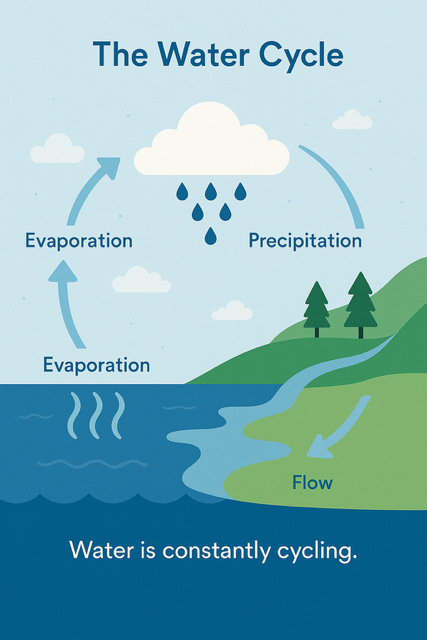 Have you ever spilled a bit of water on your table, wiped it up, and thought — where does it go now? It doesn’t disappear. It transforms. That same water drop begins a journey — one that might lead it into the sky, into a cloud, into rain, a river, a root, or even into you. The Science: Earth’s Closed Water System Our planet has held roughly the same amount of water for over 4.5 billion years. Yes, the very water you drink today is the same water the dinosaurs bathed in, the same water that nourished the first plants, the same water that’s flowed through sages, storms, oceans, and ancient civilizations. Earth’s hydrological cycle — evaporation, condensation, precipitation, and flow — is a closed loop. Water doesn’t leave Earth, and very little is added. It simply changes forms:
Even contaminated water stays in this loop — cycling through rivers, air, soil, and our bodies — until it’s filtered by nature or by us. The Reality: What We Put In, Comes Back If we pollute the water system, we pollute ourselves. Chemical runoff, microplastics, and pharmaceuticals — many of them return to our tap, our crops, and our oceans. Nature does its best to filter, but she’s not limitless. Our systems help, but they’re not perfect. The Spiritual Metaphor: Nothing Is Ever Truly Gone Water teaches us a sacred truth: Everything you release into the world — energy, emotion, intention, or waste — transforms and returns. It never truly disappears. It becomes part of the greater whole. Like water, your choices ripple outward — touching others, the Earth, and eventually… yourself. You are drinking not just ancient molecules -- You are drinking a story… a memory… a reflection of the past and a message for the future. A Call to Responsibility and Reverence
Because when you pour a cup of water, you’re not just hydrating -- You’re communing with billions of years of life. And the way you treat it… reflects how you treat life itself. 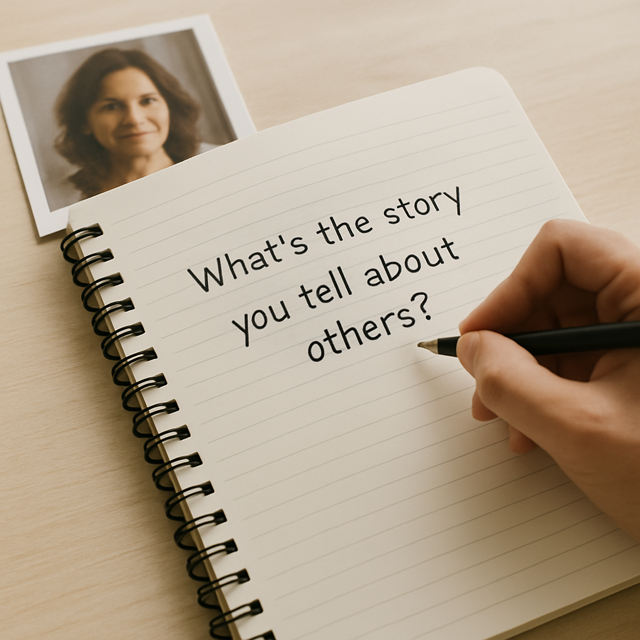 (Part of The Story Series) Introduction: Why This Story Matters We often believe that the state of our relationships depends on how others behave. But in truth, much of it depends on the story we’ve created about them in our mind. “She’s cold and doesn’t care about me.” “He’s manipulative.” “They always try to control me.” “They’re selfish. They’ll never change.” These stories may contain truths. They may have grown from real pain, real betrayal, or real patterns we’ve observed over time. But here’s what’s also true: The story we tell about someone becomes the lens through which we see them. And over time, that lens becomes a wall. It holds us back from forgiveness. It keeps us distant from people we may still care about. It locks us in resentment and prevents us from healing. Sometimes, these stories even bleed into how we relate to other people, causing patterns of mistrust, avoidance, or guardedness in entirely new relationships. What’s Happening in the Mind When you’ve been hurt, your mind forms a narrative to protect you. It says: “This is what they did. This is who they are. And I won’t let it happen again.” The brain links pain with identity: “This person caused this pain — therefore, they are dangerous.” It’s a survival instinct — but it can become a spiritual and emotional prison. Even if the story is partly true (e.g. “they are manipulative”), it becomes an identity label. And when we see someone only through their ego patterns, we stop seeing their humanity. An Example: The Manipulator Let’s say someone in your life constantly manipulates you. It’s exhausting. It’s real. You’ve felt used, maybe even emotionally twisted. So the story becomes: “They’re a manipulative person who’s always trying to get what they want.” But now pause — and go deeper. Ask yourself:
Maybe manipulation was the only way they could get love, safety, or validation when they were young. Maybe they still use it because they don’t know how to ask for their needs honestly. Understanding this doesn’t excuse the behavior — it softens your heart, so you don’t meet pain with more pain. A Powerful Example: The Movie “Pig” In the film Pig, the main character seeks revenge for the loss of his beloved animal. When he finally meets the man who stole from him, he doesn’t attack or retaliate. Instead, he cooks him a meal — a dish tied to a loving memory the man shared with his wife who is now unconscious due to illness. That act bypassed the ego and touched the man’s heart. The wall crumbled. Emotion broke through. And healing began. This is what happens when we stop fighting the ego and begin speaking to the soul. Compassion is Not Weakness This work is not about denying your hurt, or pretending everything’s okay. It’s not about letting people continue to harm you. It’s about choosing to see the full picture, so your responses come from clarity, not pain. You can:
Why This Work Is Hard (and Worth It) Some people may still trigger you. You may rewrite the story one day, then snap back into the old version the next. That’s okay. It’s all part of reconditioning the mind. You’re not trying to erase the old story in one sitting. You’re practicing a new way of seeing. And with practice, you’ll return to your heart more easily and more often. Your Reflection Practice Choose someone in your life who is important to you — especially someone with whom you’ve had conflict, distance, or emotional pain. This can be someone from the past or present. Then journal through the following prompts:
Your Assignment
Closing Thought When you change your story about others, you don’t just heal the relationship — you heal your own heart. You stop carrying old pain forward. You soften the space between you and them. And even if they never change, you do. And that change? That peace? That shift in energy? It changes everything. Read: Part 1: The Story We Tell About Ourselves Part 3: The Story We Tell About the World Part 6: The State Shifter — How to Move Between Brainwave States to Master Your Mind & Life6/12/2025  Tunnel Trail at Pinnacles National Park, California, USA We’ve explored the brain’s core frequencies — from deep Theta to elevated Gamma. You now understand that your brain isn’t locked in one state — it’s a dynamic instrument, constantly tuning itself based on your environment, focus, and internal habits. Here’s the empowering truth: You can learn to consciously shift between brainwave states to support whatever your life calls for — whether it’s insight, creativity, relaxation, connection, or action. This is the art of becoming a State Shifter — a person who moves fluidly between levels of consciousness with skill and intention. Let’s explore how. Recognizing What State You’re In Awareness is the first step. Here’s a simple guide to recognizing your current state: State How It Feels Common Signs Beta Alert, busy, scattered Mental chatter, worry, multitasking, social engagement Alpha Calm, present, open Flow state, gentle focus, relaxed body Theta Dreamy, intuitive, spacious Hypnagogic images, insights, inner voice emerges Gamma Elevated, deeply connected, clear “Aha” moments, unity experiences, love, rapid learning Delta Deep sleep, healing Not consciously accessible unless trained (lucid sleep/yoga nidra) Pay attention throughout your day. Ask yourself: “What state am I in right now? Is it helping or hindering what I need to do?” Self-awareness is the master key. Tools to Enter or Exit Each State Here’s a practical toolkit to help you shift as needed: To Exit Beta (Calm the Mind):
To Enter Alpha (Flow & Relaxed Focus):
To Enter Theta (Subconscious Access):
To Enter Gamma (Peak States & Spiritual Connection):
To Return to Beta (Productive Action):
Using State Awareness for Life Mastery Why does this matter? Because knowing how to shift states allows you to:
Real-Life Examples Public Speaking:
Conflict Resolution:
Decision Making:
Creativity (Writing, Art, Innovation):
Final Thought: Your Mind Is a Multidimensional Instrument Most people live trapped in one narrow band of brainwave activity — usually stuck in chronic Beta. But when you learn to move skillfully between states, you unlock an incredible range of capacities: Wisdom Creativity Healing Productivity Spiritual insight You become not just a thinker — but an artist of consciousness. And the more you practice, the more fluid and natural this shifting becomes. Remember: You are not your thoughts. You are the awareness that can move through thought, silence, insight, and beyond — at will. Part 6 Bonus: The State Shifter Cheat Sheet + Guided Practice Quick Reference: Brainwave States & How to Access Them State Best For How It Feels How to Enter Beta (12–30 Hz) Focus, logic, action Alert, thinking, busy Bright light, caffeine, movement, goal setting Alpha (8–12 Hz) Flow, calm, receptivity Relaxed focus, present Breathwork, hot shower, 5→1 countdown, silent driving Theta (4–8 Hz) Insight, healing, Dreamy, slowed, Hypnagogic journaling, body scan, subconscious intuitive meditation after waking reprogramming Gamma (30–100 Hz) Peak performance, Clear unified, elevated Focused love, deep insight, heart coherence, inspired spiritual downloads Guided Meditation Script: “Shift Your State in 5 Minutes” You can record it in your voice. Use soft ambient music with a slow tempo (~60 bpm) to enhance Alpha/Theta access. Script: “Shift Your State” Welcome to your moment of reset. This short practice will help you shift from stress or overthinking into the state your soul truly needs right now. Find a quiet space. Sit or lie comfortably. Let your hands rest. Close your eyes. Let’s take three deep breaths together: Inhale… Exhale… Again — in… and out… One more… let it go fully. Now gently ask yourself: “What state am I in right now?” Just notice. No judgment. Are you racing? Are you foggy? Are you already calm? Now, bring to mind the state you’d like to shift into. Choose one: calm, creative, focused, open, or connected. Good. Now we’ll begin a countdown to shift you into that state. 5… Release tension in your face and jaw. 4… Let your shoulders drop. Let your belly soften. 3… Bring your awareness to your breath. 2… Feel the ground or chair holding you. 1… Let go. Arrive here. Fully. Now simply breathe in this new state. If you chose calm, let your breath deepen. If you chose focus, feel a slight lift in your spine. If you chose connection, place your hand on your heart. Let the feeling of your chosen state expand. It’s not far away. It’s already within you — just a frequency shift away. Breathe into it. Let it anchor. [Pause 30–60 seconds in silence or soft background music] Now take one last breath… And when you’re ready, open your eyes -- carrying this new state with you. You’ve just shifted your frequency. You are not stuck. You are powerful. And you can return here — anytime. Read: Part 1: The Neuroscience of Epiphanies: Why Sudden Realizations Can Change Your Life Instantly Part 2: Relax to Receive - Why the Alpha Brainwave Is the Gateway to Spiritual Insight Part 3: Tapping the Divine Frequency - Gamma, Spiritual Downloads, and the Mystical Mind Part 4: The Portal of Dreams - How Theta Brainwaves Reveal Your Soul's Voice Part 5: Breaking Free from Mental Noise - Escapting Beta Overdrive to Find Peace  A guide to understanding and rewriting the inner story that shapes your life Introduction One of the most powerful forces in your life is the story you tell yourself. This story — about who you are, what the world is like, and what is possible — runs in the background of your mind all the time. It shapes:
Most of us rarely examine this story consciously. Often it was written for us by others: parents, teachers, culture, media, past experiences. But here’s the good news: you are the author of your story and you have the pen in your hand. You can rewrite it. And when you do, your life begins to change. Why is your story so important? Your brain is a storytelling machine. It is always trying to make sense of the world by building a narrative. This narrative acts like a filter through which you experience life. You don’t experience life directly — you experience it through the lens of your story. How this works in the mind (psychology):
In other words: we live inside our story more than we live inside objective reality. Analogies to help you understand: Your story is like your glasses. Every day, you put on “story glasses.” If they say “Life is a struggle,” you’ll notice struggle everywhere. If they say “I’m someone who makes a difference,” you’ll find opportunities to do so. We don’t see life as it is — we see it as our story tells us it is. Your story is like your brain’s operating system. Just like your phone runs on iOS or Android, your mind runs on a “story operating system.” If it’s an outdated OS written by fear or old beliefs, it limits what you can do and experience. When you rewrite your story, you upgrade your OS — and life runs smoother, freer, more aligned with who you really are today. Visual: The Story Cycle
If you change the story, the whole cycle begins to shift. Real-life examples: “I’m not creative.” A woman believed she wasn’t creative because of one teacher’s comment years ago. She rewrote the story and became an artist and a poet. “People will always disappoint me.” A man carried this story from past betrayal. It made him guarded in relationships, which led people to pull away. When he rewrote his story to allow trust where it is earned, his relationships transformed. “The world is dangerous and getting worse.” A woman consumed only negative news and became anxious and withdrawn. By balancing her inputs and rewriting her story to acknowledge both challenges and goodness, her anxiety eased and she re-engaged with life. The Work: I encourage you to reflect deeply on the story you tell yourself — and to start consciously rewriting it if needed. Here are the questions you can work through: Reflection Questions — The Story You Tell Yourself 1. What’s the story you always tell yourself? (Example: “I’m someone who struggles with relationships.” Or “I’m a guide and healer helping others.”) 2. How does it make you feel when you run that story through your head? 3. How do you like your story? (Is it empowering? Limiting? Fulfilling?) 4. Where do you think you got the story from? (Parents? Culture? Past experiences? Media? Your own reflection?) 5. How valid or truthful do you think your story is? (How much of it is still true? How much is an old version of you?) 6. If you had a chance to rewrite your story, how would you do it? (What story would serve you better now?) Final thoughts “Stories are powerful — but remember this: you are the storyteller. Every day is a new page.” I encourage you to take this process seriously. The more conscious you become of your inner story, the more freedom, clarity, and joy you will experience in life. Read: Part 2: The Story We Tell About Others Part 3: The Story We Tell About the World |
AuthorFeelasoulphy Categories
All
Archives
March 2026
|
 RSS Feed