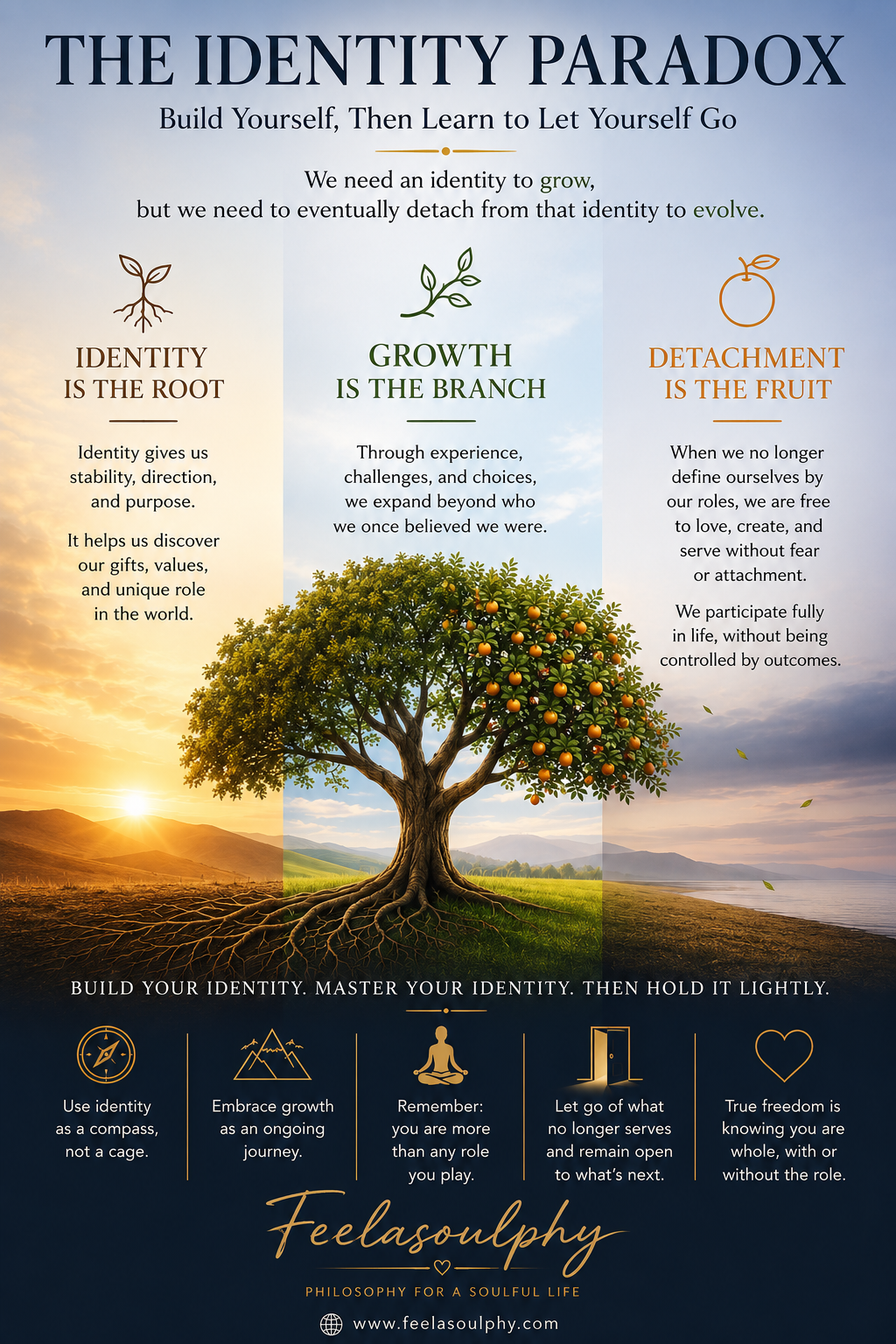
 One of the greatest paradoxes of human growth is this:
We need an identity to grow, but we need to eventually detach from that identity to evolve. Identity is a powerful force. It gives us direction, meaning, and a sense of purpose. It answers the question: “Who am I, and how do I contribute to this world?” A child begins this journey by discovering the self. “I am creative.” “I am intelligent.” “I am a helper.” “I am a leader.” As we grow older, we continue building identities through our experiences: “I am a teacher.” “I am an entrepreneur.” “I am a parent.” “I am an artist.” “I am a healer.” These identities are not the enemy. They are essential parts of our development. They help us discover our gifts, develop discipline, and create meaningful contributions to the world. But every tool that helps us build can also become something that limits us if we become attached to it. The same identity that gives us purpose can eventually become the source of our suffering. A teacher may spend decades finding meaning through teaching. But when the classroom disappears, when there are no more students, or when retirement arrives, they may ask: "Who am I now?" An entrepreneur may build a successful company and gain recognition from the world. But when the business struggles, they may feel as if they themselves are failing. A person who dedicates their life to helping others may discover that they feel empty when nobody needs their help. The problem is not the role. The problem is confusing the role with the self. We forget that identity is something we create and express. It is not the entirety of who we are. A teacher is not valuable because they have students. A leader is not valuable because people follow them. A healer is not valuable because others depend on them. Their value exists before the role begins and remains after the role ends. Identity Is the Root. Growth Is the Branch. Detachment Is the Fruit. A tree needs roots before it can reach toward the sky. Without roots, it cannot grow. Identity is the root. It gives us stability. It anchors us. It allows us to discover our strengths and develop our unique expression in the world. But a tree does not exist only to grow roots. The roots are there to support expansion. Growth is the branch. Through experiences, challenges, successes, and failures, we expand beyond our original understanding of ourselves. We discover that we are capable of more than we once imagined. The child becomes the adult. The student becomes the teacher. The follower becomes the leader. But even branches are not the final destination. Eventually, we must produce fruit. Detachment is the fruit. Detachment does not mean abandoning our identity or losing passion for what we do. It means we can fully embrace our role without being imprisoned by it. A person who is attached says: "I am a teacher, therefore I must always teach to be whole." A person who is free says: "Teaching is one beautiful expression of who I am, but my existence is greater than this role." A person who is attached says: "I need success to know I am worthy." A person who is free says: "I will pursue excellence, but my worth does not rise and fall with my achievements." True detachment allows us to participate fully in life without being controlled by the outcomes. The Spiritual Evolution of Identity Many spiritual traditions teach that suffering comes from attachment. But attachment does not only happen with material possessions. We can become attached to ideas, beliefs, relationships, and even our own image of ourselves. Sometimes the strongest attachment is to the identity we are most proud of. “I am the successful one.” “I am the wise one.” “I am the person who helps everyone.” “I am the awakened one.” Even a spiritual identity can become another form of ego if we cling to it. The final stage of growth is not becoming someone special. It is realizing that beneath all identities, there is a deeper awareness that has always been present. We are not only the roles we play. We are the consciousness experiencing those roles. The Freedom of Holding Identity Lightly The goal is not to destroy the ego or eliminate identity. A person without a developed identity may lack direction. A person trapped by identity may lack freedom. The wisdom is to build the self, but hold it lightly. Become a great teacher, but remember you are more than a teacher. Become a great leader, but remember you are more than a leader. Become successful, but remember success is something you experience, not something you are. Life is a journey of becoming. First, we build ourselves. Then, we refine ourselves. Finally, we discover that the self we built was only one expression of something much greater. The deepest freedom comes when we can say: "I can fully embrace who I am today while remaining open to who I may become tomorrow." Build your identity. Master your identity. Then learn to let it go. Because the person who is attached to an identity can only live within its boundaries. But the person who is free can use any identity as a doorway to express the infinite possibilities within.
0 Comments
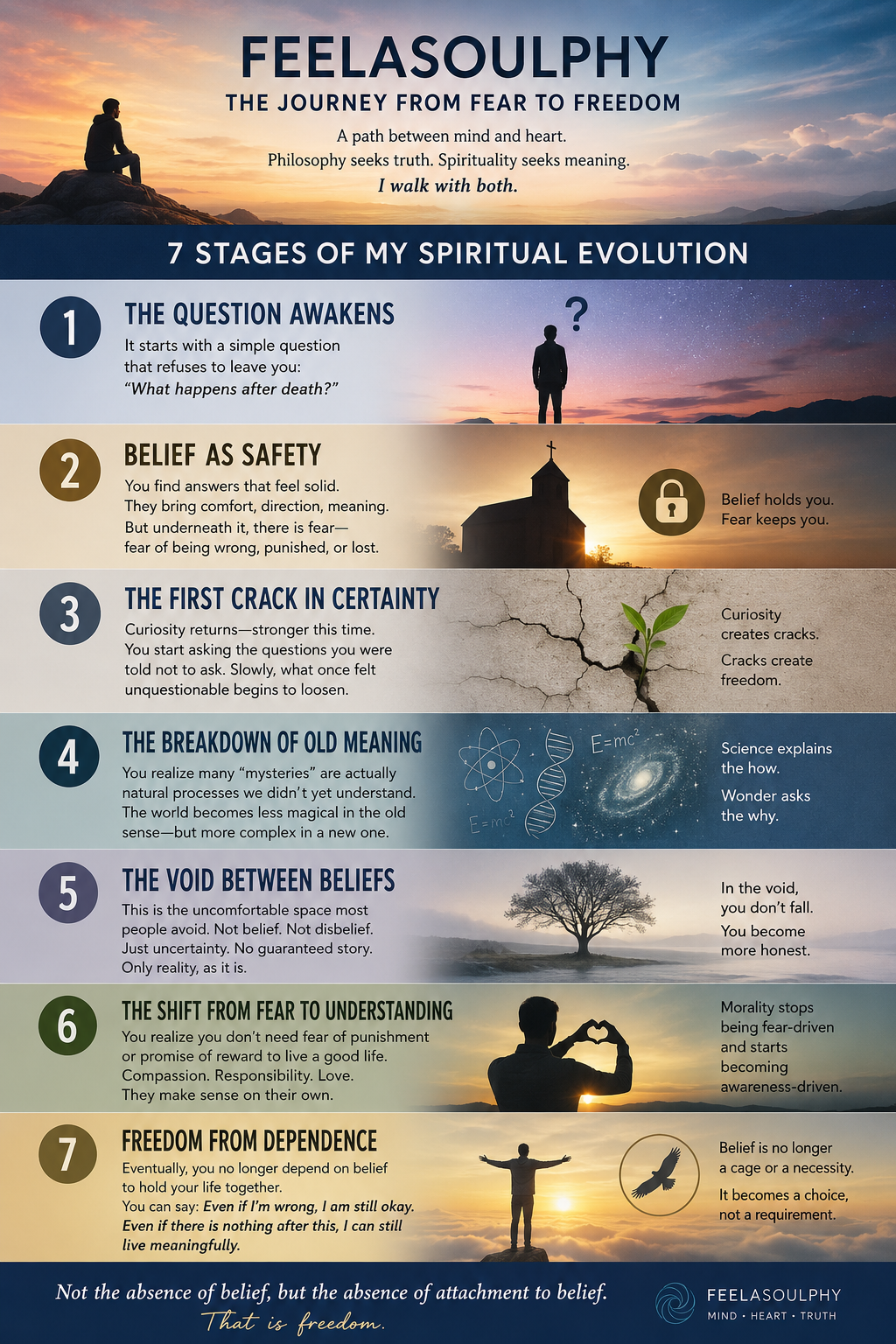 7 Stages of My Spiritual Evolution...To Be Continued... There was a time when I believed life could be neatly categorized. Philosophy belonged to the mind. Spirituality belonged to the heart. One searched for truth through logic, questioning, and reason. The other trusted intuition, meaning, and unseen connection. For a long time, I treated them as separate worlds. Almost like two different languages trying to describe existence. But life doesn’t stay in boxes for long. And neither did I. The Early Search: Fear Disguised as Faith My journey didn’t begin in clarity. It began in curiosity — and uncertainty about what happens after death. That question, once planted, doesn’t leave quietly. It grows into others: What is real? What is God? What is truth? What happens when we die? Eventually, I found myself inside Christianity. And for a while, it gave structure to the unknown. It gave answers where there were none. It gave direction where I felt lost. But underneath it, there was something I didn’t fully recognize at the time: fear. Fear of punishment. Fear of being wrong. Fear of what happens if belief collapses. And fear is a powerful teacher — but not always a truthful one. It can shape belief into something rigid, something protective rather than something alive. At some point, I started to notice that my relationship with belief wasn’t fully free. It was anchored in consequences, not understanding. And once you see that, you can’t unsee it. The Breaking Open: Science, Philosophy, and Unraveling Certainty “Did God create us in His image, or did we create God in ours?” And perhaps beneath both lies an even deeper question: “Did God create us… or did we create God?” - Feelasoulphy The next stage of my journey was not spiritual at all — at least not in the traditional sense. It was analytical. I began studying science, philosophy, and research around consciousness. I explored near-death experiences, reincarnation theories, and scientific perspectives on spirituality. Not to reinforce belief — but to challenge it. Slowly, the world I once saw as “miraculous” became increasingly explainable. The mechanisms of life, the brain, perception, evolution — all of it revealed patterns that didn’t require supernatural explanation. And something shifted in me. I started realizing that many things once attributed to God were actually natural processes we had not yet understood. But instead of closing the mystery, this opened a different one: Even if we understand how something works… we still don’t fully understand why anything exists at all. Science explains mechanisms. But it does not fully explain existence itself. That realization didn’t push me back into certainty. It pushed me deeper into humility. The Transition: Letting Belief Stop Being a Crutch Over time, something unexpected happened. My need for belief as emotional security began to fade. I stopped needing a specific story about what happens after death in order to live meaningfully now. That was a turning point. I reached a place where I could say: Even if there is no God… Even if there is no afterlife… I can still live a good, conscious, and meaningful life. Not because I was forcing myself to be strong — but because I genuinely understood why compassion, love, and responsibility matter. Not from fear. Not from reward. But from clarity. And when belief is no longer required to behave well, something subtle happens inside a person. The mind becomes lighter. The heart becomes less defended. And truth becomes less threatening. The Shift: From Dependency to Freedom At some point, I realized I no longer depended on belief in God or the afterlife to guide my actions. And that changed everything. Because belief stopped being a psychological structure holding me together. It became something I could examine freely. I was no longer afraid of my worldview collapsing. I was no longer attached to it as identity. I could question it, challenge it, even let it dissolve — and I would still be okay. That is when I first felt something I can only describe as freedom. Not freedom from meaning. But freedom from fear-based meaning. Feelasoulphy: A Middle Path This is where the idea of Feelasoulphy emerged for me. A bridge between:
Not as a contradiction — but as integration. Because I’ve come to see that philosophy without feeling becomes empty abstraction. And spirituality without inquiry becomes fragile belief. We are not meant to live in only one half of ourselves. We are meant to become whole. Fear-Based Belief vs Freedom-Based Belief One of the clearest distinctions I’ve learned is this: There is a kind of belief that is built on fear:
And there is a kind of belief — or perhaps a way of being — that is built on freedom:
Fear-based belief needs certainty to feel safe. Freedom-based understanding can hold uncertainty without collapsing. That difference changes everything. The Question I Keep Returning To I don’t claim to know what happens after death. I don’t claim to fully understand consciousness or the origin of reality. But I also no longer need those answers to live well. And maybe that is the real shift. Not from belief to disbelief. But from dependence to independence. And from independence… to a quieter possibility: That perhaps meaning is not something we receive from certainty, but something we embody through awareness. Where I Am Now Today, I feel something simple but profound: I am okay not knowing. Not in resignation — but in openness. I can explore spirituality without needing it to be “true in the ultimate sense.” I can study science without needing it to erase mystery. I can live ethically without needing fear as motivation. And most importantly, I can question everything — without losing myself in the process. That, to me, is freedom. Not the absence of belief. But the absence of attachment to belief. And in that space… life feels strangely more real than ever. 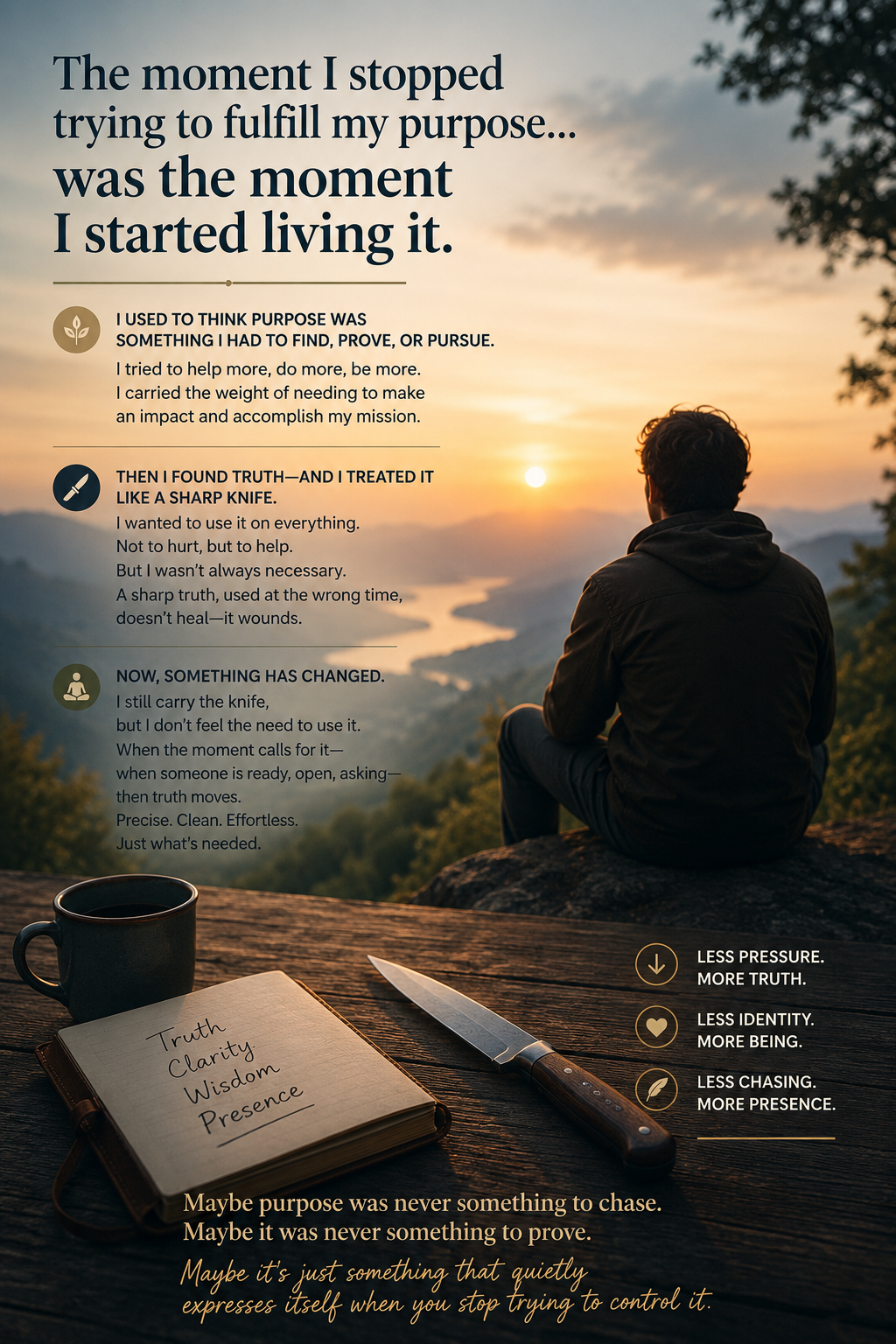 The moment I stopped trying to fulfill my purpose… was the moment I started living it.
For a long time, I carried this quiet pressure: That I was meant to do something meaningful. That I had a mission I needed to accomplish. That my life had to amount to something bigger than myself. It sounds noble… but it’s heavy. Because hidden inside that belief was fear-- Fear of not doing enough. Fear of wasting my life. Fear of not becoming who I thought I was supposed to be. So I tried. I looked for ways to help. I pushed myself to show up. I chased opportunities to make an impact. And when I discovered truth—real clarity, real insight-- it felt like I had found a sharp knife. Something powerful. Something that could cut through illusion. So I used it. In conversations. In people’s beliefs. In the way they saw themselves and the world. Not to hurt—but to help. At least… that’s what I told myself. But the truth is, when something is new and powerful, you feel the need to prove it works. So I cut into everything. And sometimes… I was right. But I wasn’t always necessary. That’s the part no one talks about. A sharp truth, used at the wrong time, doesn’t heal—it wounds. Not because it’s false, but because it’s forced. The more I tried to live my purpose, the more I was acting from pressure—not truth. Then something shifted. I stopped forcing it. Stopped chasing it. Stopped needing to be “the person who helps.” And in that space… something unexpected happened: I didn’t lose my desire to help. I just lost the need to. I still carry the knife. But I don’t feel the need to use it. Now, when someone needs me—I’m there. Fully. But I no longer carry the weight of having to fix, save, or prove anything. I wait. And when the moment truly calls for it-- when someone is ready, open, asking-- Then truth moves. Precise. Clean. Effortless. No force. No pressure. Just what’s needed. Maybe purpose was never something to chase. Maybe it was never something to prove. Maybe it’s just something that quietly expresses itself when you stop trying to control it. Less pressure. More truth. Less identity. More being. And strangely… that feels like freedom. 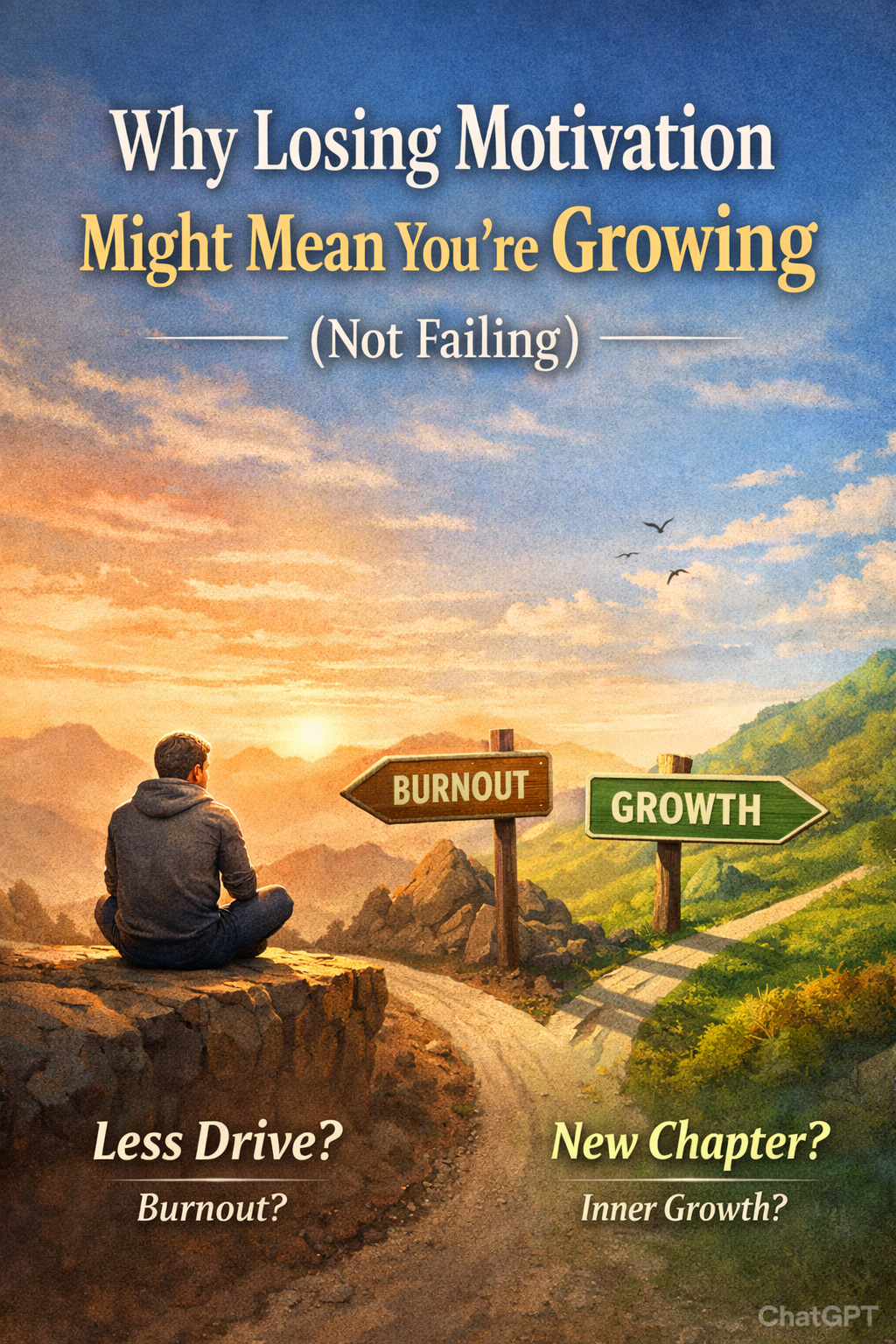 There is a phase of inner growth that rarely gets discussed—because it doesn’t look impressive. Ambition fades. The drive to achieve quiets down. The urge to become someone loosens its grip. And instead of clarity, many people feel unease. Am I evolving… or am I giving up? Is this peace—or fear disguised as contentment? This question doesn’t arise at the beginning of self-development. It appears after years of inner work, when ego has softened but purpose hasn’t yet redefined itself. The Role of Ambition in Human Development Ambition is not the enemy. Early in life, it serves an essential function. We strive in order to:
The problem isn’t ambition—it’s never knowing when to take it down. What Changes When Ego Softens If inner work is genuine, something subtle but radical happens: You no longer need achievement to validate your existence. This often shows up as:
They assume: “If my ambition is fading, something must be wrong.” In reality, something important is reorganizing. Rest vs Retreat: The Critical Distinction From the outside, rest and retreat look identical. Less output. More solitude. Fewer goals. Internally, they are opposites.
A simple test: If life gently asked something of me tomorrow, would I be open to it? A relaxed yes signals rest. A tight no signals retreat. The danger isn’t resting. The danger is mistaking withdrawal for wisdom. What Replaces Ambition After Ego Work When ego-driven ambition dissolves, one of three things replaces it:
A call does not demand constant productivity. It arrives with clarity and lightness. It asks for action—and then releases you again. From the outside, this looks inconsistent. From the inside, it feels precise. Why Many “Successful” People Never Reach This Stage Many high achievers don’t mind working all the time because stopping would force them to sit with themselves. Busyness becomes:
There’s a difference between capacity for work and compulsion to work. Losing the second while keeping the first is growth. The Real Risk at This Stage The risk is not doing less. The risk is using contentment as insulation. When “I’m fine the way I am” becomes a shield against engagement, life slowly thins out. The answer is not forcing ambition back. It’s remaining available. A Simple Operating Principle For this phase of life: Only act on what arrives with clarity and lightness. Not excitement. Not obligation. Not fear. Lightness. If nothing arrives, live fully anyway. Stillness is not a waiting room. It’s part of the work. A Short Mirror (Read slowly) Don’t answer these questions quickly. Notice what happens before the answer forms.
Only signals. Whatever you notice is the information. The Quiet Truth You are not here to maximize output. You are here to minimize distortion. When distortion falls away, contribution becomes inevitable—but no longer constant. And if you step forward again, it won’t be to become someone. It will be because silence finished saying what it could.  What you are aware of is your reality. Simple sentence. Infinite depth. Reality doesn’t just exist “out there” somewhere waiting to be discovered. It unfolds in here—within the field of your awareness. You could be standing in the same room as another person, breathing the same air, hearing the same sounds, yet living in two entirely different realities. One person feels peace; the other feels anxiety. One sees opportunity; the other sees threat. The outer world is the same, but the inner awareness is not. So what’s real? Both—and neither. Reality, as we experience it, is a mirror reflecting our state of consciousness. Awareness is the light that reveals what’s in the mirror. When the light is dim, the reflection is blurry and distorted. When the light brightens, the truth appears clearer, richer, and more whole. The Power of Awareness Awareness is not just passive observation—it’s participation. The moment you become aware of something, you interact with it. You give it meaning. You bring it into existence for you. That’s why self-awareness is so transformative. When you see your own thoughts clearly, they lose their power to unconsciously steer your emotions and behaviors. When you observe your fears, they stop dictating your choices. What you are aware of, you control; what you are not aware of, controls you. The unexamined parts of the mind—those shadowy regions of pain, resentment, or false belief—still operate, but without your conscious permission. They become the hidden puppeteers of your “reality.” You react, repeat, and relive. The same arguments, same relationships, same emotional loops—different faces, same energy. Only when you become aware of those patterns do you gain the power to change them. Awareness Expands Reality Your awareness defines the edges of your universe. As it expands, so does your world. When you become aware of beauty, life becomes beautiful. When you become aware of love, love surrounds you. When you become aware of the miracle of breath, the simple act of breathing becomes sacred. Spiritual growth isn’t about escaping reality—it’s about waking up to more of it. You start noticing the subtleties: the silence between sounds, the energy behind emotions, the consciousness within every being. You start living not just as a thinker of thoughts but as the observer of the thinker—the still presence that watches everything come and go. And in that stillness, a new kind of peace emerges—not because life got easier, but because your awareness outgrew the chaos. The Practical Side This isn’t just philosophy; it’s profoundly practical. When you shift your awareness, your experience changes. For instance:
Awareness is the ultimate form of freedom. It doesn’t require money, status, or approval—just willingness. The willingness to look. To see. To wake up. The Art of Living Consciously Every day, life invites you to expand your awareness—to step beyond autopilot and into conscious living. You can start small:
As your awareness deepens, you begin to sense something extraordinary: you were never your thoughts, emotions, or circumstances. You were the awareness behind them all—the quiet, luminous presence that has always been watching. That realization changes everything. Because then, your reality no longer happens to you. It happens through you. Final Thought What you are aware of is your reality. So if you want to change your reality, don’t start with the outer world. Start with awareness. Expand it. Deepen it. Guard it like sacred ground. Because awareness isn’t just what you have-- It’s what you are.  What Is Healing? In the simplest English, healing means “to make whole again, to restore health, to mend what is broken.” But true healing is not limited to the body—it is also emotional, mental, and spiritual. Healing is the process of returning to balance, of easing suffering, of restoring love where love has been absent. Why We Need Healing So many of us walk through life unaware that we are hurting. I didn’t always know I carried pain. I thought my reactions, my triggers, my habits were just “who I was.” But beneath them lived old wounds. And as the saying goes: hurt people hurt people. When we don’t recognize our own pain, it seeps into the way we speak, the choices we make, and the relationships we hold. We end up passing on our unhealed wounds to others—just as others once passed theirs onto us. Healing begins with awareness: to see the wound for what it is, to understand why it formed, and to choose not to keep repeating it. Discovering the Power of Love When I began my healing journey, I discovered that true healing does not come from outside—it comes from love. I had to learn to love myself first. Only then did I understand how to truly love others. Through that, I realized something simple yet life-changing: life is about love—giving it, receiving it, and becoming it. The Greatest Healers Were Lovers The people we remember most as “healers” were not medical doctors with stethoscopes—they were people who loved greatly.
When Love Is Absent History also shows us what happens when love is missing.
We Are All Healers Here’s the truth: every single one of us carries this healing power. You don’t need a degree or a title. A kind word can mend a broken spirit. A gentle touch can soothe pain that lingers unspoken. Your presence, offered without judgment, can bring peace to someone’s storm. Of course, love is not a substitute for medicine. Certain conditions require professional care, and we must honor that. But alongside medicine, love is the force that restores the soul. The Invitation The question is not “Can I heal?” but “Am I willing to love?” Because when you choose love, you choose healing. And when you choose healing, you help mend the world. Read: It's All about Love - Even When It looks Like the Opposite 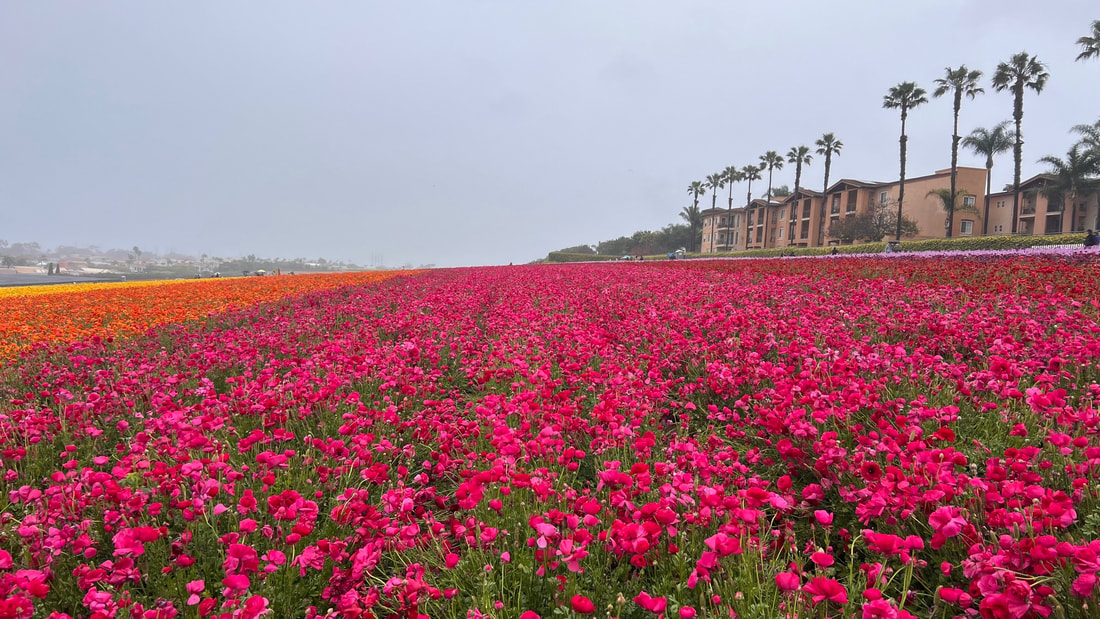 The Flower Fields, Calsbad, California, USA The Spiritual Purpose Behind Our Shifting Passions, Identities, and Paths Have you ever looked back at your life and wondered, “Who was I back then?” Maybe you went through a spiritual phase, a fitness phase, a minimalist phase, a business-building phase, or even a wild-and-free phase. And now, you’re in an entirely different chapter — with different passions, desires, and even a different sense of self. You’re not flaky. You’re evolving. You’re not lost. You’re learning. You’re not inconsistent. You’re in a phase — and that’s not only normal, it’s necessary. Phases Are How the Soul Grows From a spiritual lens, our souls incarnate with a plan — not a rigid blueprint, but a flexible curriculum. The soul doesn’t want sameness, it wants expansion. And how do we expand? Through experience. Each phase you’ve been through — no matter how random or unrelated it seemed at the time — held a piece of your puzzle. Some taught you discipline. Others cracked your heart open. Some helped you build, while others taught you how to let go. From the soul’s perspective, there’s no such thing as “wasted time.” Only lessons. The Psychology of Phases: You’re Wired to Shift Neurologically speaking, we’re not meant to stay in one mode of operation forever. The human brain is shaped by neuroplasticity, which means it constantly adapts, rewires, and reshapes itself based on what you focus on. When you go through a phase, you’re literally forming new neural pathways. You’re reprogramming your mind. This isn’t failure — it’s progress. Yes, society often glorifies “consistency” and “persistence,” but it forgets that adaptability is just as powerful a form of intelligence. The oak tree is sturdy, but the bamboo survives the storm. When to Shift, When to Stay Here’s the part many people get stuck on — how do you know when it’s time to move on, and when you’re just bored or avoiding something uncomfortable? True soul-guided shifts feel expansive, even if they’re scary. Avoidant shifts feel relieving at first but leave you feeling hollow. Some things are meant to be completed. They require your full presence and persistence — not because you’re “supposed to stick with it,” but because there’s a deep soul lesson embedded in the completion, not the escape. The Gift of Many Selves You are not here to be one fixed character your whole life. You’re a multidimensional being having a multidimensional experience. The version of you who loved painting at 20, the one who dove into meditation at 30, and the one now craving simplicity and nature — they’re all you. None of them were wrong or off-path. They were stepping stones. They were phases. They were part of the unfolding. Imagine doing only one thing your entire life — thinking the same, acting the same, dressing the same, believing the same. That’s not consistency. That’s stagnation. The river flows because it moves. A Reminder for the Multi-Passionate Souls So if you’ve ever been made to feel like you “change too much,” here’s your permission slip: You’re not meant to stay the same. You’re meant to stay true. And “true” will look different depending on the season of your soul. The world needs stable builders and daring shapeshifters. We need the ones who master one path for 40 years — and the ones who master the art of reinvention every 5. What matters most is that you’re conscious of your direction. Let your phases be sacred. Let your seasons be teachers. But also learn to listen: Which ones are calling you to finish the lesson? And which ones are whispering: It’s time to begin again? Final Thought: Phases Are Not Detours They’re the journey itself. Just make sure you’re not jumping ship because of discomfort… And you’re not staying out of fear of change. Complete what you came to complete. And when it’s done — don’t be afraid to move on. Because the next phase might just be the one that unlocks everything. 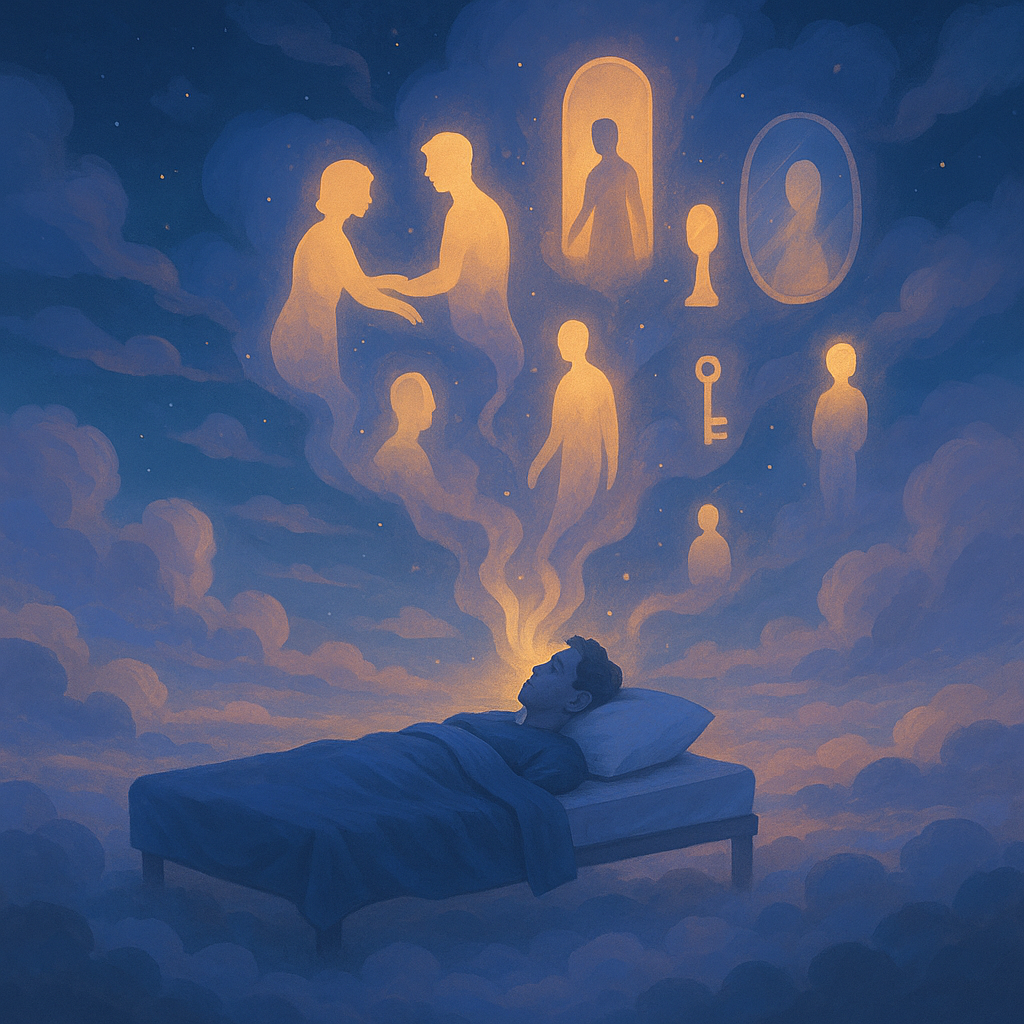 Use your dreams to track your healing, rewiring, and evolution. Here’s a little-known truth: If you behave differently in your dreams than you did in the past… that means you’ve already reconditioned your mind. You’ve rewired your brain on a deep, subconscious level. Why? Because dreams are not random. They are generated by your subconscious, the part of your mind that stores your emotional patterns, core beliefs, traumas, and triggers—long after your conscious mind has moved on. So when a situation shows up again in a dream—an ex, a fear, a fight—and this time you respond calmly or wisely or with power, you didn’t just dream it. You became it. Psychological Insight: Behavior Shift in Dreams = Subconscious Rewiring In behavioral psychology, our reactions are often automatic—especially under stress. Dreams simulate stress, emotion, and choice in surreal ways. If your instinctual response in a dream changes, it means your internal conditioning has shifted. You didn’t “decide” to change in the dream. You just acted. That’s how you know the change is real—it bypassed the thinking mind. Neuroscience Supports This Too
Dreams as a Spiritual Classroom Most things that happen in our dreams will never happen in real life. And that’s what makes them so valuable. They give you emotional simulations—safe environments to re-experience old wounds, future scenarios, or alternate versions of the self. Why did I make that choice in the dream? Would I act the same in real life? Why or why not? Since all the characters are projections of your perception of the world, every interaction is a conversation with yourself. Create a Morning Dream Practice (Before You Forget!)
My Personal Discovery I once watched a movie before bed and dreamed of an ex I hadn’t thought of in years. The dream wasn’t about her—it was about an unresolved emotion the movie triggered. I analyzed the dream the next morning, traced the emotion back to the memory, and felt it fully. That’s when it lifted. I let it go, completely. That one dream gave me more healing than months of overthinking. Final Thought: When your dreams start changing, your healing is already happening. You don’t need proof from the outside world—your subconscious has spoken. Use your dreams like a mirror. Learn from them. Talk to them. Let them show you what still hurts, and celebrate when something no longer does. Because when you act differently in a dream… you are no longer the same.  …and it still might not be good for you. I’ve noticed something strange about life — a pattern I can’t ignore: Almost everything I’ve ever wished for has eventually come true. Sometimes the wish was loud and public. Other times, it was a private whisper, known only to me. But over time, I’ve seen those desires manifest. And not all of them brought joy. People talk about the Law of Attraction, manifestation, vibration — and yes, there’s truth in those. But I want to share what I’ve learned through lived experience, not just ideas: The Psychology of Manifestation When we strongly desire something, we record it in the subconscious. That desire begins to steer our perception, attention, and decisions, even in our dreams — whether we’re aware of it or not. Let’s say I want a BMW M4. Once that desire locks in, every financial move, every opportunity I notice, is filtered through the question: “Will this get me closer to that car?” And eventually… I get it. Not through magic, but through momentum — built from consistent, subconscious alignment. This is how visualization works. It doesn’t bend the universe; it bends you — until your actions match your vision. But here’s the twist… When What You Want Isn’t What You Need I got the car. It was sleek, fast, thrilling. But the more I drove it, the more I could feel something stirring beneath the surface: “If you keep driving like this, something bad is going to happen.” I hadn’t crashed — but I could see the crash in the distance, like a premonition I was creating through habit. And that’s when I had this realization: Just because you get what you want… Doesn’t mean it’s good for you. It’s not the car’s fault. It’s mine. The desire was mine. The reckless energy it activated was already inside me — the car just amplified it. So eventually, I let it go. I traded it in for something more grounded — a hybrid RAV4. Not as fast, but more aligned with the version of me I was becoming — calmer, more conscious, more content. Wanting Wisely Here’s what I’ve learned: The real problem isn’t that we get what we want. The deeper problem is what we want is often based on who we currently are — not who we’re meant to become. Our desires come from our level of consciousness. And as we grow, evolve, and awaken… our desires change. Some of them fall away completely. What once felt like a need becomes laughable. What once felt like success now feels like noise. What once sparkled with temptation now looks hollow. This is the silent gift of spiritual growth: You stop chasing things that no longer match your energy. Desire Isn’t the Enemy — But It Must Be Refined The work is not to suppress desire. The work is to discern it.
Desires born of ego will often be granted — not as rewards, but as lessons. Desires born of awareness tend to arrive with peace — not chaos. The Chinese Farmer Parable There’s a Taoist story I love: A farmer’s son finds a wild horse. The neighbors say, “How lucky!” The farmer replies, “Maybe yes, maybe no.” Later, the son breaks his leg riding the horse. The neighbors say, “How terrible!” The farmer replies again, “Maybe yes, maybe no.” Then war breaks out, and all able young men are drafted — except the son with the broken leg. What looked like a blessing became a curse. What looked like a curse became a blessing. Only time — and consciousness — reveals what’s truly good for us. Final Reflection: Awareness, Desire, Destiny Sometimes we get what we want. Sometimes it hurts. But that hurt is often what wakes us up — and teaches us what we really need. And sometimes, as you evolve, your desires dissolve. You no longer want more — you want less noise. You no longer chase meaning — you embody it. You no longer dream of power — you rest in peace. When your consciousness expands, your desires refine. And eventually, you stop manifesting from craving… And start living from clarity. Closing Thought: Be careful what you wish for — not because you won’t get it, but because you will. And when you do, it will reveal something about you: Who you are. What you value. And whether you’re ready for what you asked for. The real evolution isn’t just getting what you want… It’s becoming someone who only wants what is true.  Have you ever noticed how easy it is to forget what you once believed? We humans have a strange habit I call “Flipping the Coin Syndrome.” We treat our beliefs like a coin in our hand. When we’re staring at one side—the side we now agree with—it feels like the only truth. We forget that the other side even exists. When we learn something new, it’s as if the old belief evaporates. We distance ourselves from it. We disown it. And then, ironically, we often start judging anyone who still holds that old view—as if we were never like them. We forget that the coin still has two sides. Think about it:
In all these cases, the judgment carries a kind of convenient amnesia. It’s as if we want to deny the simple truth that we once stood exactly where they’re standing now. Why do we do this? Perhaps because it’s uncomfortable to hold both sides of the coin in our mind at once. To admit that both perspectives have a reality to them. That our past self wasn’t simply “wrong,” but growing. That the people we’re judging are simply in process, just like we are. We prefer certainty. Simplicity. The security of believing: “Now I’m right. Then I was wrong.” “I’m enlightened. They’re lost.” But reality is rarely so neat. The Cost of Forgetting When we forget the other side of the coin, we don’t just lose empathy for others. We lose humility. We lose the chance to see ourselves as travelers on a path rather than owners of the truth. We also close the door on learning even more. Because what if the side we’re dismissing still has something to teach us? Holding Both Sides What if, instead, we practiced remembering? Remembering where we used to be. Remembering that growth is messy and slow. Remembering that certainty can be a cage. Imagine looking at someone you’re tempted to judge and asking: “What did it feel like to see the world the way they do?” “What did I need when I was there?” “How would I have wanted someone to treat me?” That’s not weakness. It’s wisdom. An Invitation We don’t have to flatten complexity. We can hold it. We can remember both sides of the coin at once. We can let our past selves humble us. We can let other people’s current struggles soften us. We can be firm in our values without forgetting our own evolution. Judgment shrinks the world. Compassion expands it. If you find yourself flipping the coin today, try holding it steady in your palm. Look at both sides. See the whole picture. You might find that truth is bigger than you thought. What’s a belief you’ve changed your mind about? How do you treat people who still hold the view you used to? |
AuthorFeelasoulphy Categories
All
Archives
March 2026
|
 RSS Feed