 How the Brain Processes Trauma, Anxiety, and Insight When the Ego Is Offline Most people misunderstand dreams because they ask the wrong question. They ask, “What does this dream mean?” When the real question is, “What emotion is being processed?” Dreams are not symbolic riddles or prophetic messages. They are the brain’s emotional maintenance system, running in the background when the conscious mind finally gets out of the way. The events in dreams are not clues about your life. They are containers for emotions already active in your waking state. The Core Principle (this changes everything) Dreams prioritize emotion, not narrative. The brain does not dream to tell stories. It dreams to regulate, consolidate, and integrate emotional information that has not been fully processed while awake. The imagery is secondary. The emotion is primary. Fear, anxiety, grief, shame, anticipation, relief--these are the real data. The dream simply borrows whatever images are available to express them. Why Dream Events Are Misleading (and usually irrelevant) Take a common example: fear of heights. A dream might place you:
This does not mean:
What it does mean is simpler and more precise: The brain needed an image that reliably produces fear. The subconscious doesn’t care about accuracy. It cares about emotional resonance. If fear exists in your waking life--fear of uncertainty, exposure, loss, failure--the brain reaches into its memory archive and grabs whatever already knows how to feel like fear. The context is interchangeable. The emotion is not. Trauma: When the Brain Stops Using Metaphors A fair challenge to this model is trauma dreams. Trauma dreams often replay events literally. Does that contradict this theory? No. It strengthens it. In trauma, the emotional charge is so intense and unresolved that the brain does not need substitute imagery. The original memory is already maximally tagged with fear and threat. This aligns with trauma research associated with Bessel van der Kolk, showing that traumatic memories are stored sensory-first, not narrative-first. In short:
Same function. Different intensity. Anxiety Dreams: The Cleanest Proof Anxiety dreams are the clearest validation of this model. Common anxiety dream themes:
None of these are predictions. None of them are symbolic puzzles. They are emotion generators. Anxiety in waking life is often:
The dream is not saying what you’re afraid of. It’s showing that fear is active. Recurring Dreams = Unintegrated Emotion Recurring dreams don’t mean the universe is nagging you. They mean:
When the waking emotional relationship changes, recurring dreams:
No decoding required. Integration ends repetition. The Dream–Emotion Integration Framework This is where theory becomes practice. Step 1: Ignore the Story Do not analyze symbols. Do not Google meanings. Do not intellectualize. The story is noise. Step 2: Identify the Dominant Emotion Ask:
Name one primary emotion. Step 3: Locate It in Waking Life Ask: “Where in my waking life do I feel this same emotion--without the drama?” Look for:
Step 4: Feel It Without Fixing It This is critical. Don’t solve. Don’t explain. Don’t suppress. Let the emotion be felt consciously. This is integration. Step 5: Watch the Dream Change As emotional integration happens:
The system says: “Handled.” Meditation and Dreams Do the Same Job The difference is timing. Dreams:
Meditation:
When you meditate regularly, especially in stillness, emotional processing happens while awake. That’s why:
Meditation doesn’t eliminate dreams. It reduces emotional backlog. The Unified Model
either asleep or still. The Takeaway Dreams are not trying to teach you something mystical. They are trying to finish something emotional. If you chase symbols, you stay confused. If you track emotion, clarity follows. Dreams aren’t messages. They’re maintenance logs. And meditation is how you read them while awake. Guided Meditation: Observing the Emotional Landscape Find a comfortable position. You can sit upright or lie down. Let your body settle. There is nothing you need to accomplish during this meditation. No goal to reach, no state to force. Just observation. Take a slow breath in through your nose. And gently release it. Allow your breathing to return to its natural rhythm. The breath knows what to do without your help. Now bring your awareness to the weight of your body. Notice how gravity holds you effortlessly. Feel the points where your body touches the chair, the floor, or the bed. Let the muscles soften. Your only task is to observe. Now allow your mind to be exactly as it is. Thoughts may appear. Images may appear. Memories may pass through. Let them come and go the way clouds move through the sky. There is no need to chase them or push them away. Simply notice. Now gently bring your attention to your emotional state. Ask yourself quietly: What emotion is present right now? There is no right answer. Sometimes the emotion is clear. Sometimes it is subtle, like a faint background tone. Maybe it is calm. Maybe curiosity. Maybe tension. Maybe something you can’t quite name yet. Just notice. If a recent dream comes to mind, allow it to appear briefly. Do not analyze the story. Let the images fade and focus only on the feeling that was present in the dream. Ask yourself: What emotion was strongest in that dream? Fear, uncertainty, pressure, sadness, anticipation, relief—whatever it was, simply acknowledge it. Now ask gently: Where in my waking life do I feel this same emotion? Do not force an answer. Let the mind wander naturally. It may show you a situation, a conversation, a relationship, or a subtle pressure you’ve been carrying. If nothing appears, that’s perfectly fine. Stay with the emotion itself. Now shift your attention to your body. Where do you feel this emotion physically? Perhaps in the chest. The stomach. The throat. The shoulders. Rest your awareness there. Do not try to change the sensation. Do not try to solve anything. Simply allow the feeling to exist in the light of awareness. This is how emotions integrate—when they are allowed to be seen without resistance. Stay here for a few breaths. Now let the focus soften again. Allow your mind to drift freely. Sometimes when the mind is relaxed and open, insights appear naturally—like a puzzle quietly solving itself. If an understanding arises, simply observe it. If nothing arises, that is also perfect. The mind continues its work even when we are unaware of it. Trust the process. Take a slow breath in. And gently exhale. Begin to feel the space around you again. Notice the room, the air, the sounds around you. When you are ready, slowly open your eyes. Carry this awareness with you. Remember: Your mind processes experiences both day and night. Dreams do it while you sleep. Meditation allows it to happen while you are awake. Both are simply the mind maintaining balance.
0 Comments
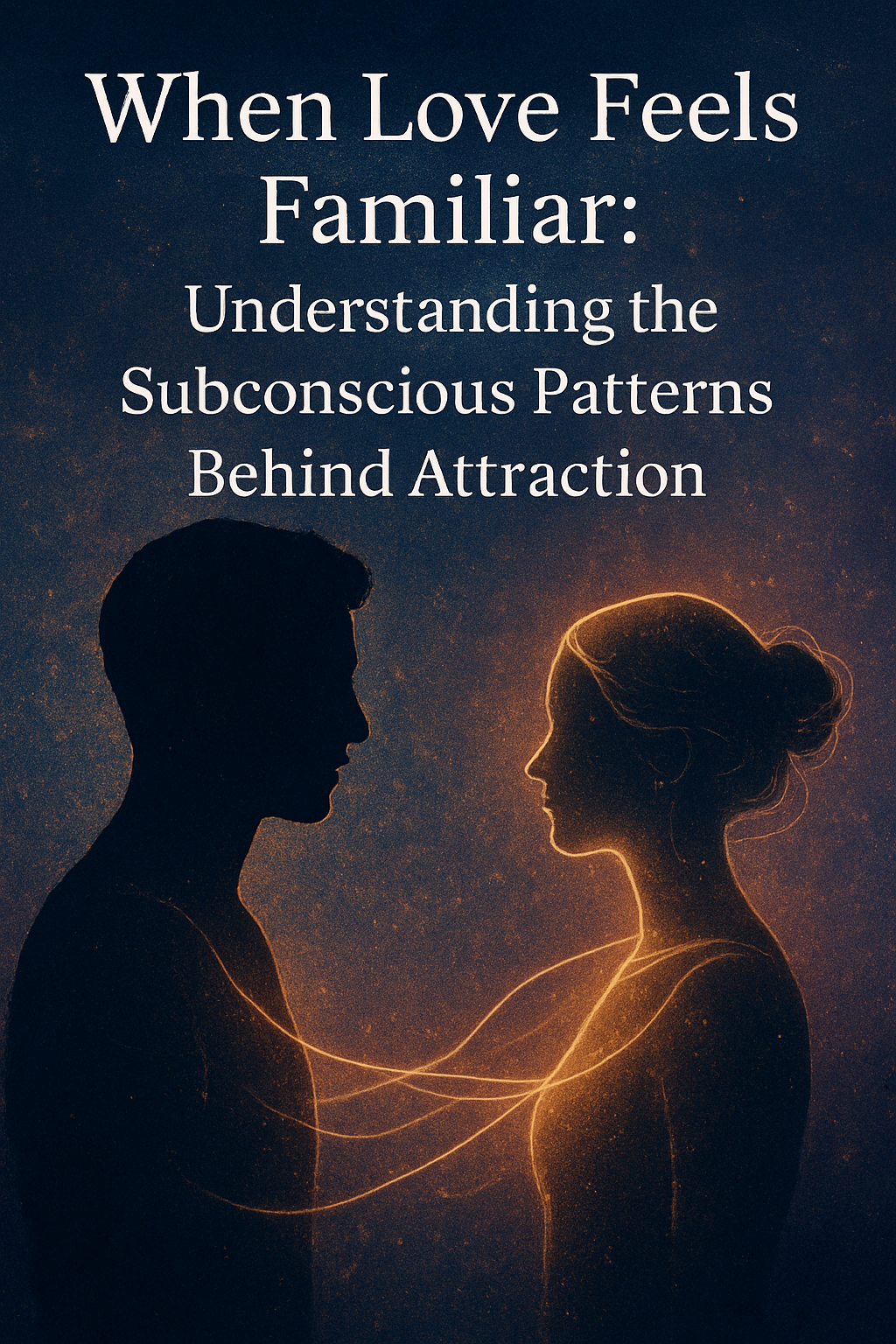 We like to believe we’re fully in control of our decisions — that each choice we make is born of conscious reasoning, logic, or even intuition. But beneath the surface of our awareness lies a vast network of memories, impressions, and emotional imprints that quietly influence almost everything we do. Each personal experience we’ve ever had — especially the emotionally charged ones — leaves a mark in the subconscious mind. Over time, these marks form into conditions, shaping our perceptions, preferences, and even the people we’re drawn to. In truth, we’re not as free as we think. We are, in many ways, walking reflections of our conditioning. Take attraction, for instance. Have you ever wondered why you keep falling for the same type of person, even after realizing that type may not be healthy for you? You may tell yourself, “I’m going to choose differently this time,” yet somehow you end up replaying the same emotional movie with a different actor. That’s not coincidence — that’s your subconscious at work. It already decided what “love” should look and feel like long before your conscious mind got involved. Sometimes, that decision was made in childhood, through observing your parents’ relationship or experiencing certain emotional dynamics yourself. The mind then stores that familiar emotional pattern as comfort, even if it’s toxic. So when you meet someone new, your conscious mind might be scanning for compatibility, but your subconscious is quietly scanning for familiarity. It looks for cues — the tone of their voice, their body language, their scent, their energy. Just one small detail can act as a trigger, instantly recreating the emotional signature of what your subconscious recognizes as “home.” And there it is — that spark. That magnetic pull you can’t explain. You tell yourself it’s chemistry, or fate, or a sign from the universe. But more often than not, it’s a memory disguised as destiny. Let’s paint a real-life example. Imagine a woman named Maya. Her father was emotionally distant but charming in public — the kind of man who could make anyone laugh but never truly opened up at home. Growing up, Maya learned to equate love with earning attention, mistaking emotional unavailability for depth. Years later, she meets Alex — charismatic, magnetic, a little mysterious. From the first conversation, she feels that irresistible connection. “He feels familiar, like we have known each other for years.” she tells her friends, and indeed, he does. Not because he’s her soulmate, but because his mannerisms mirror the emotional rhythm she grew up with. Her subconscious recognizes the dance — a dance of chasing affection, of proving worth — and pulls her toward it. Meanwhile, her conscious mind might whisper, “Be careful, this feels like the last one,” but the subconscious has already taken the wheel. This is how conditioning runs our lives — not out of malice, but out of memory. The subconscious doesn’t care if something is good or bad for you; it only cares if it’s familiar. Breaking the Pattern Awareness is the only true liberation. But awareness doesn’t happen when we’re constantly exposed to triggers. That’s why changing environments can be so powerful. When you step away from the people, places, and patterns that keep stimulating old emotional programs, you give yourself a moment of silence — a space where you can finally hear your own thoughts. In that quiet, the pattern reveals itself. You start to notice what your subconscious reacts to — the type of energy you’re drawn to, the tones that stir emotion, the circumstances that make you feel small or alive. Changing environments doesn’t erase the conditioning, but it weakens its grip. It gives you the breathing room to see it clearly — to respond rather than react. Yet real transformation happens only when you turn toward your triggers, not away from them. When you observe a familiar pull arising and ask, “Why does this feel magnetic to me?” you bring what was hidden into the light. Because here’s the truth: once a trigger is fully understood, it loses its power. What was once automatic becomes a conscious choice. The Path Forward Healing, then, isn’t about avoiding the same mistakes — it’s about understanding why those mistakes felt right to begin with. The subconscious doesn’t need to be destroyed; it needs to be integrated. Its old programs dissolve in the light of awareness, in patient self-observation, and in choosing differently even when the old pattern calls your name. So the next time you feel that unexplainable attraction — that lightning bolt that feels like destiny — pause. Take a breath. Ask yourself: Does this person feel new, or do they feel familiar? If it feels like déjà vu, it might not be love calling. It might be your subconscious asking for closure. And if you can see that clearly, without judgment, you’ve already taken the first step toward freedom — not just from others, but from the invisible forces that once guided your every choice. Reflection Prompts for Awareness Take a few quiet minutes, maybe after meditation or journaling, and reflect on these questions. Don’t rush the answers — let them rise naturally from within you.
🕊️ Awareness is not about judging who you were — it’s about understanding why you were that way. Once you see the roots clearly, the soil of your mind becomes fertile for something new to grow. 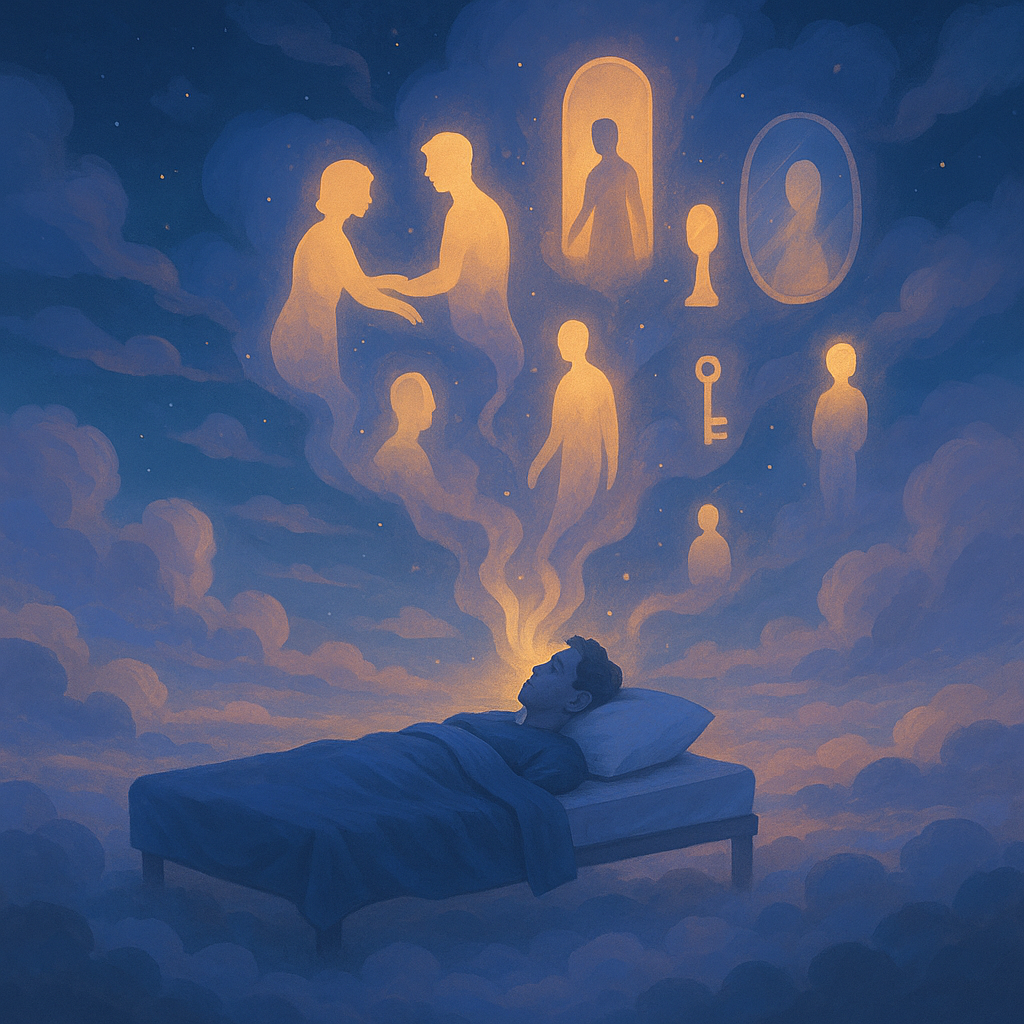 Use your dreams to track your healing, rewiring, and evolution. Here’s a little-known truth: If you behave differently in your dreams than you did in the past… that means you’ve already reconditioned your mind. You’ve rewired your brain on a deep, subconscious level. Why? Because dreams are not random. They are generated by your subconscious, the part of your mind that stores your emotional patterns, core beliefs, traumas, and triggers—long after your conscious mind has moved on. So when a situation shows up again in a dream—an ex, a fear, a fight—and this time you respond calmly or wisely or with power, you didn’t just dream it. You became it. Psychological Insight: Behavior Shift in Dreams = Subconscious Rewiring In behavioral psychology, our reactions are often automatic—especially under stress. Dreams simulate stress, emotion, and choice in surreal ways. If your instinctual response in a dream changes, it means your internal conditioning has shifted. You didn’t “decide” to change in the dream. You just acted. That’s how you know the change is real—it bypassed the thinking mind. Neuroscience Supports This Too
Dreams as a Spiritual Classroom Most things that happen in our dreams will never happen in real life. And that’s what makes them so valuable. They give you emotional simulations—safe environments to re-experience old wounds, future scenarios, or alternate versions of the self. Why did I make that choice in the dream? Would I act the same in real life? Why or why not? Since all the characters are projections of your perception of the world, every interaction is a conversation with yourself. Create a Morning Dream Practice (Before You Forget!)
My Personal Discovery I once watched a movie before bed and dreamed of an ex I hadn’t thought of in years. The dream wasn’t about her—it was about an unresolved emotion the movie triggered. I analyzed the dream the next morning, traced the emotion back to the memory, and felt it fully. That’s when it lifted. I let it go, completely. That one dream gave me more healing than months of overthinking. Final Thought: When your dreams start changing, your healing is already happening. You don’t need proof from the outside world—your subconscious has spoken. Use your dreams like a mirror. Learn from them. Talk to them. Let them show you what still hurts, and celebrate when something no longer does. Because when you act differently in a dream… you are no longer the same.  …and it still might not be good for you. I’ve noticed something strange about life — a pattern I can’t ignore: Almost everything I’ve ever wished for has eventually come true. Sometimes the wish was loud and public. Other times, it was a private whisper, known only to me. But over time, I’ve seen those desires manifest. And not all of them brought joy. People talk about the Law of Attraction, manifestation, vibration — and yes, there’s truth in those. But I want to share what I’ve learned through lived experience, not just ideas: The Psychology of Manifestation When we strongly desire something, we record it in the subconscious. That desire begins to steer our perception, attention, and decisions, even in our dreams — whether we’re aware of it or not. Let’s say I want a BMW M4. Once that desire locks in, every financial move, every opportunity I notice, is filtered through the question: “Will this get me closer to that car?” And eventually… I get it. Not through magic, but through momentum — built from consistent, subconscious alignment. This is how visualization works. It doesn’t bend the universe; it bends you — until your actions match your vision. But here’s the twist… When What You Want Isn’t What You Need I got the car. It was sleek, fast, thrilling. But the more I drove it, the more I could feel something stirring beneath the surface: “If you keep driving like this, something bad is going to happen.” I hadn’t crashed — but I could see the crash in the distance, like a premonition I was creating through habit. And that’s when I had this realization: Just because you get what you want… Doesn’t mean it’s good for you. It’s not the car’s fault. It’s mine. The desire was mine. The reckless energy it activated was already inside me — the car just amplified it. So eventually, I let it go. I traded it in for something more grounded — a hybrid RAV4. Not as fast, but more aligned with the version of me I was becoming — calmer, more conscious, more content. Wanting Wisely Here’s what I’ve learned: The real problem isn’t that we get what we want. The deeper problem is what we want is often based on who we currently are — not who we’re meant to become. Our desires come from our level of consciousness. And as we grow, evolve, and awaken… our desires change. Some of them fall away completely. What once felt like a need becomes laughable. What once felt like success now feels like noise. What once sparkled with temptation now looks hollow. This is the silent gift of spiritual growth: You stop chasing things that no longer match your energy. Desire Isn’t the Enemy — But It Must Be Refined The work is not to suppress desire. The work is to discern it.
Desires born of ego will often be granted — not as rewards, but as lessons. Desires born of awareness tend to arrive with peace — not chaos. The Chinese Farmer Parable There’s a Taoist story I love: A farmer’s son finds a wild horse. The neighbors say, “How lucky!” The farmer replies, “Maybe yes, maybe no.” Later, the son breaks his leg riding the horse. The neighbors say, “How terrible!” The farmer replies again, “Maybe yes, maybe no.” Then war breaks out, and all able young men are drafted — except the son with the broken leg. What looked like a blessing became a curse. What looked like a curse became a blessing. Only time — and consciousness — reveals what’s truly good for us. Final Reflection: Awareness, Desire, Destiny Sometimes we get what we want. Sometimes it hurts. But that hurt is often what wakes us up — and teaches us what we really need. And sometimes, as you evolve, your desires dissolve. You no longer want more — you want less noise. You no longer chase meaning — you embody it. You no longer dream of power — you rest in peace. When your consciousness expands, your desires refine. And eventually, you stop manifesting from craving… And start living from clarity. Closing Thought: Be careful what you wish for — not because you won’t get it, but because you will. And when you do, it will reveal something about you: Who you are. What you value. And whether you’re ready for what you asked for. The real evolution isn’t just getting what you want… It’s becoming someone who only wants what is true.  Carcamping by A Radiata Pine Tree in the fog off Highway 1 by Big Sur, California, USA Have you ever woken up with a strange but powerful thought, a feeling that something just clicked, or a vivid image that lingered for hours? That’s not random. That’s Theta. And Theta is the doorway. It’s the portal between your conscious mind and the vast ocean of your subconscious. It’s where healing begins, memories surface, and your soul whispers truths you may not hear in the noise of the day. What Are Theta Brainwaves? Theta brainwaves operate at 4 to 8 Hz, and are most active during:
In this state, you are relaxed but not unconscious. You are suggestible but still present. It’s fertile ground for inner work, intuition, and spiritual connection Why Theta Matters Spiritually and Psychologically Theta is where we meet:
In this liminal state, the conscious mind loosens its grip. Your subconscious takes the stage. This is why theta is often associated with dreamwork, deep healing, and mystical visions. In many indigenous cultures, dreams are considered more real than waking life — a realm where the soul travels and speaks. Pre-Sleep and Early Morning States: The Hidden Gold Two of the most potent windows for accessing Theta are: 1. Just Before Falling Asleep (Hypnagogia) This is when your brain transitions from beta (alert) to alpha (relaxed), then into theta. It’s the “twilight zone” where images flash, memories drift in, and symbolic insights arise. Practice: Instead of scrolling or watching something, lie in silence and observe what thoughts, visuals, or messages come through. You’re slipping into the soul’s frequency. Sleep tip: If you're having a hard time falling asleep, try letting your mind naturally create a series of random images, one after another. Often, this can help you drift off within minutes. This technique mimics the way we dream—moving from one random scene to the next without pause. By doing this, you're essentially allowing your subconscious mind to take over and gently ease you into a dream state. 2. Just After Waking Up You haven’t fully left the theta state yet. This is the moment when you’re most open, intuitive, and unguarded — before the rational mind boots up. Practice: Lie still, reflect on your dreams or first thoughts, and write them down. You’re catching the echoes of the subconscious before they dissolve. Journaling in Theta: Soul-Deep Integration Journaling during these windows isn’t just for remembering dreams — it’s for integration. You’re documenting raw material from the subconscious. Ask:
You don’t need to interpret every symbol. Often, just recording it anchors the insight into waking consciousness. You can also use AI to analyze your dreams. This has helped me gain deeper insights into their meanings and has even led to personal breakthroughs. Why Theta Is the Sweet Spot for Reprogramming Your subconscious mind runs about 95% of your daily behavior. It holds the beliefs you absorbed as a child — and the ones still shaping your life today. Theta is the state where these beliefs are accessible and changeable. That’s why hypnotherapy, guided meditation, and affirmations are most effective during or just before sleep. Use this time to plant new beliefs:
Repeated in the theta state, these aren’t just affirmations — they become rewrites in the code of your mind. Using Theta for Deep Healing The subconscious doesn’t just hold beliefs. It stores emotions, energy, trauma, and intuition. Theta allows you to:
Healing in Theta is non-linear. It’s not logical. It’s emotional. It’s symbolic. It’s spiritual. And it’s real. Final Thought: The Voice in the Silence In the theta state, your soul speaks softly. Not through thoughts, but through images. Emotions. Sensations. Symbols. You don’t need to force understanding. Just listen. Record. Trust. Because this is the realm where your soul becomes your guide, your dreams become your teachers, and your beliefs become changeable. Theta is not the absence of awareness. It’s where your deepest awareness lives. Read: Part 1: The Neuroscience of Epiphanies: Why Sudden Realizations Can Change Your Life Instantly Part 2: Relax to Receive - Why the Alpha Brainwave Is the Gateway to Spiritual Insight Part 3: Tapping the Divine Frequency - Gamma, Spiritual Downloads, and the Mystical Mind Part 5: Breaking Free from Mental Noise - Escapting Beta Overdrive to Find Peace Part 6: The State Shifter - How to Move Between Brainwave States to Master Your Mind & Life  A bird resting on top of the tree at Montage Laguna Beach, Laguna, California, USA In a noisy world that glorifies mental stimulation and constant doing, relaxation has become a radical act. But it’s in this relaxation—this soft, alert stillness—that your most profound insights begin to emerge. Welcome to the alpha brainwave state: the fertile ground for creativity, intuition, and spiritual downloads. What Are Alpha Brainwaves? Alpha waves are brain frequencies between 8–12 Hz, most active when you’re:
This is the sweet spot between wakefulness and sleep, between effort and surrender. It’s not passive—it’s receptive. And it opens a bridge between your conscious and subconscious mind. Why Alpha Unlocks Spiritual and Creative Flow When you’re in alpha:
This is why many spiritual practices—like meditation, prayer, journaling, or walking in nature—naturally bring you into this state. You’re no longer in “problem-solving mode” (beta). You’re available for something deeper. Alpha is the portal through which insight travels. The space that invites a gamma burst of realization. How to Enter the Alpha State in Daily Life You don’t need a retreat, incense, or silence to access alpha. You just need moments of presence, where the conscious mind lets go. Here are simple, everyday ways to drop into alpha: 1. Hot Shower Meditation Let hot water run down the back of your head and neck. This stimulates the parasympathetic nervous system, relaxing the brain and body while quieting the mind. You’re not just cleaning your body—you’re resetting your brain. Many people get their best ideas in the shower for this very reason. 2. Driving in Silence If you’re familiar with the route, your conscious mind goes on autopilot. This opens up mental bandwidth for the subconscious mind to surface. Ever noticed how deep insights hit you while driving alone on a quiet road—or stuck in traffic? That’s alpha working through stillness and rhythm. 3. Early Morning Stillness (Alpha on Wake-Up) When you first wake up, you’re naturally in alpha/theta. Avoid grabbing your phone. Instead, lie still, observe your thoughts, and ask questions. This is one of the most spiritually potent moments of the day. 4. Nature Walks Without Your Phone Let your senses guide you. No music. No distractions. Just pure presence. Nature entrains the body and mind to calm, rhythmic patterns—instantly inducing alpha. 5. Eating Alone in Silence Put your phone away. Be fully present with the textures, flavors, and sensations of your meal. This deepens awareness and reconnects you with your senses. Some even compare it to the slow, heightened mindfulness of eating edibles—without the altered state. You become the observer, not just the consumer. 6. Free Journaling or Brain Dumping Let your thoughts flow without judgment or editing. When the conscious mind stops filtering, deep truths rise from below. This is often when insight, emotional clarity, and spiritual messages come through. 7. Brushing Teeth or Doing Chores in Silence Doing mundane tasks like brushing teeth, folding laundry, or washing dishes without background noise occupies the conscious mind just enough to let the subconscious seep through. Think of it as keeping your ego busy so your soul can sneak in. 8. Bathroom Breaks Without Your Phone Use bathroom time as a mini meditation. Avoid distractions unless you’re jotting down a note that came through. These “micro-moments of stillness” allow your brain to reset and reconnect. 9. Lo-fi or Alpha Binaural Beats Listening to music in the 8–12 Hz range can entrain your brain to alpha waves. Great during journaling, meditation, or light creative work. What Blocks the Alpha State?
Alpha can’t be forced—it must be invited. It thrives in space, ease, and quiet focus. Final Thought “Alpha is where your soul can finally get a word in.” We often search for answers with the volume turned up too loud. But the voice of truth is quiet—and it speaks when you’re still. Give your mind space to breathe. The insight you’re looking for is already waiting… behind the noise. Read: Part 1: The Neuroscience of Epiphanies: Why Sudden Realizations Can Change Your Life Instantly Part 3: Tapping the Divine Frequency - Gamma, Spiritual Downloads, and the Mystical Mind Part 4: The Portal of Dreams - How Theta Brainwaves Reveal Your Soul's Voice Part 5: Breaking Free from Mental Noise - Escapting Beta Overdrive to Find Peace Part 6: The State Shifter - How to Move Between Brainwave States to Master Your Mind & Life Part 1: The Neuroscience of Epiphanies: Why Sudden Realizations Can Change Your Life Instantly5/17/2025  Redwood Trees at Land of Medicine Buddha, Soquel, California, USA Have you ever had a moment where everything just clicked? A realization so powerful it felt like the universe grabbed your shoulders and shouted, “Wake up! This is what you’ve been missing!” Maybe it was about your purpose. A relationship. A pattern you finally saw clearly for the first time. In that moment, you didn’t just understand something—you felt it in your bones. You were energized, maybe even overwhelmed. But most of all, you felt pulled to act. Not tomorrow. Not next week. But right now. That, my friend, is the power of an epiphany. And there’s a fascinating mix of spiritual alignment and brain chemistry happening behind the scenes when it occurs. What Actually Happens During an Epiphany? Science has finally caught up with what mystics and meditators have known for centuries: - Real insights are not just intellectual—they are neural, emotional, and energetic. Here’s what your brain is actually doing during a breakthrough moment: 1. You Enter a Relaxed “Alpha” Brainwave State (8–12 Hz) This is the incubation phase. It happens when you’re walking in nature, meditating, daydreaming, or simply doing nothing. Your mind is relaxed and open. It’s not busy solving or forcing—it’s just being. In this alpha state, the brain suppresses surface-level noise and opens to deeper, more creative connections. This is why so many people say they get their best ideas in the shower. - Alpha is the fertile soil where insight begins to grow. 2. A Sudden Burst of Gamma Waves (30–80 Hz) Then it happens: the famous “A-ha!” moment. Your brain rapidly links previously unconnected ideas, lighting up with a gamma burst. It’s as if puzzle pieces scattered across your life suddenly snap together. This is the moment where insight, intuition, and higher consciousness converge. Gamma is the flash of clarity—the epiphany itself. 3. Dopamine Says: “This Is Important—Do Something Now” This gamma burst is immediately followed by a release of dopamine, the brain’s motivation chemical. Dopamine doesn’t just feel good. It tags this moment as significant and urgent. That’s why your epiphany often feels so compelling—it’s chemically driving you to act now, not later. But here’s the catch: That window is short. If you don’t act, capture, or commit to something right away, the insight fades. It goes back into the subconscious like a dream you didn’t write down. How to Turn Epiphanies Into Lasting Change Breakthroughs are magical—but they’re also fleeting. To make them count, you need a system to catch and anchor them in your daily life. Here’s a simple 4-step method to do just that: 1. Create Space for Insight (Alpha State)
When your mind quiets, your soul speaks. 2. Catch the Spark (Gamma Burst) Keep a system ready:
The moment you feel the insight, write it down. Don’t worry about polishing it—just capture the energy and essence. 3. Act While Dopamine Is High Make a micro-commitment:
This is how breakthroughs become momentum. 4. Review at Night (Theta Integration) Before bed, revisit your insight. This taps into the theta brainwave state, ideal for memory and emotional consolidation. You’re reinforcing the epiphany as part of your identity and wiring it into your subconscious. Why This Matters—Spiritually and Scientifically In spiritual language, we call these moments:
In neuroscience, they’re:
It’s the same phenomenon through different lenses. You’re accessing higher consciousness and rewiring your brain at the same time. Final Thought Transformation doesn’t always come through effort. Sometimes it comes in a single moment of clarity—when you’re still enough to hear the truth. So the next time that lightning bolt of awareness strikes—don’t brush it off. Pause. Capture it. Act on it. That’s not just a thought—it’s a message from your higher self saying: “This is the moment. Go.” Reflect & Share What’s one insight or epiphany that changed your life? Leave a comment below or journal about it today. Let your breakthrough become someone else’s lightbulb. Read: Part 2: Relax to Receive - Why the Alpha is the Gateway to Spiritual Insight Part 3: Tapping the Divine Frequency, Gamma, Spiritual Downloads, and the Mystic Mind Part 4: The Portal of Dreams - How Theta Brainwaves Reveal Your Soul's Voice Part 5: Breaking Free from Mental Noise - Escapting Beta Overdrive to Find Peace Part 6: The State Shifter - How to Move Between Brainwave States to Master Your Mind & Life  Sunset at James Lick Observatory, Mt. Hamilton, San Jose, California, USA Our minds are a complex system of two primary components: the conscious and the subconscious. While they work together seamlessly, each has distinct roles depending on the state we are in—awake, asleep, or meditating. Understanding this dynamic can help us tap into deeper insights and maximize our mental potential. The Roles of Conscious and Subconscious Minds Conscious Mind: • The seat of focus, logic, and deliberate thought. • Active during tasks requiring attention, problem-solving, and decision-making. Subconscious Mind: • A vast memory bank, storing all experiences, emotions, and information. • Operates automatically, running habits, retrieving memories, and processing emotions in the background. How the Two Minds Interact 1. In Daily Life: • When awake and focused, the conscious mind leads, while the subconscious supports by providing background data (e.g., recalling memories or automatic skills). • Example: Driving a familiar route while consciously thinking about other things relies heavily on the subconscious. 2. In Sleep and Dreams: • During sleep, the subconscious dominates, creating dreams by piecing together fragmented memories. • The conscious mind typically takes a backseat unless you experience lucid dreaming, where awareness emerges within the dream state. 3. In Relaxed States: • When relaxed, such as in the alpha brainwave state, the subconscious becomes more active. This is why daydreaming and wandering thoughts occur effortlessly. • The conscious mind shifts to an observer role, which allows for contemplation and creative connections. Meditation: A Bridge Between the Two Minds Meditation offers a unique opportunity to balance the two minds: • The conscious mind quiets down, stepping into the role of a calm observer. • The subconscious becomes more accessible, revealing forgotten memories or making unexpected connections. In this state, insights often emerge because the subconscious processes information in a non-linear way, free from the constraints of conscious logic. Writing down these realizations after meditation ensures they don’t fade away. Epiphanies and Creative Breakthroughs Ever had a great idea seemingly out of nowhere? That’s the result of your subconscious working in the background. Even when the conscious mind moves on to something else, the subconscious continues processing information. When the two minds synchronize, this background processing can deliver surprising insights or solutions. This explains why moments of clarity often occur during relaxed states, like taking a walk, showering, or meditating. The Subconscious as a Memory Bank The subconscious is like a hard drive—it stores everything, but it isn’t always organized. • Dreams, for instance, can feel chaotic because the subconscious tries to link unrelated memories. • Without conscious intervention, it can seem as if the subconscious has “a mind of its own,” creating unexpected scenarios that even surprise us. By taking time to reflect, meditate, or write down these thoughts, we can give structure to this vast storehouse of information. Practical Takeaways 1. Meditate Regularly: • Use meditation to quiet the conscious mind and gain access to subconscious insights. • Don’t try to analyze during meditation—just observe. 2. Write Things Down: • Whether it’s a dream, a random thought, or a moment of clarity, writing helps organize subconscious material for conscious analysis later. 3. Leverage Relaxed States: • Activities like walking, daydreaming, or light meditation allow the subconscious to take the lead. These moments often spark creativity or problem-solving. 4. Trust the Process: • Understand that the subconscious works in the background, even when you’re not aware of it. By consciously creating time for relaxation, you open the door to unexpected insights. Conclusion The interplay between the conscious and subconscious mind is a remarkable system of balance. By learning how to work with both—letting the subconscious process while the conscious observes and organizes—we can achieve greater clarity, creativity, and self-awareness. 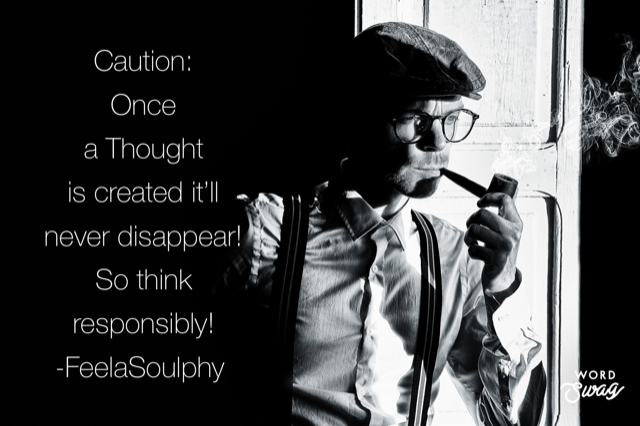 Once a Thought is created it’ll never disappear. It might seem that as time goes by it’s forgotten, but in reality it’s filed and stored away deep in your subconscious mind. It’ll reappear and resurface when it’s needed and it’s always running in the background like a smart phone app. It affects how your phone functions in a way you’d never imagine. It drains your battery even if you never use it. It’s also on demand a second away when you are in need for it. Therefore, manage your thoughts well and be careful what you think about so you can be responsible to your future self. Be in an environment where it helps you to create positive thoughts. Train yourself to think or rethink positively! - FeelaSoulphy |
AuthorFeelasoulphy Categories
All
Archives
March 2026
|
 RSS Feed