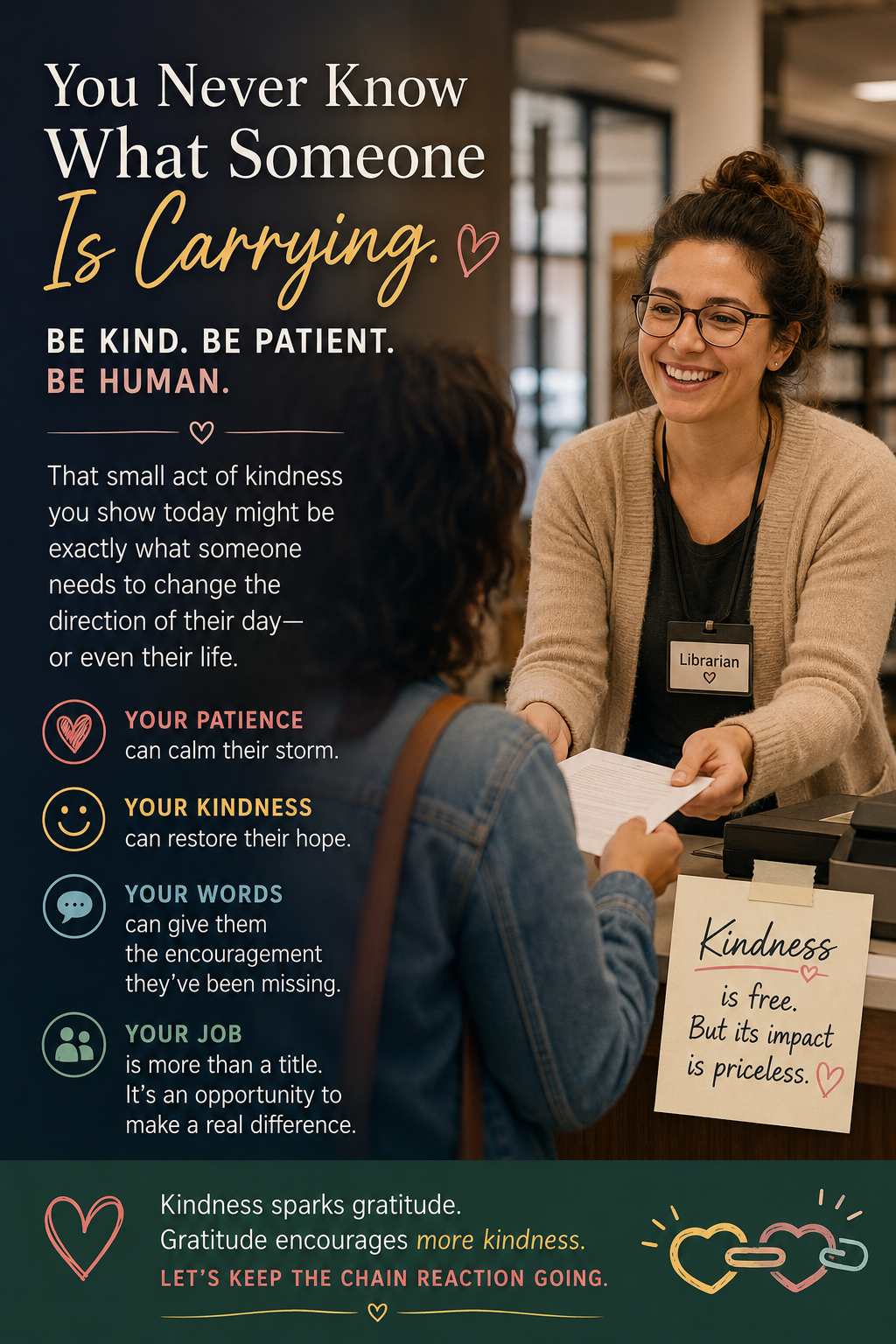
 Yesterday morning, I answered a phone call from my mom.
The moment I picked up, she started yelling. Before I even had a chance to process what was happening, my body reacted. Years of childhood conditioning surfaced instantly. By the time the call ended, I was carrying anger, frustration, and tension. I drove to the library to print some documents. I noticed I was driving faster than usual. I was impatient with slow drivers. My mind was no longer in the present—it was still trapped in that phone call. Then something unexpected happened. The librarian, Helen, helped me print everything I needed. She patiently answered my questions, showed me services I didn’t even know the library offered, and never once made me feel like I was inconveniencing her. She wasn’t trying to change my day. She was simply doing her job. But as I sat in my car afterward, I realized something profound. She didn’t just help me print documents. She fulfilled my emotional needs. In that moment, what I needed most wasn’t faster service or better technology. I needed another human being to meet me with patience, kindness, and gentleness. Without realizing it, she interrupted the emotional pattern I had been stuck in all morning. She reminded me that not everyone I encounter is going to add to my pain. Some people quietly help carry it. I was so grateful that I went back inside to thank her again. She happened to be on her break, so I waited. After about thirty minutes(it's hard to show our gratitude when we are in the hurry.), the manager came out. I told the manager that I had been having a difficult morning and that Helen had made it better simply by being kind and patient. I wanted them to know how important her work really was. As I drove away, another realization came to me. Every one of us has a job that extends far beyond our job title. A financial advisor doesn’t just help people with money. A doctor doesn’t just treat illness. A teacher doesn’t just teach. A cashier doesn’t just scan groceries. A librarian doesn’t just help people find books or print documents. Every day, we meet people carrying burdens we cannot see. Someone may have just lost a loved one. Someone may be overwhelmed with anxiety. Someone may be struggling financially. Someone may be reliving old wounds from a conversation they had only minutes earlier. We rarely know what another person is carrying. Our knowledge and skills are important. But our humanity is even more important. Sometimes the most valuable thing we give someone isn’t our expertise. It’s our patience. Our kindness. Our willingness to make another human being feel seen. One small interaction can interrupt someone’s downward spiral. It can change the direction of their day. Sometimes, it can even change the direction of their life. There’s another lesson I took away from this experience. When someone makes a difference in your life, tell them. Don’t assume they already know. I went back because I wanted Helen to know her kindness mattered. I wasn’t just thanking her—I wanted to encourage her to keep being exactly who she was. Who knows, maybe she was going to need—or had needed—my feedback to make her day! We often underestimate the power of sincere feedback. When we tell someone, “Thank you for your patience,” or, “You made my day,” we’re reinforcing the very qualities that make this world a better place. Kindness deserves to be acknowledged. Encouragement helps kindness grow. Think about a child growing up. A child who is consistently encouraged and appreciated is more likely to develop confidence and believe in themselves. When those moments are missing, some people carry self-doubt into adulthood and spend years searching for the validation they never received. Adults aren’t so different. We all need to know that what we do matters. Your words of appreciation might be exactly what someone needs to continue showing up with compassion tomorrow. Helen interrupted my emotional spiral with kindness. I tried to interrupt her day with gratitude. Kindness sparked gratitude, and gratitude encourages more kindness. That’s how compassion spreads—not through grand gestures, but through ordinary people who choose to acknowledge the good they see in one another. Never underestimate the impact of simply being kind. Every day, we have the choice to make someone’s day or break their day. We can be a positive trigger or a negative trigger, especially with the ones that are close to us. Which one do you want to be? You may think you’re just doing your job. Someone else may remember it as the moment they needed it most.
0 Comments
 Bay Bridge, San Francisco-Oakland, California, USA Growing Up Without Boundaries: My Personal Story Growing up in an authoritative household, I never really had the space to explore my own preferences. My mother made the decisions for me—what I should do, feel, and want. There was no room for my opinions. That pattern shaped me into someone incredibly easygoing—too easygoing, to the point where I didn’t know where I ended and others began. I became someone who just went along with whatever others wanted, thinking that was the path of least resistance. And sure, on one hand, it made me flexible and able to enjoy almost any situation. But the cost? I lost touch with what I wanted. The Cost of Not Having Boundaries I struggled with making decisions. I’d let others take the lead—not out of respect, but out of habit and fear of conflict. I didn’t speak up when something bothered me. And when people—often unknowingly—crossed lines I didn’t even know I had, I’d silently stew. I’d build resentment. And then, instead of addressing the issue, I’d retreat. I became passive-aggressive, slowly backing out of relationships without ever really explaining why. What Healthy Boundaries Really Mean It took me years to realize: boundaries aren’t walls to keep people out. They’re bridges to help others meet us where we are. But to even build that bridge, we have to know where we stand. Boundaries Are a Form of Self-Love and Self-Respect One of the most powerful truths I’ve learned is this: boundaries are not just about protecting yourself from others. They are acts of self-love and self-respect. When you set a boundary, you are sending a message to yourself and the world: "I matter. My feelings, my needs, and my energy deserve to be honored." This is not selfish—it’s sacred. Without boundaries, we give too much, we say yes when we mean no, we bend until we break. And slowly, we disconnect from ourselves. But when we start setting healthy limits, we rebuild that connection. We begin to treat ourselves the way we want others to treat us. And something beautiful happens: when we respect ourselves, others learn to respect us too. Setting boundaries isn’t just about making your life more peaceful—it’s about making your relationships more authentic. When people know what you need and where you stand, they can engage with you honestly, without guessing or overstepping. It’s not only a gift to yourself; it’s a gift to everyone you love. Loving yourself enough to set boundaries is one of the most courageous and compassionate things you can do—not just for you, but for everyone around you. Why Self-Awareness Comes First The first step to creating healthy personal boundaries is self-awareness. We can’t communicate what we need until we understand what makes us feel seen, respected, and safe. Sometimes, what we call a boundary is actually a wound—a sore spot from the past. If someone’s words or actions offend us, it’s worth asking: is this about them, or is it a reflection of something I haven’t healed yet? When we don't do that inner work, we risk setting boundaries based on fear, not freedom. We might end up pushing away the very experiences and people who could help us grow. Examples of Healthy vs. Unhealthy Boundaries That’s why I believe in healthy boundaries—those that are rooted in clarity, not confusion. Here are a few examples: Unhealthy Boundary: “I never let anyone get close to me because I don’t want to be hurt.” Healthy Boundary: “I take my time getting to know people and only open up when I feel emotionally safe.” Unhealthy Boundary: “If someone says something I don’t like, I cut them off immediately.” Healthy Boundary: “If something upsets me, I take a moment to reflect and then have a calm conversation about it.” Unhealthy Boundary: “I let people do whatever they want so I don’t cause drama.” Healthy Boundary: “I express my needs clearly and respectfully, knowing that honest communication builds stronger connections.” How to Communicate Boundaries Effectively Once you've done the inner work and become clear on what your boundaries are, the next step is learning how to express them in a way that is both firm and compassionate. Here are a few proven methods for communicating personal boundaries: 1. Use "I" Statements This helps reduce defensiveness and keeps the focus on your feelings.
2. Be Direct, Not Aggressive Kindness and firmness can coexist. Express your needs without attacking.
3. Set Clear Consequences Boundaries without consequences are just suggestions.
4. Repeat and Reinforce You might have to restate your boundary more than once.
Final Thoughts: Practice Makes Progress Boundaries aren’t about creating distance. They’re about creating clarity. They let others know how to love and respect us. And they teach us how to love and respect ourselves. So if you’ve struggled with boundaries like I have, be gentle with yourself. You’re not broken. You’re learning. Boundaries aren’t something you suddenly master—they’re something you practice. And the more you practice, the more your relationships—starting with the one you have with yourself—begin to thrive. 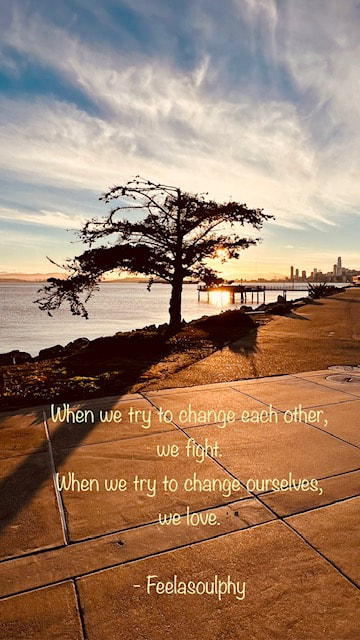 When we try to change each other, we fight. When we try to change ourselves, we love. - Feelasoulphy 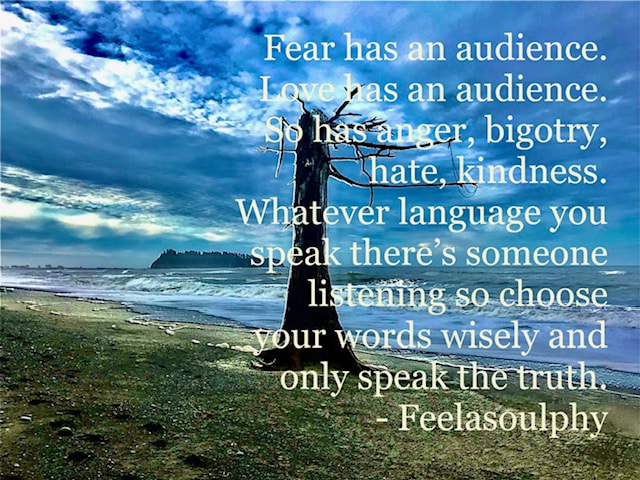 Fear has an audience. Love has an audience; so has anger, bigotry, hate, kindness. Whatever language you speak there’s someone listening so choose your words wisely and only speak the truth. - Feelasoulphy 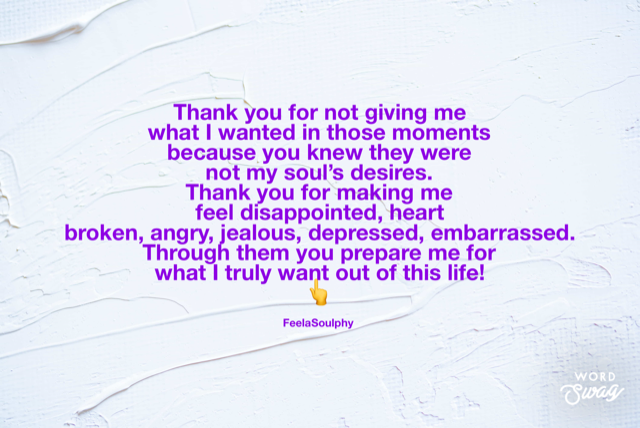 Thank you for not giving me what I wanted in those moments because you knew they were not my soul’s desires. Thank you for making me feel disappointed, heart broken, angry, jealous, depressed, embarrassed. Through them you prepare me for what I truly want out of this life! - FeelaSoulphy 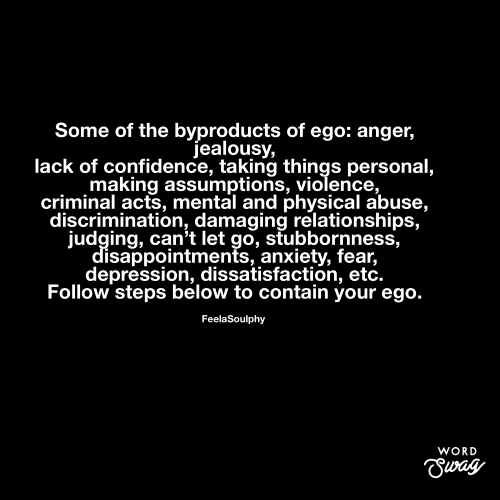 Some of the byproducts of ego: anger, jealousy, lack of confidence, taking things personal, making assumptions, violence, criminal acts, mental and physical abuse, discrimination, damaging relationships, judging, can’t let go, stubbornness, disappointments, anxiety, fear, depression, dissatisfaction, etc. The more we feed our ego, the less peace and joy we have in life. If you feel that your ego has caused you sufferings and you want to liberate yourself from the everlasting Ego-System to find peace in life, try these steps to contain your ego: 1. Understand what ego is. Anything you say and do that does not result in a positive outcome for others and it's only for your selfish fulfillment then it's very likely originated from ego. When you choose love instead of fear and do and say everything with the best intent for the highest good then that is from your higher self. 2. Be aware of your own ego and others’ ego. You are not the only one that has an ego. Egos recognize other egos so your ego can trigger other people's egos. Do not engage with other people's ego because it will also trigger yours, which will turn into an ego-battle that no one ends up winning but the ego. 3. Separate your ego from your higher self. If you follow the first 2 steps, at some point your higher self will expose your ego. You’ll see the truth and once you do you cannot unsee it. This can be a very uncomfortable and maybe even painful step for you at first because you’ll be shocked by your own ego and its ugly nature. You might even resist your higher self's instructions to do the right things. Nevertheless, in the end you will notice the change within after you go through this process. It’s important that you accept your old self with no exceptions and understand the old version of you is dying. You’re being reborn so there’s no need to continue to feel ashamed and hold on to it. Stop judging the old version of yourself and your ego. Understand that your ego is an essential part of your human experience. Without it you cannot be human and learn the lessons you are here to learn. Thus, you cannot use force to overpower ego since that itself comes from the ego. Be gentle to your ego instead of resist it because what you resist, persists. 4. Stop setting expectations from others and stop trying to live up to other people’s expectations. This is all about you trying to secure ego feasting. 5. Pay attention to your feelings, emotions, actions, reactions, thoughts, and words(F.E.A.R.T.W). Why did you say or do that? Was it from your ego or your higher self? 6. Before you say and do anything ask yourself if it’s from your ego or your higher self? Does it serve a higher purpose and benefit others or is it just to feed your ego? Often times you might catch telling yourself this is the right thing to do. However, deep down you feel otherwise. That gut feeling is your inner guidance from your higher self that's telling you not to do it. You need to learn to pay attention and listen to your intuitions instead of being influenced by your external environment or society's conventional beliefs. Do not ever feel pressured to say and do anything. What others think of you will not hurt you as long as you don't allow your thoughts to hurt you. By taking these steps your ego will be starved and contained. Your life will not be overran by yours or anyone else's ego. You will feel like being in the driver's seat steering the direction of your life. However, keep in mind that although your ego sits in the backseat it can still be a backseat driver from time to time and maybe even taking over the driver seat once in a while. That's okay because containing ego can take a lifetime to master and you have plenty of time to work on it. At least now you are aware of its existence and finding ways to make peace with it. Remember to be thankful and loving to your ego. It's there for a very good reason. - FeelaSoulphy |
AuthorFeelasoulphy Categories
All
Archives
March 2026
|
 RSS Feed