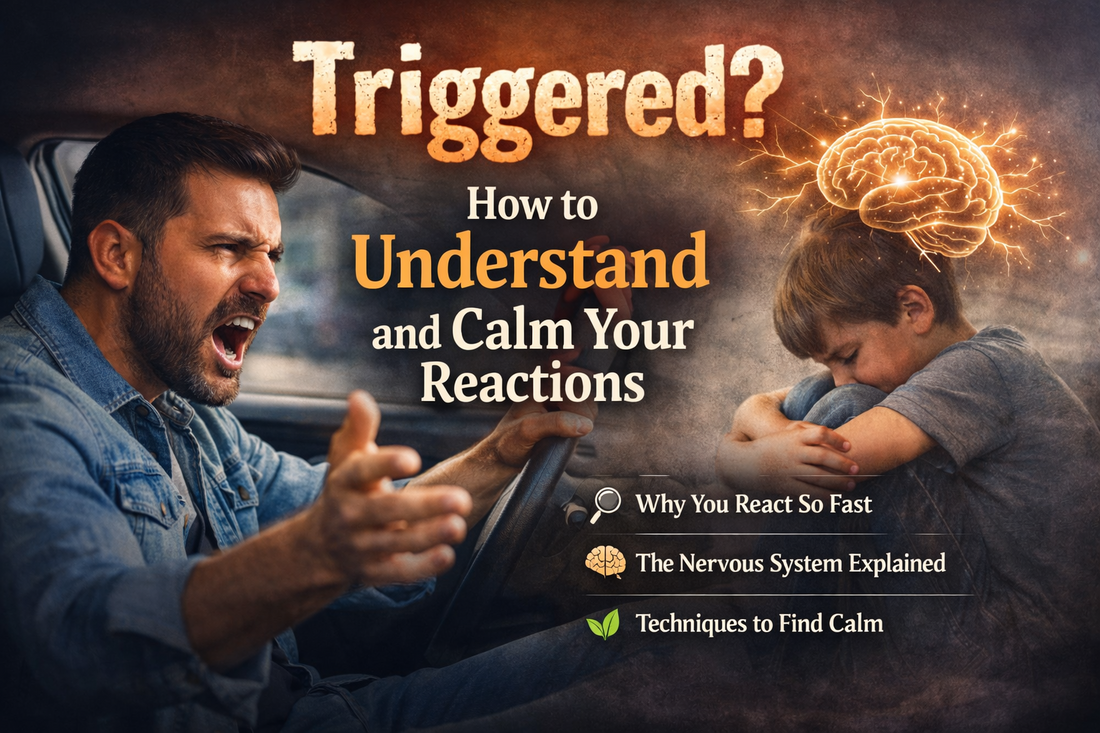
 "You don’t discover yourself when you’re peaceful. You discover yourself when something disturbs your peace." That moment when someone cuts you off… When your parent says that thing again… When a small inconvenience creates a big reaction… That is not random. That is revelation. Most people treat triggers as problems to suppress. But triggers are not interruptions. They are instructions. They show you exactly where your inner work lives. The nervous system: why this happens so fast Your nervous system is built for survival. Not for calm. Not for wisdom. Not for patience. When it senses a threat, it reacts before your thinking mind catches up. A tone. A look. A honk. A certain phrase. And your body goes: “Danger. Protect. Now.” That response can look like:
This is not weakness. This is conditioning. Your body learned somewhere along the way: “In moments like this, we react fast.” A simple truth most people miss Peace doesn’t expose you. Pressure does. When nothing is happening, you feel evolved. When something hits you, you see what is still raw. That reaction? It was not just the moment. It was memory. Pattern. Protection. Let’s break it down Every trigger has 3 layers: 1. The Story (Surface) “This person is rude.” “This shouldn’t be happening.” 2. The Emotion (Signal) Anger. Frustration. Defensiveness. 3. The Root (Truth) What actually got touched?
That is where the real work is. Real-life example You’re driving. Someone honks, speeds past, gives you a look. Instant reaction: “What the hell is his problem?!” But look deeper:
Now you are not dealing with a driver. You are dealing with a pattern. Another example Someone interrupts you. Surface: “They are disrespectful.” Deeper: “I’m not being heard.” Root: “My voice doesn’t matter.” Here’s the shift Instead of asking: “Why are they like this?” Ask: “Why did this affect me like that?” That question changes everything. A simple framework to use in real time 1. Catch it “Something just got activated.” 2. Name it “What am I feeling?” 3. Trace it “What does this remind me of?” 4. Identify the threat “What feels at risk? Respect? Control? Safety?” 5. Reframe it “Is this about them… or something in me?” How to calm yourself (this is where the real power is) You cannot always stop the first reaction. But you can regulate what happens next. If you catch it early (before or during) 1. Slow your breath (this is the fastest reset)
This tells your body: we are safe. 2. Relax your body on purpose
The body sends signals to the mind, not just the other way around. 3. Widen your awareness Instead of locking onto the trigger, zoom out:
You break the tunnel vision of the reaction. 4. Use a simple grounding thought Not something fancy. Something believable:
If the reaction already happened 1. Don’t fight it Adding judgment (“I shouldn’t react”) makes it worse. Let it pass through. 2. Shorten the recovery time That is the real growth. Minutes → seconds → moments. 3. Reset your body again Breath. Posture. Relaxation. You are teaching your nervous system a new ending. 4. Reflect later, not during Ask:
This is how you rewire. Questions to ask yourself
The uncomfortable truth You may not eliminate the first reaction. Your body is fast. But you can become someone who:
That is mastery. Final thought Your triggers are not your flaws. They are your unfinished lessons. Life will keep pressing the same buttons… Until you stop reacting and start understanding. That is when peace becomes real.
0 Comments
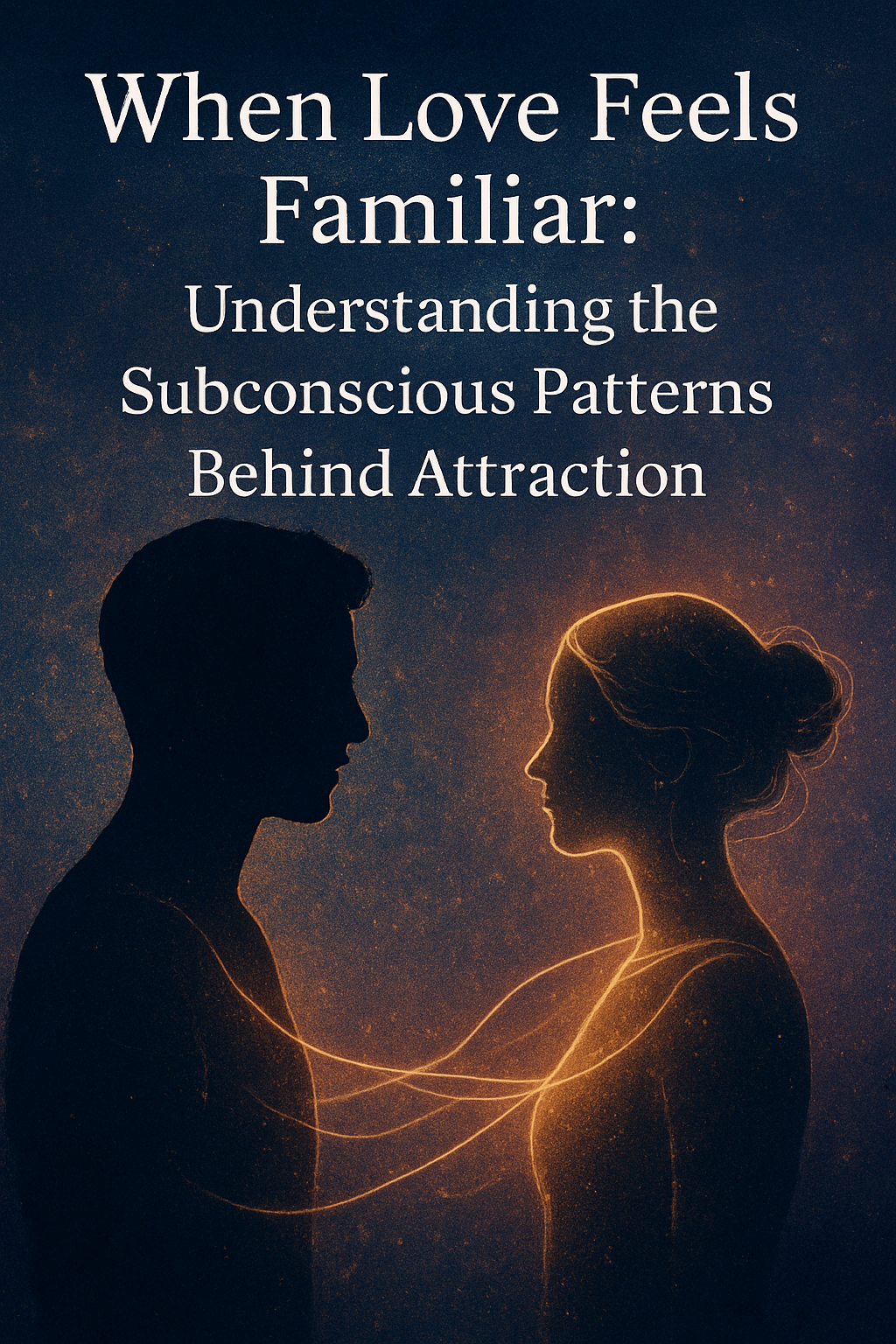 We like to believe we’re fully in control of our decisions — that each choice we make is born of conscious reasoning, logic, or even intuition. But beneath the surface of our awareness lies a vast network of memories, impressions, and emotional imprints that quietly influence almost everything we do. Each personal experience we’ve ever had — especially the emotionally charged ones — leaves a mark in the subconscious mind. Over time, these marks form into conditions, shaping our perceptions, preferences, and even the people we’re drawn to. In truth, we’re not as free as we think. We are, in many ways, walking reflections of our conditioning. Take attraction, for instance. Have you ever wondered why you keep falling for the same type of person, even after realizing that type may not be healthy for you? You may tell yourself, “I’m going to choose differently this time,” yet somehow you end up replaying the same emotional movie with a different actor. That’s not coincidence — that’s your subconscious at work. It already decided what “love” should look and feel like long before your conscious mind got involved. Sometimes, that decision was made in childhood, through observing your parents’ relationship or experiencing certain emotional dynamics yourself. The mind then stores that familiar emotional pattern as comfort, even if it’s toxic. So when you meet someone new, your conscious mind might be scanning for compatibility, but your subconscious is quietly scanning for familiarity. It looks for cues — the tone of their voice, their body language, their scent, their energy. Just one small detail can act as a trigger, instantly recreating the emotional signature of what your subconscious recognizes as “home.” And there it is — that spark. That magnetic pull you can’t explain. You tell yourself it’s chemistry, or fate, or a sign from the universe. But more often than not, it’s a memory disguised as destiny. Let’s paint a real-life example. Imagine a woman named Maya. Her father was emotionally distant but charming in public — the kind of man who could make anyone laugh but never truly opened up at home. Growing up, Maya learned to equate love with earning attention, mistaking emotional unavailability for depth. Years later, she meets Alex — charismatic, magnetic, a little mysterious. From the first conversation, she feels that irresistible connection. “He feels familiar, like we have known each other for years.” she tells her friends, and indeed, he does. Not because he’s her soulmate, but because his mannerisms mirror the emotional rhythm she grew up with. Her subconscious recognizes the dance — a dance of chasing affection, of proving worth — and pulls her toward it. Meanwhile, her conscious mind might whisper, “Be careful, this feels like the last one,” but the subconscious has already taken the wheel. This is how conditioning runs our lives — not out of malice, but out of memory. The subconscious doesn’t care if something is good or bad for you; it only cares if it’s familiar. Breaking the Pattern Awareness is the only true liberation. But awareness doesn’t happen when we’re constantly exposed to triggers. That’s why changing environments can be so powerful. When you step away from the people, places, and patterns that keep stimulating old emotional programs, you give yourself a moment of silence — a space where you can finally hear your own thoughts. In that quiet, the pattern reveals itself. You start to notice what your subconscious reacts to — the type of energy you’re drawn to, the tones that stir emotion, the circumstances that make you feel small or alive. Changing environments doesn’t erase the conditioning, but it weakens its grip. It gives you the breathing room to see it clearly — to respond rather than react. Yet real transformation happens only when you turn toward your triggers, not away from them. When you observe a familiar pull arising and ask, “Why does this feel magnetic to me?” you bring what was hidden into the light. Because here’s the truth: once a trigger is fully understood, it loses its power. What was once automatic becomes a conscious choice. The Path Forward Healing, then, isn’t about avoiding the same mistakes — it’s about understanding why those mistakes felt right to begin with. The subconscious doesn’t need to be destroyed; it needs to be integrated. Its old programs dissolve in the light of awareness, in patient self-observation, and in choosing differently even when the old pattern calls your name. So the next time you feel that unexplainable attraction — that lightning bolt that feels like destiny — pause. Take a breath. Ask yourself: Does this person feel new, or do they feel familiar? If it feels like déjà vu, it might not be love calling. It might be your subconscious asking for closure. And if you can see that clearly, without judgment, you’ve already taken the first step toward freedom — not just from others, but from the invisible forces that once guided your every choice. Reflection Prompts for Awareness Take a few quiet minutes, maybe after meditation or journaling, and reflect on these questions. Don’t rush the answers — let them rise naturally from within you.
🕊️ Awareness is not about judging who you were — it’s about understanding why you were that way. Once you see the roots clearly, the soil of your mind becomes fertile for something new to grow. 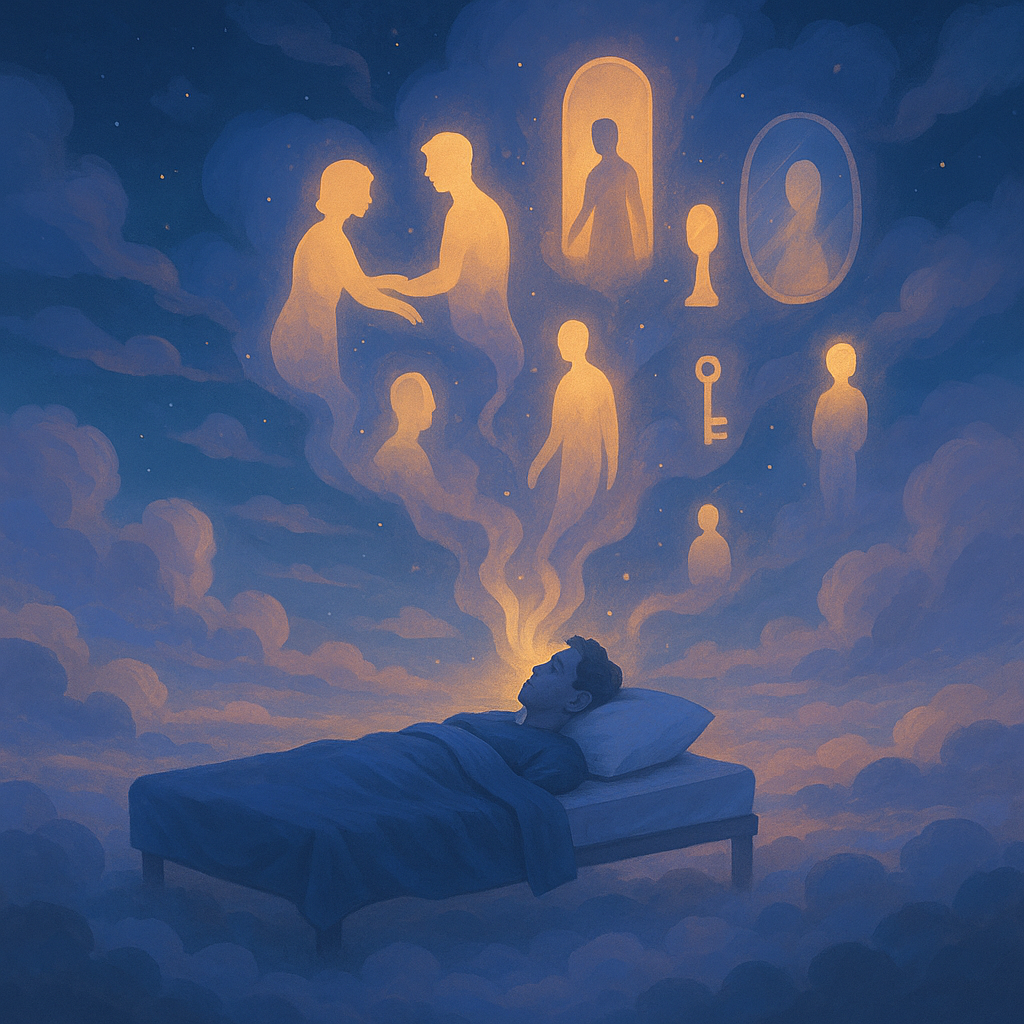 Use your dreams to track your healing, rewiring, and evolution. Here’s a little-known truth: If you behave differently in your dreams than you did in the past… that means you’ve already reconditioned your mind. You’ve rewired your brain on a deep, subconscious level. Why? Because dreams are not random. They are generated by your subconscious, the part of your mind that stores your emotional patterns, core beliefs, traumas, and triggers—long after your conscious mind has moved on. So when a situation shows up again in a dream—an ex, a fear, a fight—and this time you respond calmly or wisely or with power, you didn’t just dream it. You became it. Psychological Insight: Behavior Shift in Dreams = Subconscious Rewiring In behavioral psychology, our reactions are often automatic—especially under stress. Dreams simulate stress, emotion, and choice in surreal ways. If your instinctual response in a dream changes, it means your internal conditioning has shifted. You didn’t “decide” to change in the dream. You just acted. That’s how you know the change is real—it bypassed the thinking mind. Neuroscience Supports This Too
Dreams as a Spiritual Classroom Most things that happen in our dreams will never happen in real life. And that’s what makes them so valuable. They give you emotional simulations—safe environments to re-experience old wounds, future scenarios, or alternate versions of the self. Why did I make that choice in the dream? Would I act the same in real life? Why or why not? Since all the characters are projections of your perception of the world, every interaction is a conversation with yourself. Create a Morning Dream Practice (Before You Forget!)
My Personal Discovery I once watched a movie before bed and dreamed of an ex I hadn’t thought of in years. The dream wasn’t about her—it was about an unresolved emotion the movie triggered. I analyzed the dream the next morning, traced the emotion back to the memory, and felt it fully. That’s when it lifted. I let it go, completely. That one dream gave me more healing than months of overthinking. Final Thought: When your dreams start changing, your healing is already happening. You don’t need proof from the outside world—your subconscious has spoken. Use your dreams like a mirror. Learn from them. Talk to them. Let them show you what still hurts, and celebrate when something no longer does. Because when you act differently in a dream… you are no longer the same. Have you ever wondered why conflict seems inevitable with certain people in your life, especially family members? No matter how much you grow, they still treat you the way they always have—like the child, the troublemaker, or the person they once knew. This disconnect often leads to frustration, misunderstandings, and even emotional pain. The Root of Conflict: A Perception Gap Conflict often arises when who others think we are no longer matches who we have become. They interact with an outdated version of us, while we expect them to see and respect the person we are today. For example, a parent may still treat their adult child like they are incapable, simply because that’s how they remember them. Meanwhile, the child—now grown and independent—resents being treated that way. The result? Repeated arguments, emotional triggers, and a cycle of frustration. This dynamic isn’t just limited to parent-child relationships; it happens in friendships, romantic relationships, and even workplaces. The version of you that people hold in their minds is often based on past interactions, and unless something forces them to update their perception, they continue responding to you in the same old ways. Why People Struggle to See Our Growth People are naturally resistant to change—especially when it comes to relationships. Familiarity feels safe, even if the dynamic is unhealthy. When someone sees you differently, it forces them to question their role in the relationship. For example, a controlling parent might feel less needed if they acknowledge that their child has become independent. A long-time friend may feel threatened if they see you growing in ways they haven’t. A romantic partner may resist change because they fear losing the dynamic they once knew. Without realizing it, people may try to pull you back into old patterns not out of malice, but out of their own fears and insecurities. How We Keep Ourselves Stuck in Old Dynamics Even when we’ve grown, our reactions often reinforce the past version of us. If you’ve always argued with a parent who belittles you, reacting defensively only confirms their belief that you are still the same. If a friend still treats you like the reckless person you used to be, and you get frustrated instead of calmly correcting them, you feed their outdated perception. This is why it’s refreshing to meet new people. They see us as we are today—without the baggage of past interactions. But this doesn’t mean old relationships are doomed. They can be rekindled if both parties become aware of these dynamics. How to Shift the Relationship Dynamic 1. Understand Their Perception • Instead of assuming they are intentionally disrespecting you, recognize that they simply don’t see your growth yet. • Ask yourself: “What version of me do they see?” and “Why might they struggle to update that perception?” 2. Communicate Your Growth • You can’t expect people to just know you’ve changed. Show them through actions and words. • Example: Instead of saying, “I’m not a child anymore,” demonstrate it by handling situations with maturity and confidence. 3. Stop Reacting Like Your Old Self • When you react emotionally in a way that matches their outdated view of you, you reinforce it. • Instead, respond as your present self—with calmness, confidence, and clarity. 4. Give It Time • People don’t change their perceptions overnight. Consistently embody the new version of yourself, and eventually, they will have no choice but to recognize it. Final Thoughts Conflict in relationships isn’t always about who is right or wrong—it’s often about perception gaps. Your growth is real, but the people in your life may not see it yet. Instead of expecting them to automatically adjust, take responsibility for helping them see the new you. The more aware we are of these dynamics, the more power we have to break the cycle and create healthier, more fulfilling relationships.  The thought triggers have made who you are today.
A thought trigger could be any material thing, a person, an event, or the environment, etc. why are thoughts trigger so important? Because they originated all your thoughts from the very beginning. These thoughts lead to the words you speak and to the actions you take. This is how everything is created in our world. This creation process continues to circulate on its own that will produce complicated and compounded results that majorly contribute to who you have become today and have significantly affected all your decisions in your life and others’ lives. A positive thought will create a positive result(s) but a negative thought can potentially be harmful. Thus, be aware of the triggers of your thoughts and make an effort to only position yourself in a positive thought trigger environment, such as the people you surround yourself with, books you read, information you absorb, TV shows and movies you watch, advice you receive from people you look up to, people you follow on social media, partners you choose, etc. Ultimately, you get to choose who you want to be in this life! - FeelaSoulphy  Be a positive thought trigger to others. You may not be aware of it but your words and actions may affect others now or sometime in the future. They can be anyone you have met, touched, spoken to, worked with, loved, etc. Do you think a person’s suicidal act was formed in one day? Don’t be a part of the process of someone else’s tragedy. Be responsible with your words and actions at all times so you can be a positive thought trigger to others, especially children. - FeelaSoulphy |
AuthorFeelasoulphy Categories
All
Archives
March 2026
|




 RSS Feed