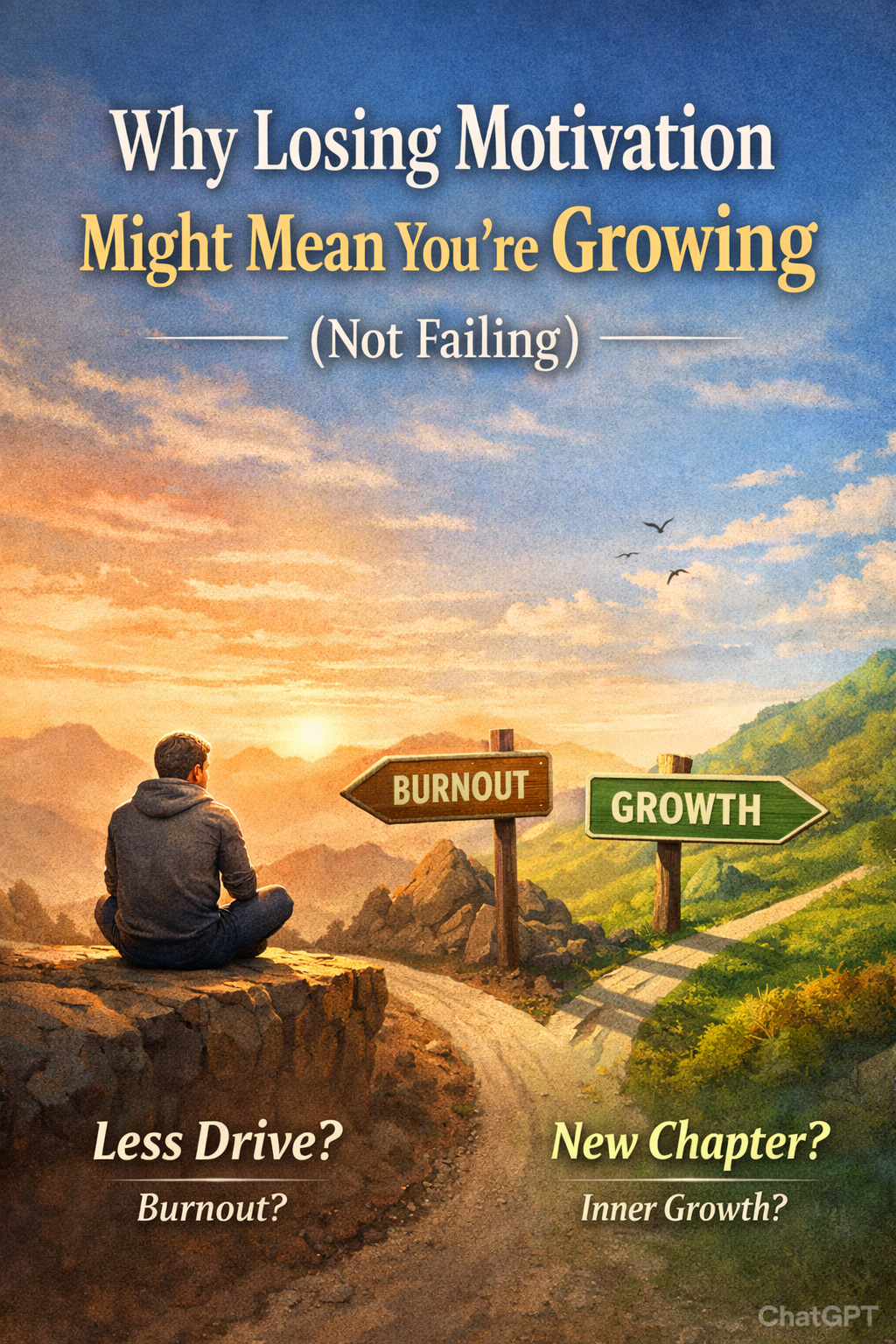
 There is a phase of inner growth that rarely gets discussed—because it doesn’t look impressive. Ambition fades. The drive to achieve quiets down. The urge to become someone loosens its grip. And instead of clarity, many people feel unease. Am I evolving… or am I giving up? Is this peace—or fear disguised as contentment? This question doesn’t arise at the beginning of self-development. It appears after years of inner work, when ego has softened but purpose hasn’t yet redefined itself. The Role of Ambition in Human Development Ambition is not the enemy. Early in life, it serves an essential function. We strive in order to:
The problem isn’t ambition—it’s never knowing when to take it down. What Changes When Ego Softens If inner work is genuine, something subtle but radical happens: You no longer need achievement to validate your existence. This often shows up as:
They assume: “If my ambition is fading, something must be wrong.” In reality, something important is reorganizing. Rest vs Retreat: The Critical Distinction From the outside, rest and retreat look identical. Less output. More solitude. Fewer goals. Internally, they are opposites.
A simple test: If life gently asked something of me tomorrow, would I be open to it? A relaxed yes signals rest. A tight no signals retreat. The danger isn’t resting. The danger is mistaking withdrawal for wisdom. What Replaces Ambition After Ego Work When ego-driven ambition dissolves, one of three things replaces it:
A call does not demand constant productivity. It arrives with clarity and lightness. It asks for action—and then releases you again. From the outside, this looks inconsistent. From the inside, it feels precise. Why Many “Successful” People Never Reach This Stage Many high achievers don’t mind working all the time because stopping would force them to sit with themselves. Busyness becomes:
There’s a difference between capacity for work and compulsion to work. Losing the second while keeping the first is growth. The Real Risk at This Stage The risk is not doing less. The risk is using contentment as insulation. When “I’m fine the way I am” becomes a shield against engagement, life slowly thins out. The answer is not forcing ambition back. It’s remaining available. A Simple Operating Principle For this phase of life: Only act on what arrives with clarity and lightness. Not excitement. Not obligation. Not fear. Lightness. If nothing arrives, live fully anyway. Stillness is not a waiting room. It’s part of the work. A Short Mirror (Read slowly) Don’t answer these questions quickly. Notice what happens before the answer forms.
Only signals. Whatever you notice is the information. The Quiet Truth You are not here to maximize output. You are here to minimize distortion. When distortion falls away, contribution becomes inevitable—but no longer constant. And if you step forward again, it won’t be to become someone. It will be because silence finished saying what it could.
0 Comments
How to Be Alone Without Being Lonely - Awareness, Curiosity, and the Education We Keep Ignoring2/10/2026 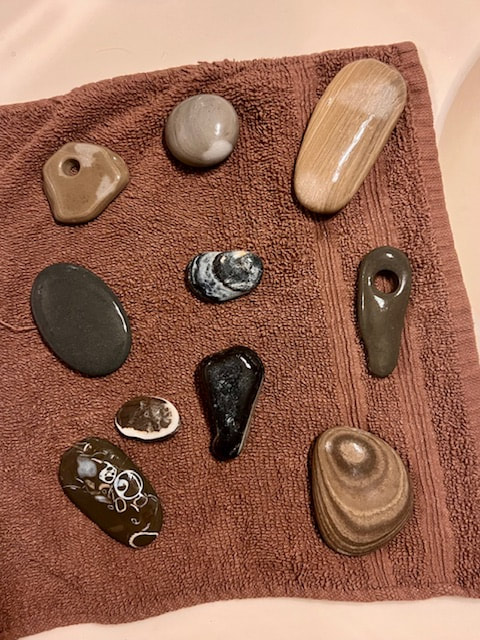 Naturally shaped pebbles off a beach in Santa Cruz, California, USA. They are Sandstones, Mudstones, Limestones (with fossils), Cherts. Ages 1 million to over a billion years old. Any idea which one is the oldest? Most people don’t fear being alone. They fear what happens when distractions disappear. Solitude feels empty only when awareness is low. When awareness rises, learning speeds up — and suddenly, being alone becomes alive. The other day, I spent hours alone at the beach. No plan. No productivity agenda. Just attention. What unfolded taught me more than weeks of routine thinking ever could. I watched seagulls fly high into the air carrying mussels, then drop them onto rocks below to crack the shells. Again and again. No frustration. No overthinking. Just experimentation. Gravity became their tool. The rock became their ally. That matters for one simple reason: Many animal species have survived on this planet far longer than humans. Some for millions of years. Some relatively unchanged. They didn’t do that by accident. They figured something out. If we refuse to learn from them, an honest question follows: Who exactly do we think we’re learning from instead? Later that same day, I noticed a man running along the beach — with two crows flying beside him. I didn’t understand it at first. An hour later, they were still together. Then I saw it: he was feeding them as he ran. He had learned how to attract them, how to stay in rhythm with them. That wasn’t dominance. That was relationship. Crows don’t obey. They choose. That scene alone says more about intelligence than most definitions do. In between, I picked up pebbles. Smooth ones. Scarred ones. Some carrying fossil-like imprints of ancient shells. Later, I learned many of these stones began forming 1 million to over a billion years ago — shaped slowly by pressure, water, and time. Holding one felt like holding patience itself. Most people would call that “just a rock.” That’s not accuracy — that’s inattention. Jane Goodall changed how we understand chimpanzees not by imposing theories, but by doing something radical: she stayed curious longer than most people are willing to. She watched. She listened. She allowed understanding to emerge instead of forcing conclusions. And, perhaps most importantly, she genuinely enjoyed being alone in nature and learning from it. That’s what solitude in nature does when awareness is present. And here’s the part we underestimate: Awareness doesn’t just deepen insight — it accelerates learning. When you’re attentive:
This is why “unplugging” works — not because technology is evil, but because disconnection from noise allows reconnection to reality. Or put simply: Disconnect to reconnect. I had been stressed with work for a while. Busy. Productive. Effective — but disconnected from myself and from nature. Solitude in nature didn’t slowly help. It immediately brought me back to life. Not metaphorically. Viscerally. Loneliness comes from disconnection. Solitude comes from engagement. Nature is always teaching. Animals are always demonstrating intelligence, efficiency, cooperation, and presence. The lessons are everywhere. The only requirement is awareness. You don’t need to escape life. You need to pay attention to it. Practical Homework: How to Practice Awareness in Solitude Don’t romanticize this. Practice it. 1. Schedule unstructured alone time No podcasts. No scrolling. No objectives. Go somewhere alive: beach, park, trail, quiet street. 2. Train one sense at a time Spend 5–10 minutes focusing only on:
Awareness grows through specificity. 3. Stay past boredom Watch one thing long enough for it to change. Learning accelerates after the mind stops demanding stimulation. 4. Ask grounded questions Not philosophical ones. Practical ones:
5. Pick up or observe one object — then use AI to learn about it A pebble. A leaf. A shell. A bird. Later, research it. Its age. Its function. Its history. This bridges curiosity, technology, and nature — instead of treating them as opposites. 6. Write down everything you did that day Not just insights — actions:
When I did this, I surprised myself. What felt like “doing nothing” was actually a full, rich, adventurous day. Awareness changes the scoreboard. Do this once a week. That’s enough. Curiosity opens the door. Awareness lets you walk through it. Solitude stops being empty — and becomes education. And eventually, you realize something quietly radical: Being alone isn’t the absence of life. It’s the removal of noise that was keeping you from seeing it. |
AuthorFeelasoulphy Categories
All
Archives
March 2026
|
 RSS Feed