 What Is Healing? In the simplest English, healing means “to make whole again, to restore health, to mend what is broken.” But true healing is not limited to the body—it is also emotional, mental, and spiritual. Healing is the process of returning to balance, of easing suffering, of restoring love where love has been absent. Why We Need Healing So many of us walk through life unaware that we are hurting. I didn’t always know I carried pain. I thought my reactions, my triggers, my habits were just “who I was.” But beneath them lived old wounds. And as the saying goes: hurt people hurt people. When we don’t recognize our own pain, it seeps into the way we speak, the choices we make, and the relationships we hold. We end up passing on our unhealed wounds to others—just as others once passed theirs onto us. Healing begins with awareness: to see the wound for what it is, to understand why it formed, and to choose not to keep repeating it. Discovering the Power of Love When I began my healing journey, I discovered that true healing does not come from outside—it comes from love. I had to learn to love myself first. Only then did I understand how to truly love others. Through that, I realized something simple yet life-changing: life is about love—giving it, receiving it, and becoming it. The Greatest Healers Were Lovers The people we remember most as “healers” were not medical doctors with stethoscopes—they were people who loved greatly.
When Love Is Absent History also shows us what happens when love is missing.
We Are All Healers Here’s the truth: every single one of us carries this healing power. You don’t need a degree or a title. A kind word can mend a broken spirit. A gentle touch can soothe pain that lingers unspoken. Your presence, offered without judgment, can bring peace to someone’s storm. Of course, love is not a substitute for medicine. Certain conditions require professional care, and we must honor that. But alongside medicine, love is the force that restores the soul. The Invitation The question is not “Can I heal?” but “Am I willing to love?” Because when you choose love, you choose healing. And when you choose healing, you help mend the world. Read: It's All about Love - Even When It looks Like the Opposite
0 Comments
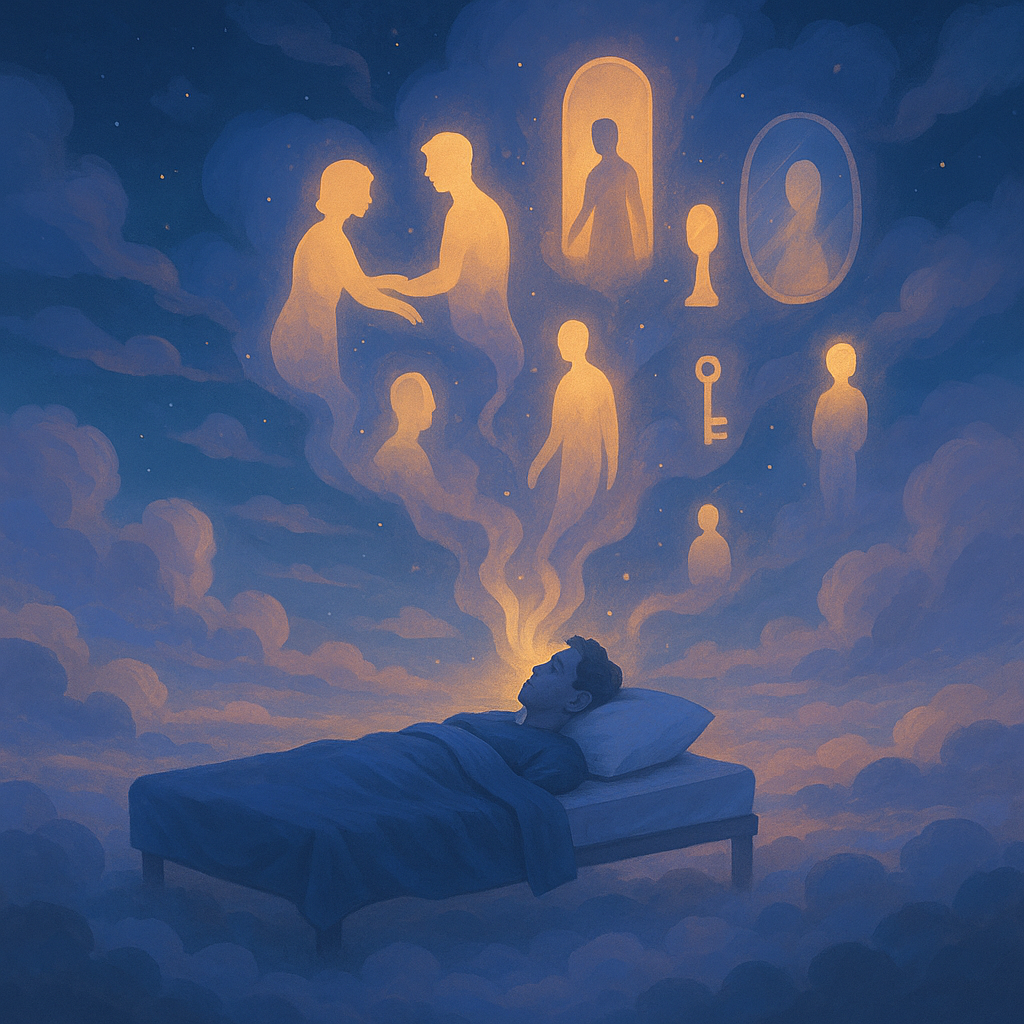 Use your dreams to track your healing, rewiring, and evolution. Here’s a little-known truth: If you behave differently in your dreams than you did in the past… that means you’ve already reconditioned your mind. You’ve rewired your brain on a deep, subconscious level. Why? Because dreams are not random. They are generated by your subconscious, the part of your mind that stores your emotional patterns, core beliefs, traumas, and triggers—long after your conscious mind has moved on. So when a situation shows up again in a dream—an ex, a fear, a fight—and this time you respond calmly or wisely or with power, you didn’t just dream it. You became it. Psychological Insight: Behavior Shift in Dreams = Subconscious Rewiring In behavioral psychology, our reactions are often automatic—especially under stress. Dreams simulate stress, emotion, and choice in surreal ways. If your instinctual response in a dream changes, it means your internal conditioning has shifted. You didn’t “decide” to change in the dream. You just acted. That’s how you know the change is real—it bypassed the thinking mind. Neuroscience Supports This Too
Dreams as a Spiritual Classroom Most things that happen in our dreams will never happen in real life. And that’s what makes them so valuable. They give you emotional simulations—safe environments to re-experience old wounds, future scenarios, or alternate versions of the self. Why did I make that choice in the dream? Would I act the same in real life? Why or why not? Since all the characters are projections of your perception of the world, every interaction is a conversation with yourself. Create a Morning Dream Practice (Before You Forget!)
My Personal Discovery I once watched a movie before bed and dreamed of an ex I hadn’t thought of in years. The dream wasn’t about her—it was about an unresolved emotion the movie triggered. I analyzed the dream the next morning, traced the emotion back to the memory, and felt it fully. That’s when it lifted. I let it go, completely. That one dream gave me more healing than months of overthinking. Final Thought: When your dreams start changing, your healing is already happening. You don’t need proof from the outside world—your subconscious has spoken. Use your dreams like a mirror. Learn from them. Talk to them. Let them show you what still hurts, and celebrate when something no longer does. Because when you act differently in a dream… you are no longer the same.  “What if the world was always this vivid—and we just forgot to pay attention?” Most of us eat distracted. We’re watching TV. Scrolling. Talking over dinner. We don’t even taste our food. But one day, I learned what it was like to really eat. I was on an edible. I remember biting into a kiwi. Suddenly, it was electric. Juicy. Tart. Sweet. The texture of the seeds. The smell of the fruit. Every sense was awake. Even watching a movie, I felt more emotional, more attuned to what was happening on screen. It was like my empathy was dialed up—I could sense what the characters felt. It was such a strange gift. Why did this happen? It turns out this isn’t magic. It’s attention. Edibles (like cannabis) can reduce activity in the default mode network (DMN)—the part of the brain responsible for mind-wandering and constant self-narration. When the DMN quiets down, sensory networks become more active. Emotions and empathy rise to the surface. In other words: When you’re really here, you really feel. Eating is special Eating is one of the few everyday activities that naturally engages all our senses: Sight: color, shape, presentation. Smell: aroma. Taste: layers of flavor. Touch: texture, weight. Sound: crunch, slurp, chew. It’s designed to be immersive. But we numb it by multitasking and rushing. When you actually focus? It’s an experience. It’s not just food—it’s people This kind of presence doesn’t just change eating. It changes how we connect with others. When you really listen to someone—without waiting to talk, without checking your phone—you hear them on a different level. You notice subtle emotions in their voice. You see the story in their eyes. You feel with them, not just next to them. Presence is the foundation of empathy. And empathy is what deepens connection. Science agrees Mindfulness meditation reduces DMN activity, just like certain drugs can—but without side effects. It increases interoceptive awareness (body sensations) and sensory acuity. It also strengthens brain regions linked to empathy and compassion (anterior cingulate, insula). Long-term meditation practice literally rewires the brain for presence. Drugs vs. Meditation Drugs can open the door to this state. They show you how present you could be. But they don’t train you to stay there. Meditation does. Presence practice does. It’s a lifelong shift, not a temporary escape. Try This: A Mindful Eating Practice Pick something simple. A kiwi. An apple. Chocolate. Look at it carefully. Color. Shape. Smell it. Take a slow bite. Chew carefully. Feel the texture. Notice the sound. Taste all the flavors. Keep bringing your mind back when it drifts. This isn’t just about food. It’s a training ground for attention. A Practice for Connection Next time you’re with someone: Put the phone away. Look them in the eyes. Really listen. Notice tone, words, pauses. Feel what they’re feeling. Watch how the conversation changes. Watch how you change. Final Reflection That kiwi taught me that life is always offering something beautiful—if I’m willing to really show up for it. Food can be spiritual. Conversations can be sacred. This moment can be everything. Presence turns ordinary life into holy ground.  Mt. Diablo State Park, Clayton, California, USA Did you know your mind is constantly creating stories—narratives so vivid and detailed they feel as real as the world around you? But here’s the catch: not all of these stories are true. Some are distorted memories, others are pure imagination, and many are a mix of both. The mind is so powerful that these stories can shape how you feel, how you act, and even the reality you create. Let’s dive deeper into how this works, why it happens, and what you can do to reclaim control over your mind’s narratives. How the Mind Creates Stories Imagine this: You’re walking down the street, and you see someone you know. They don’t wave or smile back at you. Within seconds, your mind starts spinning: • “Did I upset them? Are they mad at me?” • “Maybe they don’t like me anymore…” What really happened? Maybe they didn’t see you or were distracted, but your brain filled in the gaps with assumptions and emotional stories. This happens because your mind relies on two key sources: 1. Memories: The brain doesn’t store perfect snapshots. Instead, it remembers bits and pieces of past experiences and emotions, which it reconstructs when you recall them. 2. Imagination: When details are missing, the mind fills in the blanks using your thoughts, fears, or expectations. The result? A story that feels real, even though it may not be true. The Emotional Power of Thought Have you ever woken up from a vivid dream feeling angry, sad, or even anxious? Maybe you dreamed a friend betrayed you, and for a moment, it felt so real that you couldn’t shake the emotion. That’s because your brain doesn’t differentiate between real and imagined events when it comes to emotions. When you imagine something, your amygdala (the brain’s emotion center) reacts just as it would to a real experience, producing physical sensations like a racing heart, sweaty palms, or tightness in your chest. For example: • Replaying a past failure: If you keep replaying the time you made a mistake at work, your brain relives the embarrassment, making you feel like it’s happening all over again. • Worrying about the future: Thinking, “What if I mess up my presentation tomorrow?” triggers anxiety in the present, even though the event hasn’t happened yet. Why You Can’t Always Trust Your Thoughts The stories your mind creates can be distorted in several ways: • Memory Bias: Your brain may exaggerate or alter details over time. For example, you might remember a childhood argument as worse than it actually was because your emotions magnified it. • Negativity Bias: You’re more likely to dwell on negative memories or imagined outcomes than positive ones because the brain evolved to focus on threats for survival. • Catastrophizing: Your mind jumps to the worst-case scenario, like thinking your partner didn’t text back because they’re upset with you, when in reality, they may just be busy. These distortions can lead to unnecessary stress, anxiety, and even conflicts with others. Virtualization in the Brain: How It Helps and Hurts Your brain is like a virtual reality machine. It constantly simulates past experiences, imagines future ones, and creates “what-if” scenarios. This ability to virtualize happens in areas like the prefrontal cortex (planning and imagination) and the hippocampus (memory recall). • Example of Help: Picture yourself preparing for a big presentation. You mentally rehearse what you’ll say and visualize yourself succeeding. This boosts confidence and readiness. • Example of Harm: Imagine you’re lying awake at night, replaying a potential argument with your boss. Even though it hasn’t happened, your body reacts with stress as if it’s real, robbing you of peace and sleep. The key is learning to use virtualization for growth, not unnecessary suffering. Reclaiming Control: How to Stop Believing Every Thought Here’s the truth: you are not your thoughts. Your mind is an incredible tool, but it’s also a storyteller that doesn’t always tell the truth. Here’s how to take back control: 1. Practice Mindfulness: When a thought arises, pause and observe it without judgment. For example: • “Is this thought based on fact or assumption?” • “Is this helping me or harming me right now?” Treat your thoughts like passing clouds. You don’t have to grab onto them or believe every one. 2. Use Visualization Wisely: Instead of letting your mind spiral into negative scenarios, consciously visualize positive outcomes: • If you’re nervous about a job interview, picture yourself feeling calm, confident, and answering questions well. • When revisiting a painful memory, imagine yourself learning from it and growing stronger. Visualization isn’t just a mental exercise—it rewires your brain over time, helping you build optimism and resilience. 3. Ground Yourself in the Present Moment: If you find yourself spiraling into “what-ifs,” bring yourself back to the present. Try this: • Take 3 deep breaths, focusing on the sensation of air filling your lungs. • Name 3 things you can see, hear, or feel right now to ground your senses. These simple techniques remind you that the only moment that truly exists is now. 4. Remember: Thoughts Aren’t Facts: Just because your mind says something doesn’t mean it’s true. For example: • Thought: “I’ll fail at this.” • Reality: You haven’t even tried yet. What if you succeed instead? Final Takeaway Your mind is an extraordinary tool, capable of creating detailed stories that can help or hurt you. The key to reducing unnecessary suffering is learning to question your thoughts, use your imagination wisely, and focus on the present moment. The next time your mind tells you a story, ask yourself: “Is this true? Or is it just a thought?” Reclaim your power by becoming the observer of your mind, not its victim.  You don’t have to understand emotions to experience them but when you do understand them you will be able to control them. - Feelasoulphy  Stop saying “You make me feel this way!” and start taking responsibility of your own feelings. How you feel is the direct results of your personal experiences from the past to the present. What others say or do is their own inner experiences that they have carried outward or projected onto you. It has little to do with you. By blaming others make you feel certain way you are giving your power away and allowing them to control and manipulate you. If they control your emotions they control you. However, no one can make you feel any way you don’t want to and only you can make yourself feel that way. You manufacture 100% of your feelings, thus, you often have a choice as to how you want to feel. You can have more control over your feelings than you think. Otherwise, you need to get to know yourself a lot better by paying more attention to your feelings and emotions. When you learned how to take responsibility of these feelings you will know why you should never make others feel the same. Imagine what the world would be like if we all take responsibilities for our own feelings? - Feelasoulphy  If you are truly heart broken, I congratulate you that you have finally arrived at the deepest part of your heart all the way from...your head... A wise friend once told me that our life journey is merely the distance from our head to our heart, a whopping 16 inch long! I believe that we spend our entire life traveling back and forth between our head and our heart. We have all been to the heart but it took some of us a traumatic event to go straight to the heart instantly which is a blessing in the sky. When we hit rock bottom and broke down that’s when we can no longer live with all the lies we have been telling ourselves and we finally arrived at the heart. This is a place without ego and only truth exists. When we cry, we cry out of our heart and not our head because we feel it directly from the heart. Sadness is bad if we only focus on the negative emotions that it brings to us. When we turn sadness into compassion we are then acting upon the power of love. Next time when you feel the pain in your heart again remember that you have arrived at the heart and a positive change in your life is in the making. Take this precious opportunity to reflect on things and see what you can do now to improve your life! It’ll always be your choice to stay here or return to your head. - FeelaSoulphy 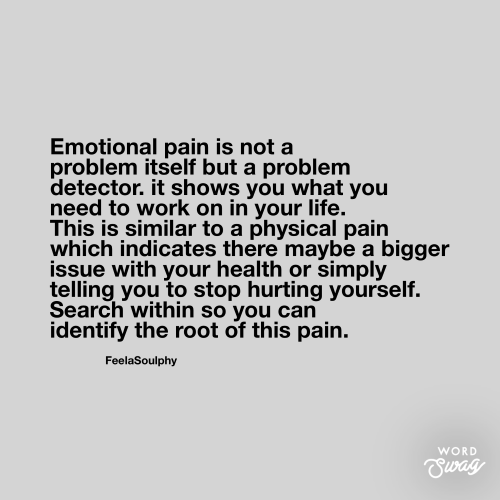 Emotional pain is not a problem itself but a problem detector. it shows you what you need to work on in your life. This is similar to a physical pain which indicates there maybe a bigger issue with your health or simply telling you to stop hurting yourself. Search within so you can identify the root of this pain. - FeelaSoulphy  Their thoughts cannot hurt you but your thoughts can. - FeelaSoulphy |
AuthorFeelasoulphy Categories
All
Archives
March 2026
|
 RSS Feed