 Community Garden, South Laguna Bluff, California, USA What if you could tune into the same brainwave frequency as monks during moments of enlightenment? What if insight wasn’t just mental — but divine? This is where Gamma comes in. Often overlooked in everyday life, Gamma is the brainwave state linked to the highest forms of consciousness, the aha! moments that feel like downloads from beyond, and even spiritual awakening. But Gamma doesn’t show up randomly. It’s a state you can prepare for — and invite. What Are Gamma Waves? Gamma brainwaves range from 30 to 100 Hz, the fastest of all brain frequencies. These waves are associated with:
When you experience a sudden epiphany — the kind that changes your life — you’re likely in a gamma burst. It’s your brain creating an instantaneous global connection, fusing memory, insight, emotion, and intuition into one flash of clarity. Gamma in Mystics, Monks, and Moments of Awakening In groundbreaking research, neuroscientists observed elevated gamma activity in the brains of advanced Tibetan monks during meditation. These monks weren’t just calm — they were in a state of profound, expansive awareness. Love-based meditations, in particular, triggered the most powerful gamma waves. These findings suggest that gamma isn’t just about cognition. It may be the neural signature of transcendence — the bridge between the personal and the divine. How Gamma and Alpha Work Together Think of Alpha as the fertile ground. It’s where you relax, open your awareness, and quiet the noise. Gamma is the lightning strike. It’s the moment the insight arrives, fully formed. Together, they form the perfect flow state:
Your goal isn’t to chase Gamma — but to create the conditions for it to arise. Practices That Induce Gamma States You don’t have to live in a monastery to access gamma. These practices have been shown to boost gamma activity and support spiritual downloads: 1. Insight Meditation Rather than emptying the mind, this style focuses attention on a single subject (a question, concept, or sensation) while observing arising insights without judgment. It combines clarity with curiosity — a recipe for gamma bursts. 2. Breathwork Rhythmic or conscious breathing techniques can alter brainwave patterns, especially when paired with emotional release. Gamma often appears after strong somatic breakthroughs. 3. Deep Focus (Flow States) When fully immersed in a creative, intellectual, or physical activity, your brain can enter “flow” — a state associated with both alpha and gamma synchronization. 4. Acts of Love and Compassion Heart-based states (like gratitude, empathy, and unconditional love) elevate not just your mood, but your frequency. Studies show these emotions correlate with increased gamma activity and neural coherence. How to Invite Gamma Into Your Daily Life The more often you create space, the more likely your brain is to deliver insight. Here’s how to build a gamma-friendly lifestyle: Stillness Windows Designate sacred “alpha zones” during your day — no phone, no noise, just presence. These might include:
See more details about Alpha Brainwave in Part 2. Ask Powerful Questions Gamma breakthroughs often follow curious inquiry. Use questions like:
Let the answers come later — in a flash. Final Insight: Epiphanies Are Spiritual Invitations Gamma is more than a brainwave. It’s a state of divine intelligence. It’s when the veil thins… and something greater than you whispers through the neurons. When you get the message, don’t just admire it — act on it. Because real transformation doesn’t happen when you understand something. It happens when you become it. Read: Part 1: The Neuroscience of Epiphanies: Why Sudden Realizations Can Change Your Life Instantly Part 2: Relax to Receive — Why the Alpha Brainwave Is the Gateway to Spiritual Insight Part 4: The Portal of Dreams - How Theta Brainwaves Reveal Your Soul's Voice Part 5: Breaking Free from Mental Noise - Escapting Beta Overdrive to Find Peace Part 6: The State Shifter - How to Move Between Brainwave States to Master Your Mind & Life
0 Comments
 Bella From the day we’re born, we are entangled with love. It begins before we even know the word—when we’re held, fed, smiled at (or not). That early interaction sets a blueprint for what love feels like. And more importantly, it shapes how we believe we must behave in order to receive it. Most people assume love is just a spiritual ideal—something soft and poetic that we strive for in relationships or spiritual teachings. But what most don’t realize is this: Love is also psychological. Love is biological. Love is survival. When people behave badly—when they lie, control, dominate, brag, lash out—it doesn’t look like love at all. But if you trace it all the way back to the root, it always leads to love. Or more specifically: the need to be loved. The Example of Donald Trump Let’s take a figure who represents dominance, pride, and controversy: Donald Trump. To many, he’s arrogant, aggressive, self-obsessed, divisive. He boasts about being a winner, having the best words, the highest ratings, the strongest policies. He demands loyalty. He hates being criticized. He portrays himself as the savior of America and insists the world recognize his greatness. At first glance, none of this sounds like a man seeking love. It sounds like a man seeking power. But look closer. Power is often a substitute for love. It’s what people reach for when they don’t believe they can simply be loved for who they are. When a person constantly brags, what are they really saying? “Please see me. Please tell me I matter. Please validate that I’m good enough.” When someone can’t tolerate being wrong, they’re often screaming inside: “I don’t feel safe being vulnerable. If I’m flawed, I won’t be loved.” Everything becomes a performance to prove their worth—because deep down, they never felt loved without having to earn it. Broken Strategies for Love We all have our own twisted strategies for getting love, based on what we learned in childhood. Some people:
Trump’s behavior is just a loud, extreme example of what we all do in subtler ways. If you look past the politics, the headlines, and your opinion of him—you’ll see a scared child inside a powerful man, still trying to prove he is worthy of love. This Isn’t About Justifying Harm Understanding that people are wounded doesn’t mean excusing bad behavior. Compassion and accountability must coexist. But when we look at human behavior through the lens of “This person is trying to get love in the only way they know how,” it breaks the cycle of judgment and hatred. And it helps us do the same for ourselves. Love: The Hidden Force Behind It All This is why spiritual teachers keep saying: “Life is all about love.” Not because it’s a feel-good phrase, but because it’s the underlying motivator behind everything we do. Whether we’re succeeding, sabotaging, pushing people away, or drawing them close-- we’re just trying to get back to the feeling of being safe, seen, and accepted. We want what we were born for. We want what the soul remembers. We want love. This is also why so many people love having pets. On a conscious or unconscious level, we are drawn to animals because they offer us an experience of unconditional love—whether we’re receiving it or giving it. Your dog doesn’t care how much money you make or how many mistakes you’ve made. They love you when you’re a mess and when you’re on top of the world. They’re excited to see you come home and sad when you leave. That’s not neediness—it’s devotion. Remember this: you may have many people in your life, but your pet only has you. You are their one and only source of love. So be gentle with them. Take good care of them. They too just want to feel loved—just like you. A Practice for Reflection Next time you catch yourself:
Pause and ask: “What am I really trying to get right now?” “How am I trying to get love?” Then take it a step further and ask: “Who might be hurting because of how I’m trying to get love?” “What is the cost of my unmet needs for the person on the receiving end?” And when you witness someone else behaving badly, try asking: “What twisted strategy for love might they be using?” Just because you’re trying to feel loved doesn’t mean others aren’t feeling unloved in the process. Be mindful: the ways we reach for love—if rooted in fear, control, or insecurity—can push others away or even harm them. And when that happens, we’re not only not getting the love we want, we’re also blocking the love we already have. Healing begins with awareness. Love begins with responsibility. Final Thought The world doesn’t need more punishment. It needs more understanding. It needs more people willing to look beneath the behavior and see the wound. That doesn’t mean tolerating abuse or enabling harm. It means living from the wisdom that says: “Even the most unlovable-seeming person is trying, in their own broken way, to be loved.” That, too, includes you. This post is dedicated to my favoriate dog in the world - Bella, who guided me to this deeper realization about love. Read: The Healing Power of Love  A bird resting on top of the tree at Montage Laguna Beach, Laguna, California, USA In a noisy world that glorifies mental stimulation and constant doing, relaxation has become a radical act. But it’s in this relaxation—this soft, alert stillness—that your most profound insights begin to emerge. Welcome to the alpha brainwave state: the fertile ground for creativity, intuition, and spiritual downloads. What Are Alpha Brainwaves? Alpha waves are brain frequencies between 8–12 Hz, most active when you’re:
This is the sweet spot between wakefulness and sleep, between effort and surrender. It’s not passive—it’s receptive. And it opens a bridge between your conscious and subconscious mind. Why Alpha Unlocks Spiritual and Creative Flow When you’re in alpha:
This is why many spiritual practices—like meditation, prayer, journaling, or walking in nature—naturally bring you into this state. You’re no longer in “problem-solving mode” (beta). You’re available for something deeper. Alpha is the portal through which insight travels. The space that invites a gamma burst of realization. How to Enter the Alpha State in Daily Life You don’t need a retreat, incense, or silence to access alpha. You just need moments of presence, where the conscious mind lets go. Here are simple, everyday ways to drop into alpha: 1. Hot Shower Meditation Let hot water run down the back of your head and neck. This stimulates the parasympathetic nervous system, relaxing the brain and body while quieting the mind. You’re not just cleaning your body—you’re resetting your brain. Many people get their best ideas in the shower for this very reason. 2. Driving in Silence If you’re familiar with the route, your conscious mind goes on autopilot. This opens up mental bandwidth for the subconscious mind to surface. Ever noticed how deep insights hit you while driving alone on a quiet road—or stuck in traffic? That’s alpha working through stillness and rhythm. 3. Early Morning Stillness (Alpha on Wake-Up) When you first wake up, you’re naturally in alpha/theta. Avoid grabbing your phone. Instead, lie still, observe your thoughts, and ask questions. This is one of the most spiritually potent moments of the day. 4. Nature Walks Without Your Phone Let your senses guide you. No music. No distractions. Just pure presence. Nature entrains the body and mind to calm, rhythmic patterns—instantly inducing alpha. 5. Eating Alone in Silence Put your phone away. Be fully present with the textures, flavors, and sensations of your meal. This deepens awareness and reconnects you with your senses. Some even compare it to the slow, heightened mindfulness of eating edibles—without the altered state. You become the observer, not just the consumer. 6. Free Journaling or Brain Dumping Let your thoughts flow without judgment or editing. When the conscious mind stops filtering, deep truths rise from below. This is often when insight, emotional clarity, and spiritual messages come through. 7. Brushing Teeth or Doing Chores in Silence Doing mundane tasks like brushing teeth, folding laundry, or washing dishes without background noise occupies the conscious mind just enough to let the subconscious seep through. Think of it as keeping your ego busy so your soul can sneak in. 8. Bathroom Breaks Without Your Phone Use bathroom time as a mini meditation. Avoid distractions unless you’re jotting down a note that came through. These “micro-moments of stillness” allow your brain to reset and reconnect. 9. Lo-fi or Alpha Binaural Beats Listening to music in the 8–12 Hz range can entrain your brain to alpha waves. Great during journaling, meditation, or light creative work. What Blocks the Alpha State?
Alpha can’t be forced—it must be invited. It thrives in space, ease, and quiet focus. Final Thought “Alpha is where your soul can finally get a word in.” We often search for answers with the volume turned up too loud. But the voice of truth is quiet—and it speaks when you’re still. Give your mind space to breathe. The insight you’re looking for is already waiting… behind the noise. Read: Part 1: The Neuroscience of Epiphanies: Why Sudden Realizations Can Change Your Life Instantly Part 3: Tapping the Divine Frequency - Gamma, Spiritual Downloads, and the Mystical Mind Part 4: The Portal of Dreams - How Theta Brainwaves Reveal Your Soul's Voice Part 5: Breaking Free from Mental Noise - Escapting Beta Overdrive to Find Peace Part 6: The State Shifter - How to Move Between Brainwave States to Master Your Mind & Life 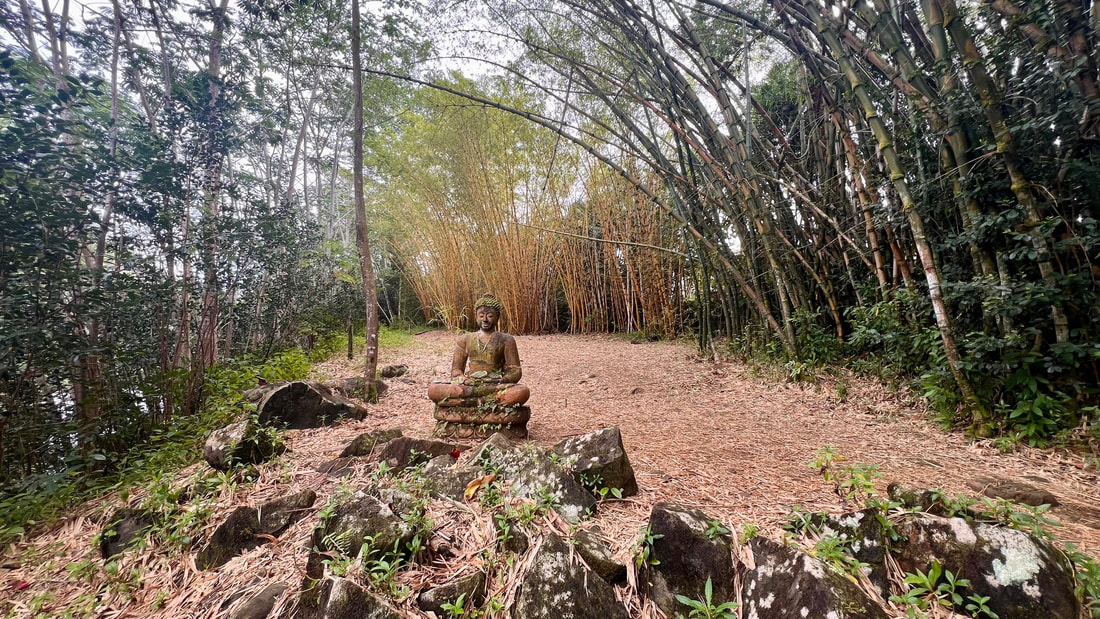 Wai Koa Loop Trail, Kalihiwai, Kauai, Hawaii, USA [Opening – Setting the Tone, 1–2 minutes] Welcome. Find a comfortable position—seated or lying down—in a natural setting. Close your eyes gently or let them rest softly on the earth around you. Take a deep breath in… and slowly let it go. Let the earth hold you. Let your breath arrive fully in this moment. [Step 1 – Anchoring in the Present Through the Senses, 3–5 minutes] Now, begin to notice the world around you. Listen… What do you hear? The chirping of birds? The rustle of leaves? Notice the sounds as vibrations, as movement in the field of awareness. Let them come and go, just as they are. Feel… The breeze on your skin… the sun on your face… The temperature… The wind touching your body. Notice the smells around you—the damp earth, the scent of trees or flowers. Let the smells enter your awareness like waves touching the shore. Everything you sense is happening now. Right here. This is the present. Let your senses be the doorway. [Step 2 – Entering the Non-Labeling State, 4–6 minutes] Now allow the mind to relax even more deeply. Let go of names. Let go of meanings. If you hear a sound, don’t call it a “bird.” Just feel the vibration. If you feel a breeze, don’t call it “wind.” Just be with the sensation. Let all things just be—without needing to define, control, or understand. Let go of your identity too. You are not your name, your story, or your body. You are awareness itself—open, still, vast. Let your edges blur… And gently dissolve into the environment around you. [Step 3 – Becoming One, 4–6 minutes] There is no you, and no nature. There is just this. Just sound. Just breath. Just presence. You are the sound of the leaves moving. You are the warmth of the sunlight. You are the stillness beneath all movement. You are the field in which it all appears. Let yourself merge with it. Feel what it’s like to be one with everything around you. Feel the unity—not as a concept, but as a lived, felt experience. Let this wholeness fill you. [Closing – Gently Returning, 2–3 minutes] Now, slowly bring your awareness back to your body. Feel your breath again. Feel the ground beneath you. Gently wiggle your fingers and toes. Let your eyes open softly only if you are ready. Bring this sense of unity back with you. You were never separate. You are nature remembering itself. Take one final breath in gratitude—for this moment, for this life, for this presence. Part 1: The Neuroscience of Epiphanies: Why Sudden Realizations Can Change Your Life Instantly5/17/2025  Redwood Trees at Land of Medicine Buddha, Soquel, California, USA Have you ever had a moment where everything just clicked? A realization so powerful it felt like the universe grabbed your shoulders and shouted, “Wake up! This is what you’ve been missing!” Maybe it was about your purpose. A relationship. A pattern you finally saw clearly for the first time. In that moment, you didn’t just understand something—you felt it in your bones. You were energized, maybe even overwhelmed. But most of all, you felt pulled to act. Not tomorrow. Not next week. But right now. That, my friend, is the power of an epiphany. And there’s a fascinating mix of spiritual alignment and brain chemistry happening behind the scenes when it occurs. What Actually Happens During an Epiphany? Science has finally caught up with what mystics and meditators have known for centuries: - Real insights are not just intellectual—they are neural, emotional, and energetic. Here’s what your brain is actually doing during a breakthrough moment: 1. You Enter a Relaxed “Alpha” Brainwave State (8–12 Hz) This is the incubation phase. It happens when you’re walking in nature, meditating, daydreaming, or simply doing nothing. Your mind is relaxed and open. It’s not busy solving or forcing—it’s just being. In this alpha state, the brain suppresses surface-level noise and opens to deeper, more creative connections. This is why so many people say they get their best ideas in the shower. - Alpha is the fertile soil where insight begins to grow. 2. A Sudden Burst of Gamma Waves (30–80 Hz) Then it happens: the famous “A-ha!” moment. Your brain rapidly links previously unconnected ideas, lighting up with a gamma burst. It’s as if puzzle pieces scattered across your life suddenly snap together. This is the moment where insight, intuition, and higher consciousness converge. Gamma is the flash of clarity—the epiphany itself. 3. Dopamine Says: “This Is Important—Do Something Now” This gamma burst is immediately followed by a release of dopamine, the brain’s motivation chemical. Dopamine doesn’t just feel good. It tags this moment as significant and urgent. That’s why your epiphany often feels so compelling—it’s chemically driving you to act now, not later. But here’s the catch: That window is short. If you don’t act, capture, or commit to something right away, the insight fades. It goes back into the subconscious like a dream you didn’t write down. How to Turn Epiphanies Into Lasting Change Breakthroughs are magical—but they’re also fleeting. To make them count, you need a system to catch and anchor them in your daily life. Here’s a simple 4-step method to do just that: 1. Create Space for Insight (Alpha State)
When your mind quiets, your soul speaks. 2. Catch the Spark (Gamma Burst) Keep a system ready:
The moment you feel the insight, write it down. Don’t worry about polishing it—just capture the energy and essence. 3. Act While Dopamine Is High Make a micro-commitment:
This is how breakthroughs become momentum. 4. Review at Night (Theta Integration) Before bed, revisit your insight. This taps into the theta brainwave state, ideal for memory and emotional consolidation. You’re reinforcing the epiphany as part of your identity and wiring it into your subconscious. Why This Matters—Spiritually and Scientifically In spiritual language, we call these moments:
In neuroscience, they’re:
It’s the same phenomenon through different lenses. You’re accessing higher consciousness and rewiring your brain at the same time. Final Thought Transformation doesn’t always come through effort. Sometimes it comes in a single moment of clarity—when you’re still enough to hear the truth. So the next time that lightning bolt of awareness strikes—don’t brush it off. Pause. Capture it. Act on it. That’s not just a thought—it’s a message from your higher self saying: “This is the moment. Go.” Reflect & Share What’s one insight or epiphany that changed your life? Leave a comment below or journal about it today. Let your breakthrough become someone else’s lightbulb. Read: Part 2: Relax to Receive - Why the Alpha is the Gateway to Spiritual Insight Part 3: Tapping the Divine Frequency, Gamma, Spiritual Downloads, and the Mystic Mind Part 4: The Portal of Dreams - How Theta Brainwaves Reveal Your Soul's Voice Part 5: Breaking Free from Mental Noise - Escapting Beta Overdrive to Find Peace Part 6: The State Shifter - How to Move Between Brainwave States to Master Your Mind & Life  Woods Trail, Sierra Azul Preserve, San Jose, California, USA There are many different types of meditation, but the goal is always the same: to achieve a meditative state. Walking meditation is a beautiful practice that not only relaxes your body and mind but can also lead you into deeper states of consciousness, such as Alpha and even Gamma brainwave states, where profound realizations happen. Here’s how to approach it to get the most out of the experience: 1. Choose the Right Trail
2. Minimize Distractions
3. Engage All Six Senses Fully experience your surroundings through:
Take your time. Stop and observe. Take photos if you feel inspired — nature is the ultimate playground for your inner artist.  Beautiful Lupin with patterned water drops on its leaves. 4. Deepen Presence When you relax into the present moment, your experience of nature intensifies — similar to how senses are heightened under the influence of edibles. One reason for this is simple: full concentration on the now magnifies your experience. The vast majority of nature has never been truly experienced by most humans — not because it isn’t beautiful, but because our attention is often elsewhere. 5. Be Mindful
6. Set Intentions, Not Expectations
7. Cultivate a Childlike Curiosity Children are naturally curious — that’s why they learn so quickly and experience so much joy. Scientists and passionate people share this trait too: they remain curious, which keeps their mind and heart alive. Adopt a spirit of curiosity during your walk — it will deepen your experience and open new doors within you. 8. Try New Sensory Exercises
9. Understand Brainwave States Meditation often aims to move your brain into deeper states:
During walking meditation, you’ll likely move in and out of Alpha and Gamma. Let it happen naturally — never force it. Relaxation comes first. Depending on your current mood and state of mind, it might take 20–30 minutes to start feeling relaxed and present. Once in Alpha:
In both states, you’re much more likely to experience epiphanies and “aha” moments — profound realizations that may even be life-changing. 10. Why Epiphanies Happen Normally, our daily lives interrupt our thoughts constantly. We accumulate fragmented, incomplete thoughts that never fully connect. But when the right environment, relaxation, mood, information, and attention come together, your mind naturally makes connections between those fragments — unlocking wisdom already inside you. (I’ll write more about this important process in a future post.) 11. Pace Yourself
Reminders
 A stream running through the forest Suggested Questions and Prompts for Walking Meditation If you feel called to, you can take one or two reflection questions with you on your walk. You can also allow your intuition to guide you naturally without any set focus. Either way, there is no need to force insights or outcomes—set your intention to stay open, curious, and present, and trust that whatever needs to arise will come in its own time. If you want structure, try asking yourself:
Or simply notice and reflect:
Gentle Tips
Remember, the goal is not to force answers but to create the space where answers naturally arise. Final Thoughts Walking meditation is a beautiful practice of reconnecting—with yourself, with nature, and with the present moment. Each walk will be different. Some days you may feel deeply connected and inspired; other days you may simply enjoy a peaceful stroll. Both are valuable. Trust the process. The more you practice, the more natural it becomes to enter deeper states of awareness. Let nature be your guide, your mirror, and your playground. Walk with presence, curiosity, and an open heart—and allow the wisdom within you to arise when the time is right. Also check out this post about The Healing Power of Nature We May Not Know.  patterned water drops on Iris and blades of grass   President Donald Trump adn Elon Musk speak before departing the White House on March 14th. Photo Credit: CNBC Imagine sitting in a car. You’re the observer. But who’s driving? For most people, the answer is the ego—firmly gripping the wheel, speeding toward desires, defending against imagined threats, chasing approval, status, and power. Meanwhile, the higher self—the wise, calm navigator—sits quietly in the backseat. But what happens when we let ego drive not just our lives, but our entire world? Let’s explore what the ego truly is, why it exists, how it functions in the brain, and what happens when we allow it to dominate—individually and collectively. What Is the Ego? In psychology, the ego is the part of our mind that helps us function in the world. It negotiates between our instincts (id), moral ideals (superego), and external reality. It forms a sense of identity—the “I” that interacts with the world. In spirituality, the ego is the false self. It’s the mask we wear, the roles we play, the stories we believe about who we are. It operates in separation, fear, and comparison. It says, “I am this body, this status, this job, this belief.” But none of those are truly you. How the Ego Operates in the Brain The ego thrives on dopamine—the brain’s reward chemical. Every time you receive praise, a win, a like on social media, or prove someone wrong, the ego feels validated. You get a dopamine hit. You feel important. But it doesn’t last. This is why the ego constantly chases--more money, more validation, more control. It also reacts quickly to threats, real or perceived. A raised eyebrow can feel like an attack. The ego’s job is to protect the false identity it has created. So it responds with anger, pride, defensiveness—or aggression. It was once useful for survival. But now, it mostly defends illusions. When the Ego Causes Suffering Let’s say someone insults you. You feel rage. That’s the ego defending its image. In that moment, you suffer from the intensity of the emotion—and you may hurt someone else in response. The ego’s mission is to maintain its version of truth. It justifies its reactions and rarely admits fault. That’s why it’s hard for people trapped in ego to back down, apologize, or reflect. This isn’t just personal—it’s collective. The Rise of the Ego-System We live in an Ego-System—a society built to feed and reward egoic behavior. From advertisements that say, “Look what they have—you need this too,” to social media platforms that reward attention-seeking and outrage, we are constantly being trained to feed our false self. The bigger the ego, the bigger the desires—and the greater the consumption. Success is often measured not by inner peace or love, but by how much you have, how loud you are, and how many people follow you. This system has normalized ego-driven behavior. We excuse it, reward it, even admire it. Famous Examples: When Ego Rules Let’s take a closer look at a few familiar figures: Donald Trump Regardless of politics, he’s widely seen as someone with a strong ego. His success has often come through fear-based negotiation, force, and bold self-promotion. In an ego-driven society, that’s effective. We say, “He gets things done,” even if the cost is emotional, relational, or moral. But this approach brings long-term damage—internally and externally. Resistance follows force. Power built on fear cannot bring peace. Elon Musk A visionary with enormous ambition, but his unfiltered tweets and provocative behavior reveal a restless ego at work. He may create groundbreaking innovations, but the thrill of ego often takes center stage—sometimes overshadowing the mission. This isn’t judgment—it’s observation. We all have ego. But the bigger it grows, the harder it is to see clearly. History Doesn’t Lie Let’s reflect on the past:
The ego always crashes. It’s not a question of if—but when. No illusion can last forever. What’s built on fear, separation, and pride will eventually collapse under its own weight. The Alternative: Letting the Soul Drive The ego isn’t evil. It’s just not meant to lead. The goal isn’t to kill the ego—it’s to move it to the backseat. Let your higher self—your soul, your truth, your deeper wisdom—take the wheel. The ego can still speak up when it needs to protect or push you into action. But it doesn’t need to drive your decisions, relationships, or life purpose. Because a life led by ego may win battles—but it loses peace. And a world led by ego might gain power—but it sacrifices soul. A Final Reflection We are in a time of heightened ego momentum. The world feels louder, angrier, and more divided. That’s not just coincidence—it’s the ego-system in full swing. But awareness is the beginning of transformation. Notice the voice in your mind that demands, defends, and divides. Then ask: Who is really driving? When the soul leads, the path is slower, softer, but infinitely wiser. Want to dive deeper into this topic or share your reflections? Leave a comment or share this article with someone navigating their own ego journey. Let’s raise collective awareness—one soul at a time.  Wai Koa Loop Trail(Stone Dam) in Kilauea, Kauai, USA Have you ever felt stuck in a phase of life and wondered why you’re going through it? You’re not alone. But here’s something to remember: Every season has a purpose. Even the most difficult ones are not without meaning. They often arrive to teach us something our soul needs to grow. Sometimes it’s one big lesson. Sometimes it’s many, unfolding slowly over time. If you ask “What’s wrong with me?” you’ll only find frustration. But if you ask “Why am I going through this season, and what am I meant to learn?”—you begin to shift from confusion to clarity. The secret is to focus on the lesson, not the event. Shift your attention away from the external circumstances and look inward. What patterns are repeating? What emotions are surfacing? What beliefs are being challenged? Awareness Is the Key The lessons of life are always present—but our awareness isn’t always developed enough to see them. That’s why cultivating awareness is essential. When you raise your level of awareness, you begin to recognize the subtle opportunities for growth that were always there. As the saying goes, “When the student is ready, the teacher appears. When the student is truly ready, the teacher disappears.” It’s not about the presence of the teacher—it’s about the readiness and awareness of the student. Once the student begins to see clearly, everything becomes a teacher—even themselves. Why Awareness Calms the Storm When you focus on uncovering the lessons, you naturally feel calmer. You’re no longer fighting your season—you’re learning from it. Emotions no longer run the show. And that’s when something beautiful happens: your prefrontal cortex activates. This is the part of your brain responsible for decision-making, planning, and reasoning. Instead of reacting impulsively, you start to make grounded, intentional choices. This doesn’t mean you shut off your intuition. In fact, the opposite is true. When you’re not clouded by emotional noise, you can actually feel your intuition more clearly. It no longer has to shout over your inner chaos to be heard. Trust Your Season So next time you’re in a tough season, pause. Don’t fight it—feel into it. Learn from it. The purpose will reveal itself… as it always does. You’re not stuck. You’re becoming. You’re not lost. You’re being guided. Everything in your life—especially the difficult seasons—is part of your awakening. If this message resonates with you, share it with someone who might need it right now. And if you’re currently in a tough season, take a breath, and remember: the lesson is not in the storm—it’s in how you move through it. Have you ever wondered why conflict seems inevitable with certain people in your life, especially family members? No matter how much you grow, they still treat you the way they always have—like the child, the troublemaker, or the person they once knew. This disconnect often leads to frustration, misunderstandings, and even emotional pain. The Root of Conflict: A Perception Gap Conflict often arises when who others think we are no longer matches who we have become. They interact with an outdated version of us, while we expect them to see and respect the person we are today. For example, a parent may still treat their adult child like they are incapable, simply because that’s how they remember them. Meanwhile, the child—now grown and independent—resents being treated that way. The result? Repeated arguments, emotional triggers, and a cycle of frustration. This dynamic isn’t just limited to parent-child relationships; it happens in friendships, romantic relationships, and even workplaces. The version of you that people hold in their minds is often based on past interactions, and unless something forces them to update their perception, they continue responding to you in the same old ways. Why People Struggle to See Our Growth People are naturally resistant to change—especially when it comes to relationships. Familiarity feels safe, even if the dynamic is unhealthy. When someone sees you differently, it forces them to question their role in the relationship. For example, a controlling parent might feel less needed if they acknowledge that their child has become independent. A long-time friend may feel threatened if they see you growing in ways they haven’t. A romantic partner may resist change because they fear losing the dynamic they once knew. Without realizing it, people may try to pull you back into old patterns not out of malice, but out of their own fears and insecurities. How We Keep Ourselves Stuck in Old Dynamics Even when we’ve grown, our reactions often reinforce the past version of us. If you’ve always argued with a parent who belittles you, reacting defensively only confirms their belief that you are still the same. If a friend still treats you like the reckless person you used to be, and you get frustrated instead of calmly correcting them, you feed their outdated perception. This is why it’s refreshing to meet new people. They see us as we are today—without the baggage of past interactions. But this doesn’t mean old relationships are doomed. They can be rekindled if both parties become aware of these dynamics. How to Shift the Relationship Dynamic 1. Understand Their Perception • Instead of assuming they are intentionally disrespecting you, recognize that they simply don’t see your growth yet. • Ask yourself: “What version of me do they see?” and “Why might they struggle to update that perception?” 2. Communicate Your Growth • You can’t expect people to just know you’ve changed. Show them through actions and words. • Example: Instead of saying, “I’m not a child anymore,” demonstrate it by handling situations with maturity and confidence. 3. Stop Reacting Like Your Old Self • When you react emotionally in a way that matches their outdated view of you, you reinforce it. • Instead, respond as your present self—with calmness, confidence, and clarity. 4. Give It Time • People don’t change their perceptions overnight. Consistently embody the new version of yourself, and eventually, they will have no choice but to recognize it. Final Thoughts Conflict in relationships isn’t always about who is right or wrong—it’s often about perception gaps. Your growth is real, but the people in your life may not see it yet. Instead of expecting them to automatically adjust, take responsibility for helping them see the new you. The more aware we are of these dynamics, the more power we have to break the cycle and create healthier, more fulfilling relationships.  I personally believe that life purpose is something we remember from a spiritual perspective rather than something we create. Of course, this depends on a person’s beliefs, and their viewpoint may differ. For me, I remembered my purpose when I discovered my passion—helping and motivating others to reach their full potential. I believe my purpose was already determined before I was born, but it remained dormant or was gradually unfolding as I matured. When the time was right, I became aware of it, understood it, and eventually began embodying it. This process has been gradual, but now my purpose is very clear to me: to learn, to experience, and to serve others. I believe there was a reason for me to come back to Earth, meaning my purpose was already determined before birth. Once my soul defined this purpose, it had to manifest it into reality—into a physical form—so I was born with this purpose written inside me. But here’s the key: It’s not that you are looking for your purpose. Your purpose has always been guiding you. We often think of purpose as something we must actively seek, as if it’s hidden somewhere outside of us. But in reality, our purpose is always present, subtly directing us through our experiences, passions, and even challenges. The process of life itself is designed to help us remember and align with it. An Analogy: The Meeting of Forgotten Purpose Imagine we all have a condition—not Alzheimer’s, but a type of forgetfulness where we remember bits and pieces, just not everything clearly. We find ourselves in a meeting but don’t remember why we’re there. The entire time, we’re trying to recall the purpose of the meeting and our role in it. We try different things to spark our memory, hoping to find something that feels right, but nothing fully clicks. Since our memory is unreliable, we rely on feelings and intuition. Deep down, we sense we’re in the right place—we planned to be here—but we’re not truly fulfilling our purpose because we don’t fully remember what we came to do. Others in the meeting are in the same situation. Some might remember more than others. Together, we start piecing together clues, helping each other recover fragments of our memory. As more people remember, the purpose of the meeting becomes clearer, and soon, things start moving in the right direction. The key to feeling at peace isn’t just remembering the purpose—it’s fulfilling it. Once we recall why we’re here, the anxiety and frustration fade, giving us clarity. Instead of spending all our time just trying to remember, we can focus on doing what we came here to do—contributing, making a difference, and even helping others remember their purpose too. For Spiritual and Non-Spiritual Perspectives For those on a spiritual path, the journey of purpose looks like this: Higher purpose → Manifested → Living and remembering our higher purpose → Fulfilling our purpose. For those who do not hold spiritual beliefs, purpose can still be deeply meaningful: Nothing → Something → Lost/Confused → Finding a purpose → Fulfillment. Even without believing in a higher purpose, one can still enter “the meeting” with a reason—to learn, to contribute, and to experience life. There’s nothing wrong with not believing in spiritual destiny. The key is long-lasting fulfillment, rather than chasing fleeting goals. Why Does Purpose Seem to Change? Why is it that sometimes we feel certain about pursuing something, only to realize later that it no longer feels right? Because your goal was never meant to last forever. It may have even been aligned with your larger purpose, but only as a fraction of what you were meant to accomplish. The universe guides you into doing something, then out of it, so you can continue fulfilling your greater purpose. Mind vs. Soul: The Illusion of Purpose Purpose exists for the mind at the human level—it needs direction to continue its journey. But the soul is already living its purpose, patiently progressing according to a greater plan. The struggle comes because the mind, limited by ego and human perception, cannot fully comprehend the soul’s deeper purpose. In many cases, the mind’s pursuit of purpose originates from the ego. The ego seeks identity, validation, and significance. It wants to feel special, to achieve something, to leave a mark. This is why people sometimes chase goals that later feel empty—because they were ego-driven rather than soul-aligned. But when the mind finally recognizes the soul’s true purpose, the two align, and purpose is naturally fulfilled. In other words, the moment you realize your true purpose, you are already living it. Whether you feel like you’ve accomplished or fulfilled your purpose is simply the mind trying to measure and understand something that was always in motion. A Lesson from 50 First Dates In 50 First Dates, Adam Sandler’s character, Henry, can be seen as a representation of God/Spirit Guide or an awakened friend trying to help someone (Lucy) recover her memory—just like how an awakened soul helps those who are still “asleep” remember their true purpose. Henry knows that Lucy will likely forget everything by the next morning, yet he has no expectations or frustration. Instead, he patiently works with her, bringing joy into her life each day. He meets her where she is, without force or pressure. Lucy, despite her memory loss, still experiences happiness in her day-to-day life. And Henry, through his unwavering commitment, lives with a sense of purpose every day. This mirrors the journey of awakening—some people forget who they are and why they’re here, but those who remember can gently guide them, not by forcing remembrance, but by being present, patient, and leading with love. In the end, whether one remembers or not, the key is to live with joy and purpose in each moment. “The world exists because of you, not the other way around.” - FeelaSoulphy |
AuthorFeelasoulphy Categories
All
Archives
March 2026
|




 RSS Feed